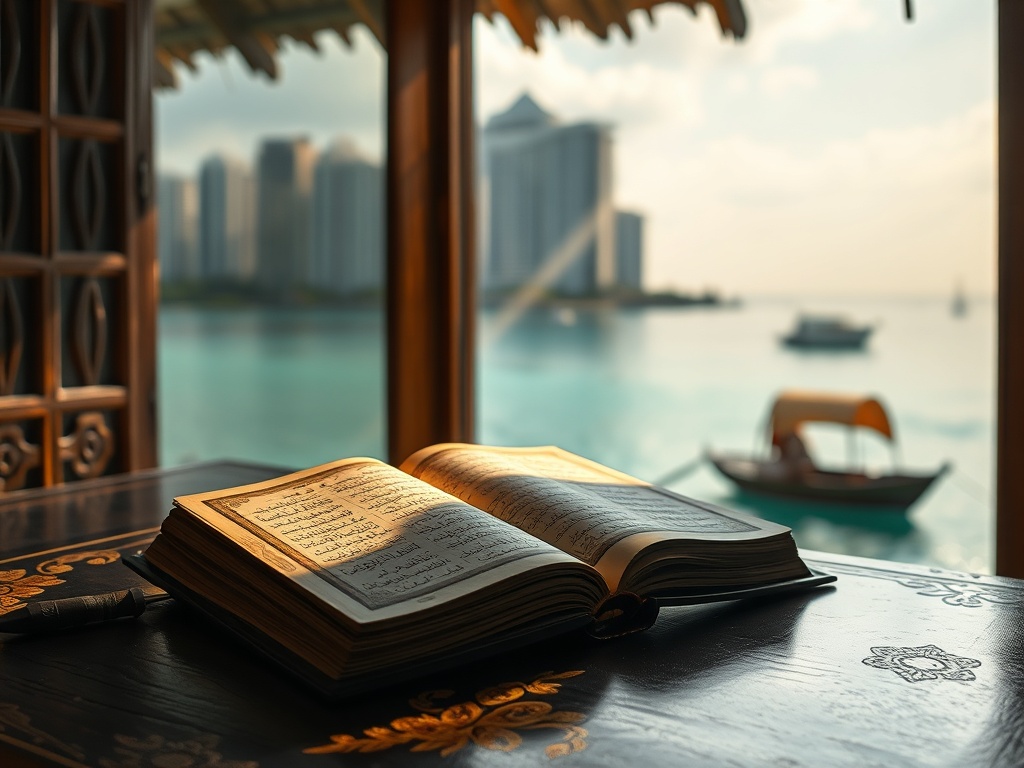
Between Divine Command and Personal Conviction: The Struggle for Islam's Soul in the Maldives
In the Maldives, where the constitution mandates a 100% Muslim population, faith transcends personal belief—it defines the state, daily life, and public discourse. Yet beneath this unified identity simmers a fierce debate over interpretation, enforcement, and individual conscience.
For many, the path is clear: align with the Quran and Sunnah, following divine commandments without compromise. Islam, in this view, offers a straight path defined by obedience. Piety is measured by adherence to this standard, with the Prophet Muhammad's (PBUH) noble conduct—Akhlaaq—as the ideal. This system acknowledges human fallibility but elevates Taqwa, the conscious fear of Allah, as the compass guiding believers toward mercy after missteps.
This conviction extends to governance. Drawing from 1500 years of Islamic jurisprudence, proponents argue the state must enforce public morality. Separating religion from law is seen not as neutrality but as adopting secularism—a foreign concept that severs society from the spiritual. The passion is profound, rooted in Iman (faith), a relationship believers vow to protect fiercely.
Yet a counterpoint echoes through digital forums and coffee shops, grounded in the same faith. It emphasizes belief as personal and unforced. "It is the relationship between you and Allah," they say, arguing against imposing interpretations on others. For some, this stems from personal rediscovery—moving beyond societal narratives to independent study. They conclude that Islam's perfection has been misunderstood, often to restrict personal choices like attire, which they reframe as matters of individual understanding, not crimes.
This is not a clash between religious and secular ideals but a debate within Islam, intensified by the Maldives' unique context. Against high-profile corruption, economic strain, and political consolidation, discussions on moral enforcement and freedom gain urgency. When governance appears inefficient or nepotistic, trust in institutional authority—religious or secular—erodes. For youth grappling with unemployment and housing crises, abstract theological debates can feel detached from daily struggles.
The conversation transcends doctrine to confront identity in a modernizing world. It asks how a nation upholds Islamic foundations while engaging globally, ensuring economic survival, and honoring diverse aspirations. Can unity accommodate a spectrum of sincere belief within Islam's broad tenets?
Ultimately, Maldivian discourse mirrors a universal tension: the search for truth in community, the craving for moral clarity, and the blurred line between personal conviction and communal duty. The path may be straight, but the journey is each individual's to walk.
— Source fragments: Primary themes kept: 1) The primacy of aligning with Quran/Sunnah regardless of source. 2) Islam as a path defined by commandments and Akhlaaq (conduct), with Taqwa as the guiding principle. 3) The Islamic state's right to enforce public morals, contrasting with secular separation. 4) The personal, un-coerced nature of faith ('relationship between you and Allah'). 5) The journey of personal religious rediscovery and rejection of externally imposed 'retarded claims'. Fragments omitted were those that reiterated these core points without adding new conceptual depth or were purely personal declarations that disrupted the journalistic, analytical tone.