Between Law and Loyalty: A Maldivian's Search for Justice
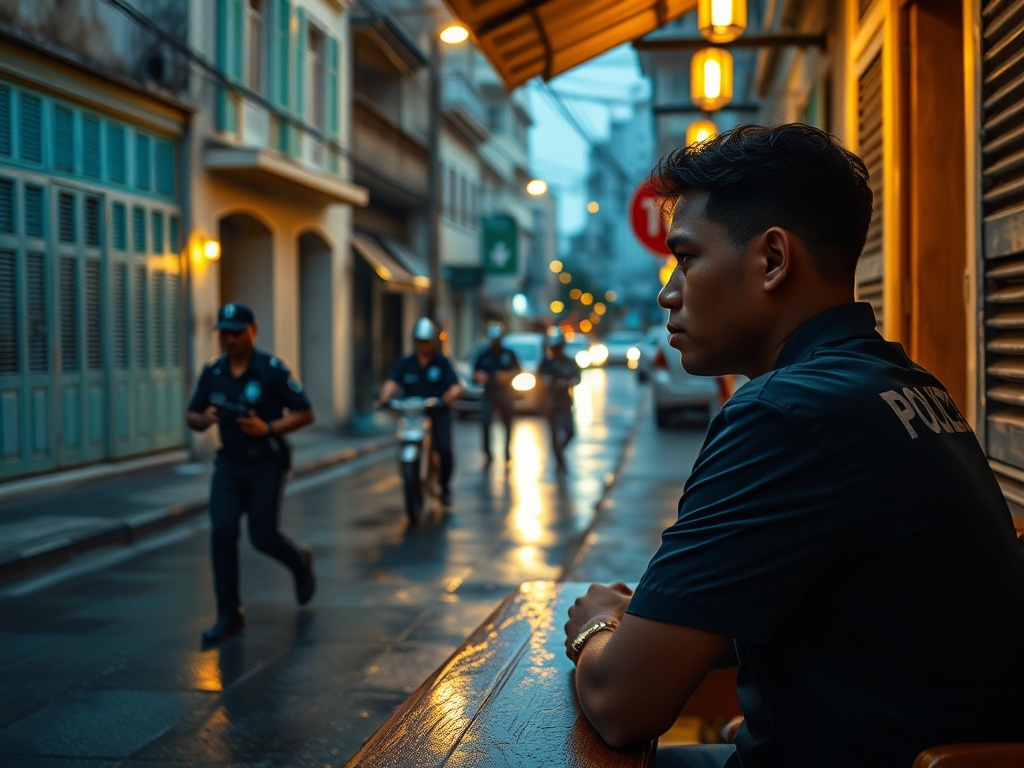
The scent of salt and diesel hung heavy over Malé as Ismail watched the police van disappear down the narrow street. He could still see the handcuffed man's face in his mind—not the hardened criminal he'd expected, but someone who looked like his own cousin, being escorted not to a cell but to what appeared to be a casual walk near the seafront. The contradiction settled in his stomach like bad fish.
Later, at the café where the ceiling fans did little against the humid afternoon, fragments of conversations swirled around him like monsoon winds. 'Who should I believe?' a young man at the next table muttered into his phone, his voice tight with confusion. 'Police or Ihusaan?' The name echoed other murmurs Ismail had collected—talk of military men in civilian roles, of resignations that spoke louder than official statements, of fundamental rights that seemed to evaporate when serious crimes were alleged.
Ismail remembered his grandfather's stories of when justice was measured in the shade of the bodu beru circle, where elders listened and decided matters that affected the community. Now, the systems felt like overlapping currents in the reef—surface calm hiding dangerous undertows. He thought of the police officer he'd interviewed last week, a decent man who'd looked genuinely pained when asked about certain cases, his eyes avoiding Ismail's as he spoke of following orders.
Walking home as the call to prayer echoed across the crowded island, Ismail passed the construction site of another government housing project. The half-built towers stood like skeletons against the twilight sky, promises made during elections that now housed more political arguments than families. He thought of the young people he knew—bright, educated, yet adrift in a sea of limited opportunities, their frustration sometimes turning to anger at systems they couldn't trust.
The ocean breeze brought no answers, only the constant reminder that islands, no matter how separate they appear, are connected by what flows beneath the surface. Ismail knew he would keep writing, keep asking questions, even when the answers were as elusive as catching moonlight on the waves. In a nation of scattered atolls, truth too often felt like just another island—visible from afar, but difficult to reach through the treacherous channels of power and perception.
— Source fragments: Confusion about police credibility, questions about military figures in civilian roles, concerns about fundamental rights in justice process, emotional reactions to institutional statements