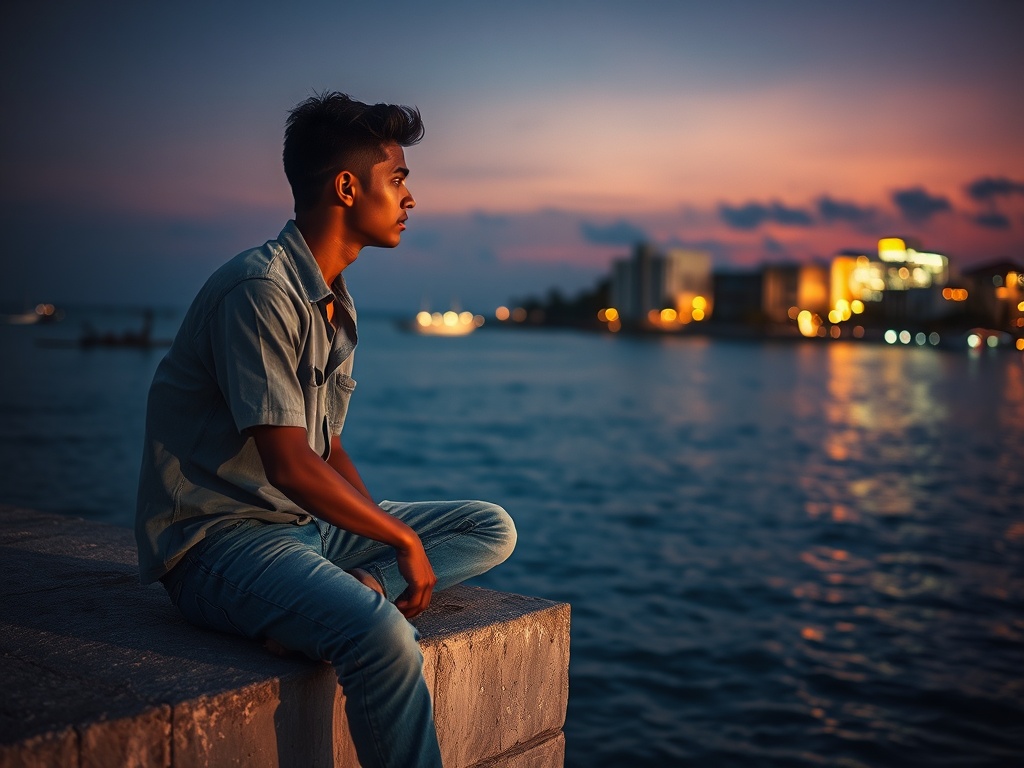
Between Leaning Walls in Malé, a Life on Hold
The sea breeze carries more than salt these days—it carries the weight of waiting. In the narrow alleys of Malé, between concrete walls that seem to lean closer with each passing year, you can feel it. The quiet tension of lives suspended between aspiration and reality.
For the young man staring at his phone screen, the job listings blur into a single repeating message: not qualified, position filled, try again later. His education feels like a key to a lock that no longer exists. The diploma gathers dust while his dreams of starting a family, of having a place to call his own, recede with the tide. He watches foreign workers arrive by the plane-load, filling jobs he was told would be his, and wonders what invisible barrier separates his future from theirs.
In government housing blocks, the irony is palpable. Flats meant for those most in need stand empty while their official leaseholders live abroad, the keys to better lives traded like currency. Meanwhile, families cram into single rooms, their children doing homework on floor mats, the sea view from their window a constant reminder of the space they cannot afford.
At the local shop, the shopkeeper rearranges the same canned goods for the third time today. He knows his customers by the hesitation in their eyes before they ask for credit. The rising prices have turned familiar transactions into delicate negotiations of dignity. The fish that once sustained islands now costs what a day's wages might bring—if the work comes.
Yet in this landscape of constraint, small acts of resilience bloom like shore flowers after rain. The neighbor who shares a pot of garudhiya with the family next door. The young people gathering on the seawall at dusk, not with protest signs but with quiet determination to build something better. The fisherman who still goes out before dawn, his boat cutting through waters that have witnessed generations of survival.
There's a particular quality to Maldivian hope—it's not loud or dramatic, but patient and deep-rooted, like mangrove trees holding fast against the current. It's in the mother teaching her daughter to read by lamplight, the craftsman perfecting his lacquer work, the student studying late into the night despite not knowing where her knowledge will find purchase.
The challenges are real—the crowded rooms, the empty pockets, the opportunities that seem to float just beyond reach like driftwood on the horizon. But so too is the quiet determination to endure, to adapt, to find dignity not in what we have but in who we are becoming. The tide will turn, as it always does, and when it does, we'll be here—waiting, working, remembering that these islands have weathered stronger storms.
— Source fragments: Youth issues: unemployment, lack of opportunities; Housing crisis in congested capital; High cost of living; Expatriates competing with locals for jobs; Economic pressures and daily struggles