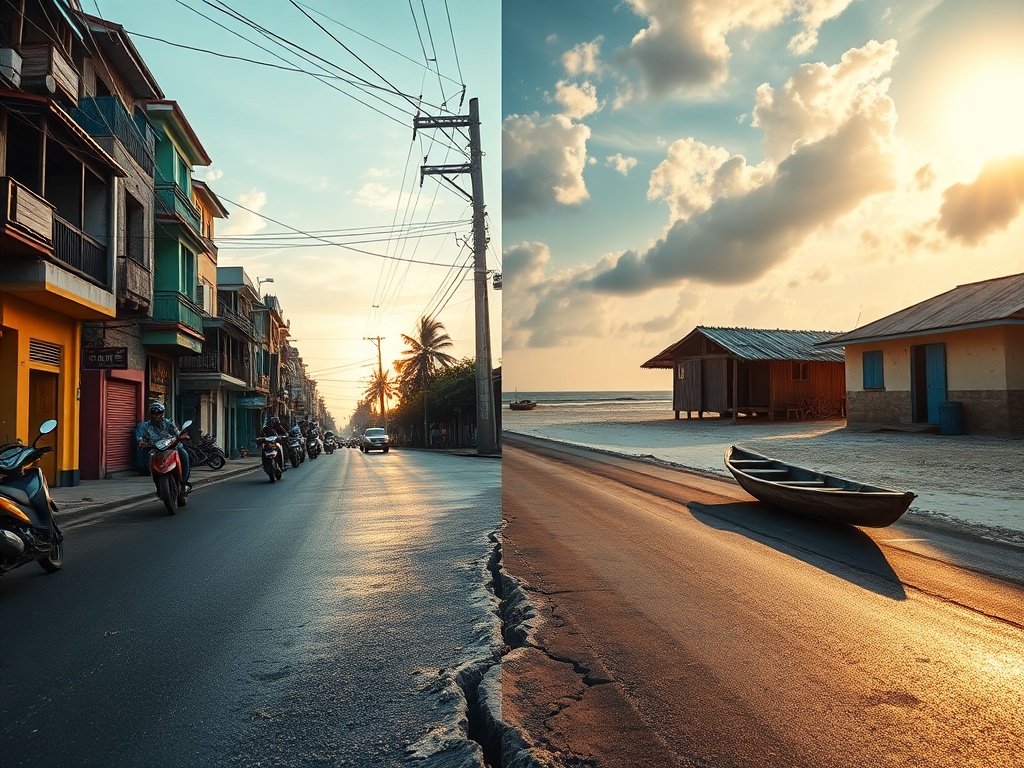
Between Malé's Crowded Streets and the Atolls' Waiting Harbors
The Maldives stands at a crossroads, not just politically but geographically. The persistent tension between the capital Malé and the southern atolls represents one of the nation's most enduring challenges—a division that speaks to deeper questions about what kind of country the Maldives wants to become.
For generations, residents of outer islands have witnessed how laws and state institutions systematically discriminate against them. The perception isn't merely anecdotal; it's embedded in the daily realities of infrastructure neglect, where communities can endure months without reliable power or water while government response remains indifferent. This institutional disregard extends to how regional tragedies are minimized and local economic initiatives are stifled.
The historical memory of economic suppression remains particularly raw in places like Addu, where stories persist of government-ordered destruction of vessels following the Suvadeeb era—allegedly because southern economic progress threatened Malé's dominance. What began as jealousy transformed into policy, creating patterns of control that continue to shape development priorities today.
Yet the solution isn't simply about reversing privileges or engaging in comparative suffering. Both Malé residents and those in outer islands possess unique advantages and face distinct challenges. The capital offers greater access to essential services and opportunities, while outer islands contend with systemic neglect despite their economic potential. This isn't a competition about who suffers more, but rather a recognition that the current system fails both groups in different ways.
The fundamental question isn't whether discrimination exists—the evidence is overwhelming—but whether the nation can move beyond it. True unity requires acknowledging that regional divisions serve no one's long-term interests. When southern economic potential remains untapped due to centralized control, the entire nation loses. When outer islands lack basic infrastructure, it reflects not just on regional inequality but on national failure.
The path forward demands more than political rhetoric about unity. It requires concrete policy changes that decentralize power, equitable infrastructure investment that recognizes all citizens' dignity, and economic policies that harness rather than suppress regional potential. The alternative—continued division and resentment—only ensures that the Maldives remains an unfinished nation, unable to realize its full potential because it cannot reconcile its geographical and political contradictions.
— Source fragments: Regional privilege differences, historical economic suppression in Addu, systemic discrimination against southern islands, infrastructure neglect, calls for unity