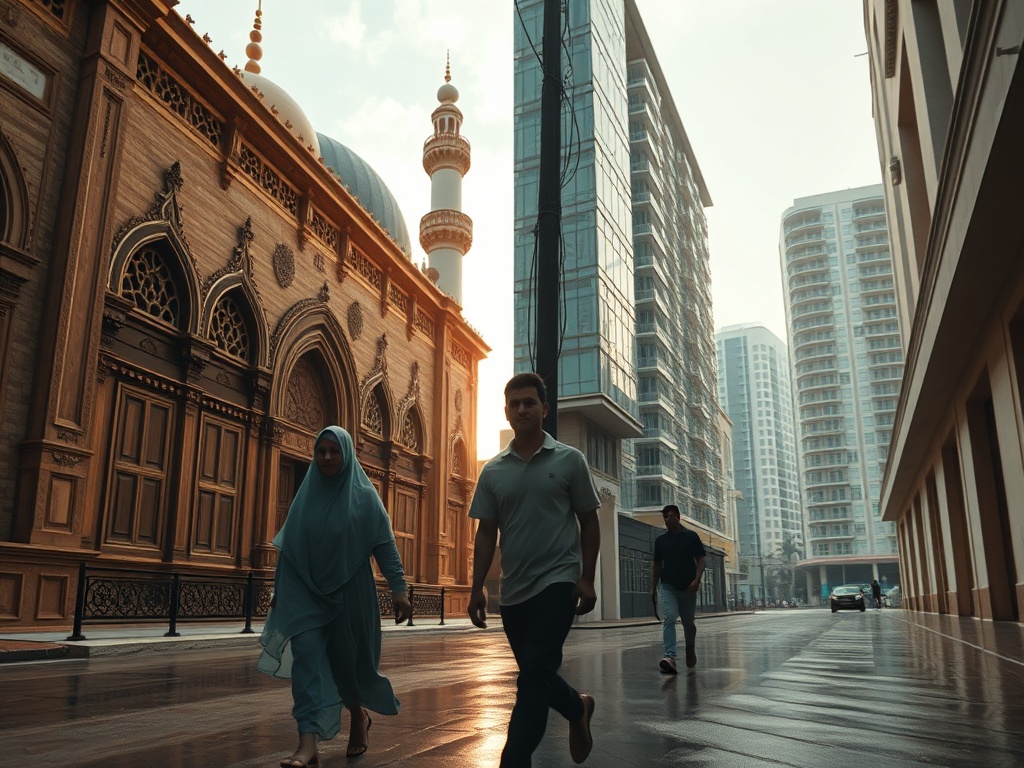
Between Mosque Calls and Social Media Feeds
In the quiet spaces between mosque calls and social media feeds, a conversation simmers across the Maldives—one that touches the very heart of what it means to be Muslim in a modern island nation. The debate over personal choice versus religious obligation has become a cultural fault line, revealing how Maldivians navigate the complex terrain of faith in daily life.
On one side, voices argue for strict adherence to Islamic teachings as understood through historical precedent. They point to the examples of early Muslim communities and emphasize that religious obligations are not matters of personal interpretation but divine commandments. The discussion often centers on modesty, with proponents arguing that certain standards of dress are non-negotiable aspects of Islamic practice that the community has both the right and responsibility to uphold.
Yet countering this perspective are those who advocate for a more personal relationship with faith. They question the role of intermediaries in religious practice, arguing that matters of conscience and worship are ultimately between an individual and God. This viewpoint emphasizes personal responsibility over communal enforcement, suggesting that religious observance loses meaning when compelled rather than chosen.
The tension between these positions reflects broader questions about the role of religion in public life. Critics of enforcement mechanisms draw parallels to international contexts where secular laws have been used to restrict religious expression, warning against similar approaches in reverse. They argue that compulsion in matters of faith contradicts the spirit of Islamic teaching, which values sincere belief over performative compliance.
Meanwhile, traditionalists express concern about what they see as the erosion of religious values through selective interpretation. They warn against creating a 'customized Islam' that prioritizes personal preference over established teachings, viewing this as a departure from the practices of early Muslim communities.
The debate extends beyond theoretical discussions to practical concerns about community harmony and individual rights. Some express apprehension about the social consequences of religious disagreements, pointing to instances where theological disputes have escalated into personal conflicts. This highlights the delicate balance between religious conviction and social cohesion in a close-knit society.
What emerges from these conversations is not merely a disagreement about specific practices, but a deeper dialogue about how a 100% Muslim nation navigates the intersection of faith, freedom, and community standards. As Maldivians grapple with economic challenges, political tensions, and social change, these religious discussions reflect the broader search for identity and direction in a rapidly evolving world.
The intensity of these exchanges underscores their significance in Maldivian life. They represent not just theological differences but competing visions of how Islam should inform both personal conduct and public policy in a nation where religion and national identity are deeply intertwined.
— Source fragments: Debate about religious obligation vs personal choice; questions about who decides religious practice; concerns about enforcement mechanisms; discussion of historical religious practices; tension between individual interpretation and traditional teachings