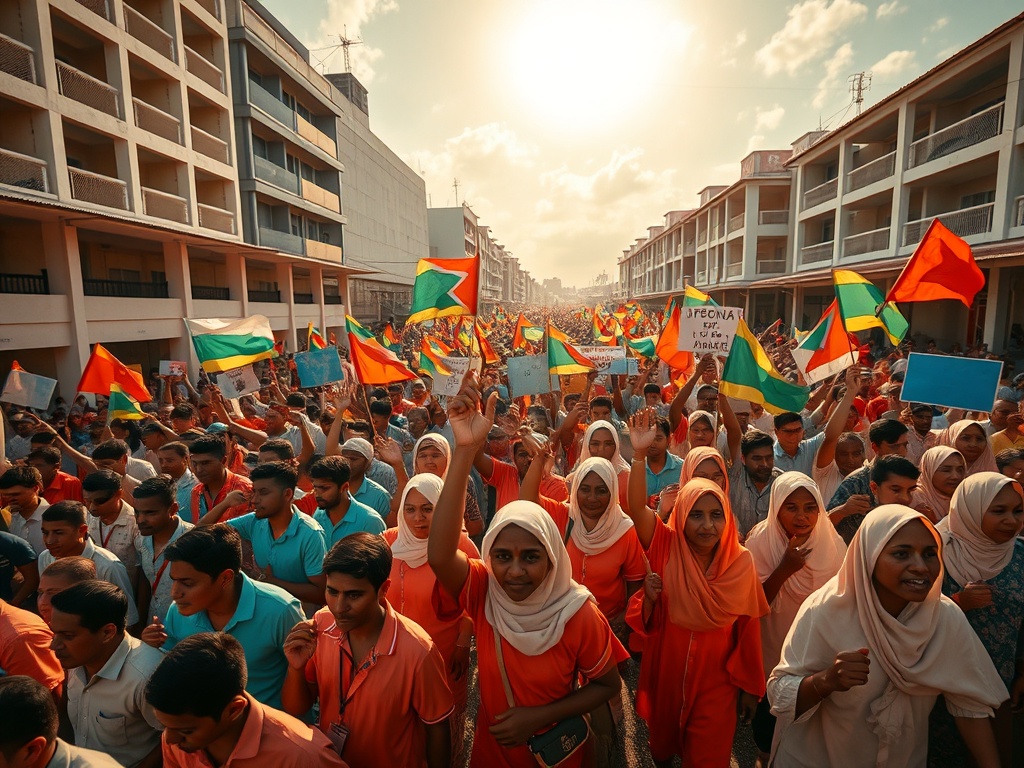
Between Official Figures and Ground Estimates Lies Our Politics
The numbers game begins as soon as the speeches end. President Muizzu confirms 13,000 attendees. Independent observers whisper 20,000. In the space between official figures and ground estimates lies the true pulse of Maldivian politics.
Political rallies in the Maldives have long served as more than mere campaign events—they are living barometers of public sentiment, theatrical displays of strength where every headcount carries symbolic weight. When supporters chant "Henveiru has the power," they're not just celebrating a neighborhood's political clout but affirming a fundamental democratic principle: that in a nation of scattered islands, collective presence still matters.
These gatherings represent moments where abstract political support becomes visible, tangible. The discrepancy between official counts and independent estimates speaks to a deeper reality—in a political landscape where media freedom faces pressures and institutional trust wavers, crowd sizes become alternative metrics of legitimacy. They're the people's fact-check against official narratives.
Behind the numbers lies the human calculus of political allegiance. The journey from home to rally ground represents a cost—time, transportation, opportunity—that few pay lightly. Each attendee has weighed their priorities and chosen public demonstration over private concern. This voluntary assembly remains one of democracy's most powerful visuals, especially in nations where other democratic indicators face challenges.
The psychological impact of mass gatherings cannot be overstated. For participants, seeing thousands share their political leanings reinforces conviction and dispels isolation. For opponents, large turnouts serve as sobering reminders of the work ahead. And for undecided voters, these demonstrations can shift perceptions about a candidate's viability and popular support.
Yet the focus on numbers alone risks missing the substance beneath the spectacle. While crowd size indicates energy, it doesn't necessarily correlate with policy wisdom or governance competence. The real test comes after the banners are folded and the stages dismantled—when campaign promises meet the hard realities of administration.
In Maldives' highly competitive political environment, where multiple parties jockey for influence and former presidents remain active players, these public demonstrations serve as crucial positioning moves. They're the visible expression of political mathematics that will ultimately play out in ballot boxes.
As one political observer noted, the true measure of any movement isn't just who shows up when the cameras are rolling, but who remains engaged when the work turns from cheering to governing. The crowd that disperses after the rally must become the constituency that holds power accountable long after the echo of the last chant fades.
— Source fragments: President Muizzu confirmed crowd of 13,000+; independent estimate of 20,000; 'Henveiru has the power' chant; reference to political competition between Ihsaan and Azanna