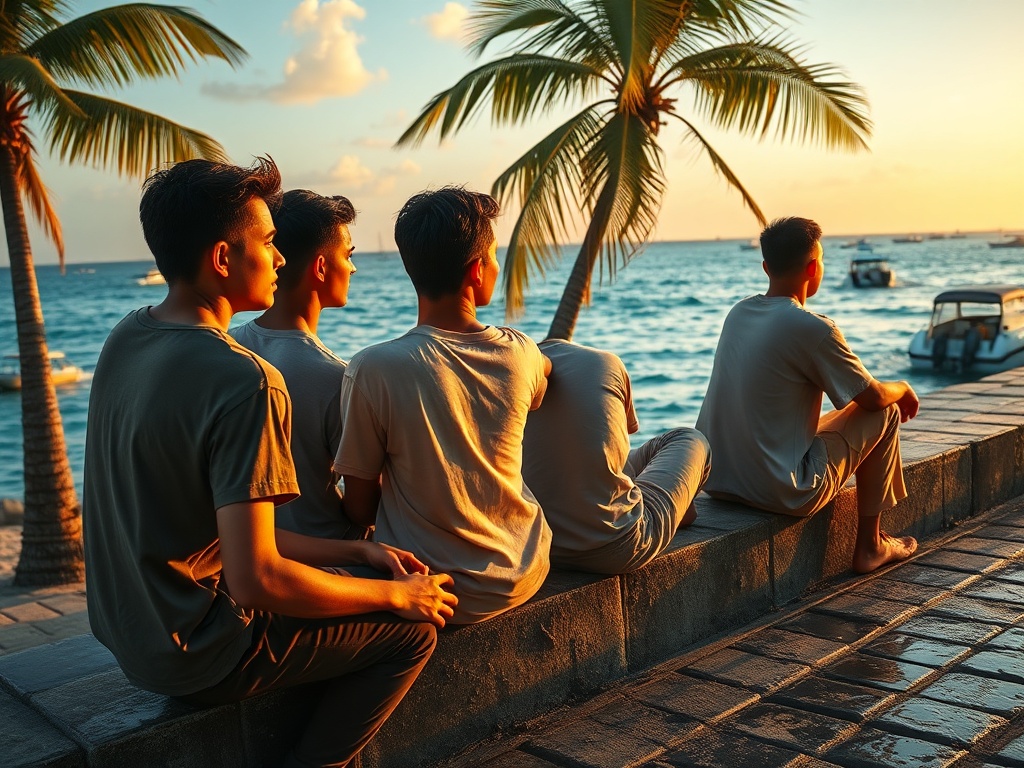
Between Sea and Sky: The Dreams Our Youth Hold in Silence
The afternoon sun casts long shadows across the narrow streets of Malé, where young men gather on corners not out of idleness, but out of waiting. Their conversations drift like sea foam—light on the surface, heavy with what remains unspoken. They speak of applications submitted, of qualifications earned, of doors that remain closed despite their knocking.
In the spaces between their words, you can hear the echo of a generation's uncertainty. The education they pursued with such hope now feels like a map to places that don't exist. The jobs they trained for have been claimed by the relentless tide of expatriates who work for less, live in crowded rooms, and send their earnings across oceans. There's no anger in their voices—just the weary acceptance of a system that has learned to function without them.
At the harbor, the fishing boats rock gently, their rhythms unchanged for generations. The older men mend nets with hands that know the sea's language, while their sons scroll through job listings on phones that glow with artificial promise. The distance between these two worlds grows wider with each passing monsoon season.
Some find escape in substances that blur the edges of their reality—a temporary harbor from the storm of expectations. Others cling to the hope of government positions that may never materialize, or tourism jobs that pay just enough to survive but not enough to build a future. The lucky ones find work on resort islands, serving cocktails to tourists while dreaming of having the means to be tourists themselves someday.
Yet beneath this surface of resignation, there remains a stubborn resilience. In the early morning hours, before the city fully wakes, you can see them—the young entrepreneurs setting up small cafes, the artists painting murals on forgotten walls, the students studying by lamplight. They are planting seeds in concrete, determined to grow something beautiful in unlikely places.
The sea that surrounds us has always been both barrier and gateway. For our grandparents, it was the source of life. For our parents, it became the path to tourism wealth. For this generation, it represents the distance between what is and what could be. They are learning the hardest lesson of all: that waiting is not passive, but an active resistance against despair. They are the tide, patient and persistent, knowing that even the hardest rock eventually yields to the water's constant caress.
— Source fragments: Youth issues: Drug use, unemployment, lack of educational/job opportunities; Expatriates: Uncontrolled numbers lead to competition with locals for jobs/business; Economy: High cost of living; Tourism is the main forex source but limited national benefit