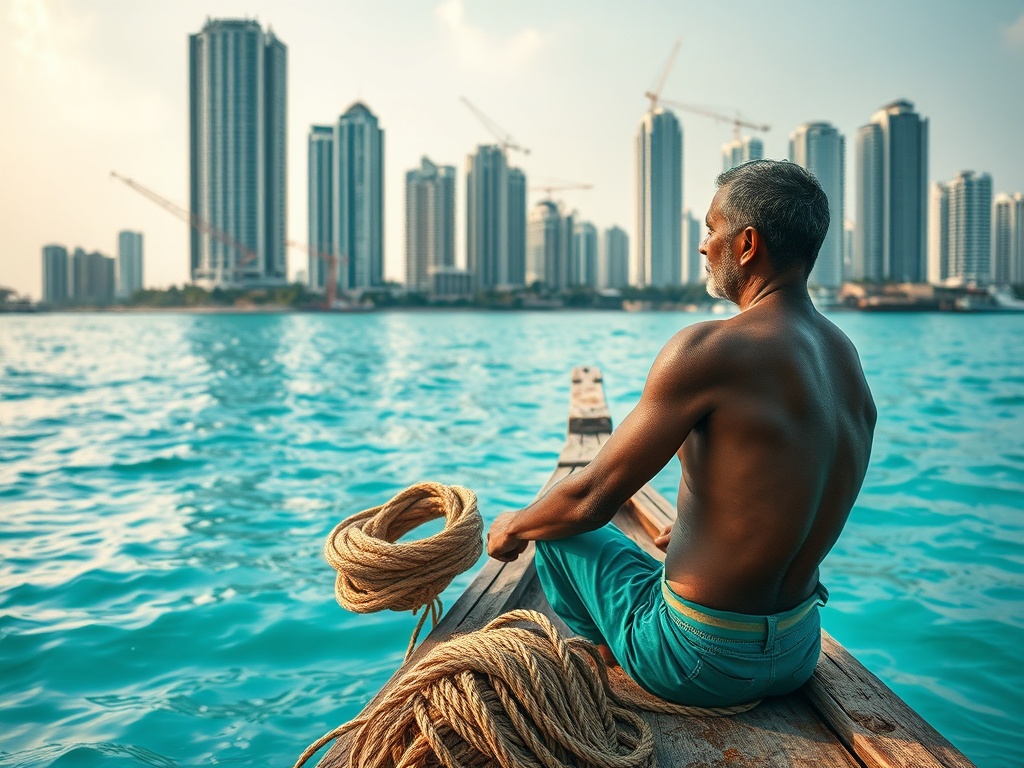
Between the Fishing Boat and Malé's Glass Towers
In the scattered archipelago of the Maldives, a quiet but persistent cultural tension simmers beneath the postcard-perfect surface. Recent public discourse reveals a nation grappling with its place in a globalized world, where Western cultural influence, political controversies, and questions of identity create a complex tapestry of resistance and reflection.
The conversation often centers on cultural preservation versus global integration. Critics of Western cultural imports describe them as "inhumane" and "cancerous," pointing to what they perceive as excessive individualism and commercialization. This perspective sees Western influence as something to be resisted rather than embraced, with some advocating for alternative cultural anchors that align more closely with local values and traditions.
Simultaneously, there's growing skepticism about the appropriation of foreign political dramas. When international scandals like the Epstein files dominate local headlines, many question the relevance. "Why is this American problem making headlines here?" voices ask, highlighting a weariness with importing foreign political controversies that may have little direct bearing on Maldivian daily life. This sentiment reflects a broader desire to focus on domestic issues that more immediately affect the island nation.
The entertainment industry hasn't escaped this cultural scrutiny either. Local performers who primarily cover Western songs rather than creating original content face accusations of tarnishing the country's cultural reputation. This criticism speaks to deeper anxieties about authenticity and cultural production in a nation navigating its creative identity.
Underlying these debates is the fundamental question of belonging. The repeated refrain "you are as brown as me" underscores a tension between global citizenship and local identity. As Maldivians consume global media and engage with international issues, some worry about losing touch with their distinct cultural heritage and physical reality.
This cultural moment reflects a nation at a crossroads—one that welcomes global engagement through tourism and international relations while simultaneously seeking to protect its unique identity. The conversations happening across social platforms and coffee shops suggest a population carefully considering what to embrace, what to adapt, and what to reject from the global cultural marketplace.
The challenge for the Maldives lies in navigating this complex terrain without falling into either extreme: complete isolation or uncritical assimilation. As the discourse continues, it reveals a society thoughtfully engaging with the difficult questions of modernity, tradition, and self-determination in an increasingly interconnected world.
— Source fragments: I don't want to be included in such an inhumane culture; it's not that christians are bad, it's just that western culture is; western culture has been individualized and capitalized; western culture is cancer; they are not happy that muslims are not assimilated into this evil culture; Why is this American problem making headlines here?; you are as brown as me