Between the Mosque and the Microscope
The evening call to prayer echoes across the crowded rooftops of Malé, a sound as constant as the sea that surrounds us. In this small island nation where Islam shapes our daily rhythms, conversations about faith and science unfold like the gentle lapping of waves—sometimes calm, sometimes stirring deeper currents.
We are a people anchored in divine truth, yet living in an age of cosmic theories and evolutionary debates. The Quran stands as our eternal compass, its verses guiding generations through changing seas. When discussions turn to the Big Bang or human origins, there's a quiet tension in the air—not of conflict, but of navigation. How do we reconcile celestial beginnings described in sacred texts with scientific explanations that speak of expanding universes?
Some voices insist that the Quran needs no validation from human theories, that truth stands independent of our limited understanding. Others seek connections, finding comfort when science appears to echo what faith has long declared. Between these positions lies a more nuanced reality—one where Maldivians go about their lives, fishing in waters that have witnessed centuries of devotion, watching stars that have guided both navigators and theologians.
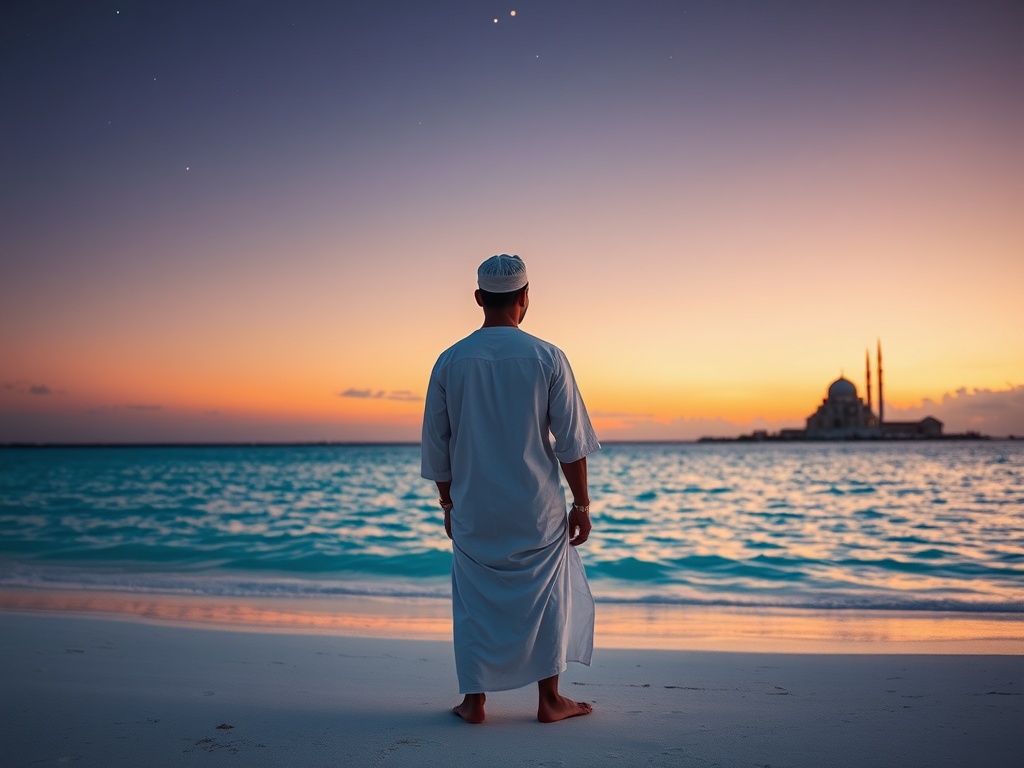
In the crowded tea shops where political debates rage about foreign relations and economic struggles, these deeper questions often surface quietly. A young student staring at the horizon wonders about the universe's beginnings while maintaining his five daily prayers. A mother teaching her children about Allah's creation contemplates how scientific discoveries might reflect, rather than challenge, divine wisdom.
The beauty of our situation lies in this very tension—the space between absolute faith and human curiosity. We don't need to force agreement between scripture and science, nor do we need to declare them enemies. Like the coral reefs that protect our islands while allowing the ocean's currents to flow through, our faith provides structure without closing us off to the wonders of creation.
As the sun sets over the Indian Ocean, turning the water to gold, one realizes that some questions aren't meant to be resolved through debate alone. They're lived in the rhythm of prayer, in the respect for knowledge, in the humility of recognizing that whether we're contemplating the birth of stars or the meaning of verses, we're all seeking understanding in our own way, guided by the same light that has illuminated these islands for generations.
— Source fragments: Fragments about Quran as absolute standard, discussions of Big Bang theory compatibility, tension between religious certainty and scientific validation, and nuanced approaches to these questions