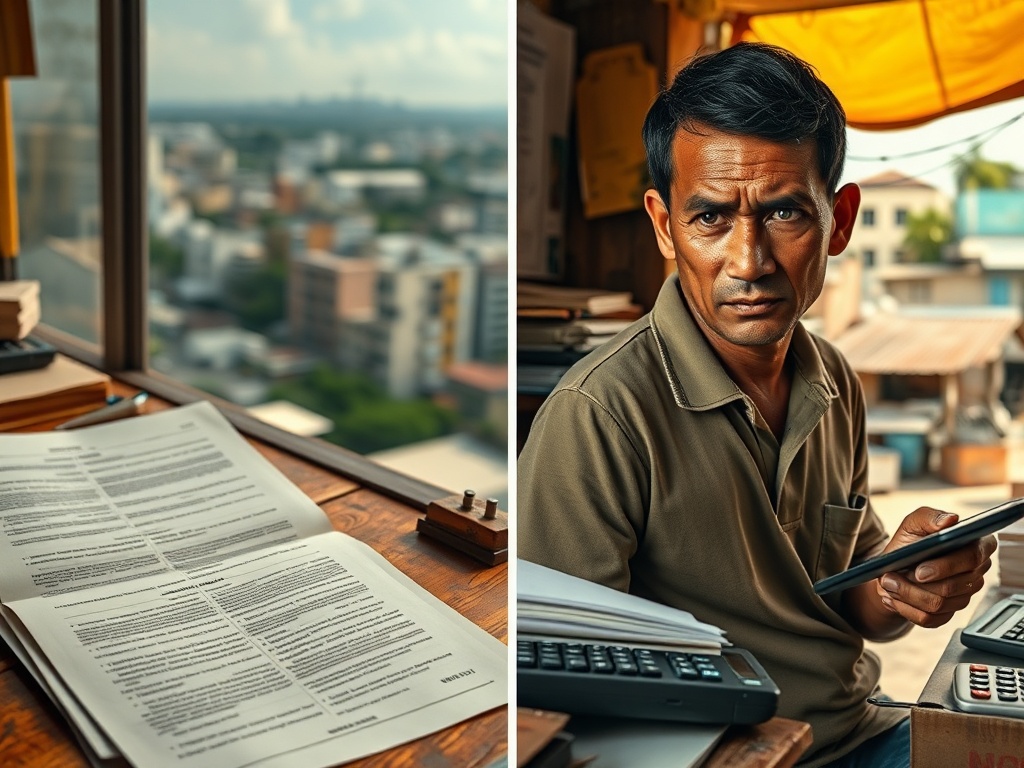
Billions Awarded Without Bids While Shopkeepers Count Their Rufiyaa
Across the Maldives, a troubling pattern has emerged in public procurement that threatens both economic stability and public trust. Major infrastructure projects worth billions of rufiyaa are being awarded without transparent competitive bidding, raising serious questions about accountability in government spending.
This opacity in contract allocation occurs alongside a growing tax burden on citizens and businesses. The combination creates a perfect storm: public funds potentially being mismanaged through questionable procurement practices while ordinary Maldivians face increasing financial pressure through various fees and levies. The system appears to be squeezing from both ends—questionable outflows and increased inflows—leaving little room for sustainable economic development.
The impact on small businesses has been particularly severe. While large contracts flow through opaque channels, local entrepreneurs face mounting operational costs and bureaucratic hurdles. Many small business owners report feeling abandoned by a system that seems to prioritize large, politically connected projects over the grassroots economic activity that employs most Maldivians.
This situation reflects broader governance challenges in the Maldives, where procurement transparency has long been a concern. Previous high-profile corruption cases have demonstrated how lack of oversight can lead to significant financial losses for the nation. The current pattern suggests that despite public commitments to reform, the fundamental issues persist.
The consequences extend beyond immediate financial concerns. When public trust in government spending erodes, it undermines the social contract between citizens and the state. People become less willing to pay taxes when they doubt the funds will be used properly, creating a vicious cycle that further strains public finances.
For the Maldives to achieve sustainable development, there must be a renewed commitment to transparent procurement mechanisms that ensure public funds serve public interests. Independent oversight, competitive bidding, and clear accountability measures are not just procedural formalities—they are essential safeguards for a nation's economic health and democratic integrity.
As the country navigates complex economic challenges including high living costs and foreign currency shortages, restoring confidence in how public money is spent becomes increasingly urgent. The alternative—continued opacity and questionable allocations—risks deepening economic inequalities and undermining the nation's development trajectory.
— Source fragments: Projects awarded without proper tender process; Concerns about transparent mechanisms; Perception of public fund mismanagement; Tax burden on public; Impact on small businesses