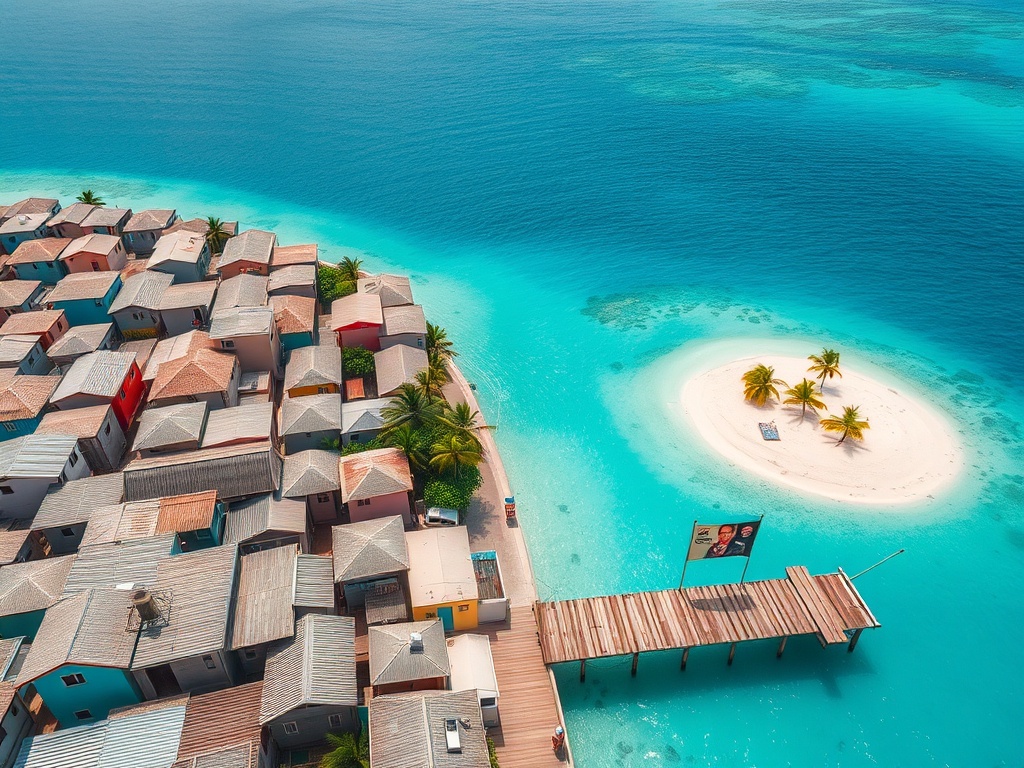
Binveriya Scheme Exposes Malé's Concrete Versus Atoll Sand
In the intricate tapestry of Maldivian politics, few issues cut as deep or reveal as much about the nation's social fractures as housing policy. The recent Binveriya scheme has emerged as a lightning rod for public discontent, exposing what many perceive as systemic discrimination between the capital and the outer atolls.
The policy's implementation has triggered a political reckoning. Opposition voices argue that the scheme represents more than just poor planning—it embodies a fundamental failure to address the archipelago's core housing crisis. While intended to provide land solutions, critics contend it primarily benefited Malé residents, reigniting longstanding tensions between the capital and Raajje tharahuge, or atoll communities.
This isn't merely bureaucratic mismanagement. The housing debate has become symbolic of broader governance questions: who benefits from development, whose needs are prioritized, and whether political parties remain responsive to the people they serve. The public outrage surrounding Binveriya suggests many Maldivians see it as the latest manifestation of a deeper pattern—policies that appear designed to consolidate political power rather than solve pressing social problems.
Political analysts observe that the ruling party's approach to housing reflects a calculation about electoral mathematics. By concentrating benefits in densely populated Malé, parties potentially secure votes in the nation's political center of gravity. Yet this strategy carries significant risks, as evidenced by the backlash from atoll communities who feel increasingly marginalized in national development discussions.
Meanwhile, the main opposition MDP faces its own credibility test. Having championed the Jazeera Raajje manifesto with promises to bridge the Malé-atoll divide, the party now confronts accusations of abandoning those principles. The perception that MDP embraced discriminatory housing policies while in government has damaged its standing among atoll voters, raising questions about whether any major party truly represents Raajje tharahuge interests.
The political consequences are already materializing. The last presidential election demonstrated that housing discrimination could be an electoral deal-breaker, and parties now navigate this issue with heightened awareness of its explosive potential. Yet beyond electoral calculus lies a more fundamental concern: whether the political class has the vision or will to address housing as a national challenge rather than a patronage opportunity.
As sea levels rise and land becomes increasingly precious, the stakes extend beyond political fortunes. The housing crisis touches on questions of intergenerational justice, environmental vulnerability, and national identity. How Maldivians resolve these tensions will shape not just who governs, but what kind of society emerges in the coming decades—one united by shared challenges or divided by unequal access to the most basic human need: a place to call home.
— Source fragments: Discriminative housing policy was one of the main reasons Ibu lost the last election; MDP is still peddling this failed policy; promised to address discrimination between Malé and RT through Jazeera Raajje manifesto; effects of this policy will be felt till Maldives goes under the waves; MDP centralized their housing voice for Male' not for housing problem of Maldives; all parties are scared of losing votes; MDP's platform riddled with double standards