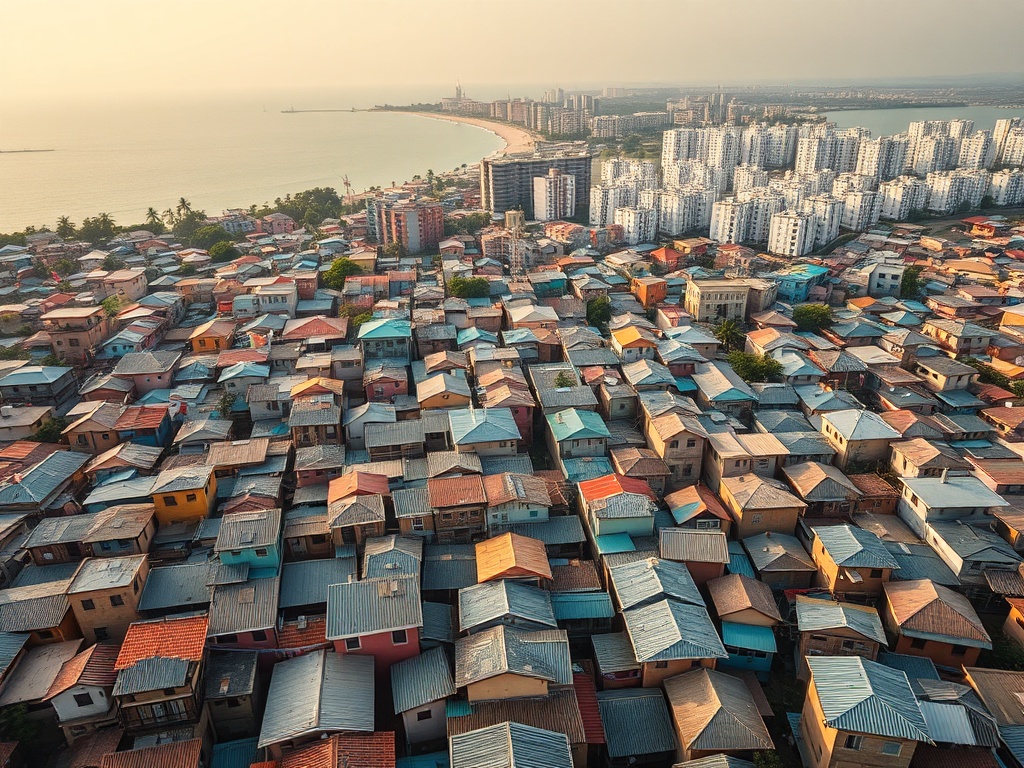
Binveriya Scheme's Empty Promises Divide Crowded Maldivian Streets
In the crowded islands of the Maldives, where housing scarcity has become a defining feature of daily life, government initiatives meant to provide relief are increasingly viewed through a political lens. The Binveriya housing scheme, once touted as a solution to the nation's accommodation crisis, now stands accused of deepening societal fractures rather than healing them.
The criticism cuts to the heart of a broader concern: that housing policy has become another tool in the political arsenal, designed to reward loyalty and punish opposition rather than serve the public good. This approach, critics argue, creates a dangerous precedent where basic human needs become bargaining chips in the political arena.
The recent political climate has seen accusations fly across party lines, with the current administration facing claims of disrespect and divisive tactics. The opposition MDP, while having had its own opportunity to implement meaningful reform, stands accused of similar failures during its tenure. This cycle of recrimination suggests a political culture where short-term electoral gains consistently trump long-term national interest.
What makes this particularly troubling in the Maldivian context is the acute nature of the housing crisis. In Malé, where space is at a premium and living conditions grow increasingly cramped, the fair distribution of housing resources represents more than just policy—it represents fundamental questions of justice and equality. When citizens perceive that access to housing depends on political affiliation rather than genuine need, the social contract begins to fray.
The danger lies not just in the immediate inequality created by politicized housing schemes, but in the lasting divisions they sow. When neighbors view each other through the lens of who received government benefits and who didn't, community bonds weaken. When political loyalty becomes the currency for basic necessities, the very foundation of democratic participation becomes corrupted.
As the Maldives continues to navigate complex economic challenges, including high living costs and foreign currency shortages, the need for unifying leadership has never been greater. Yet the current political discourse suggests a different trajectory—one where division becomes the default strategy and national unity remains an elusive ideal.
The question facing Maldivians is whether their political leaders can break this cycle, transforming housing policy from a weapon of division into a tool of national cohesion. The answer may determine not just who gets housing, but what kind of society the Maldives becomes.
— Source fragments: Daily reminder that Thaaru is not progress; Policies create division, inequality and therefore leads to fighting and hatred; MDP had the opportunity to do the right thing but they chose to spread division and inequality; Binveriya scheme is the prime example