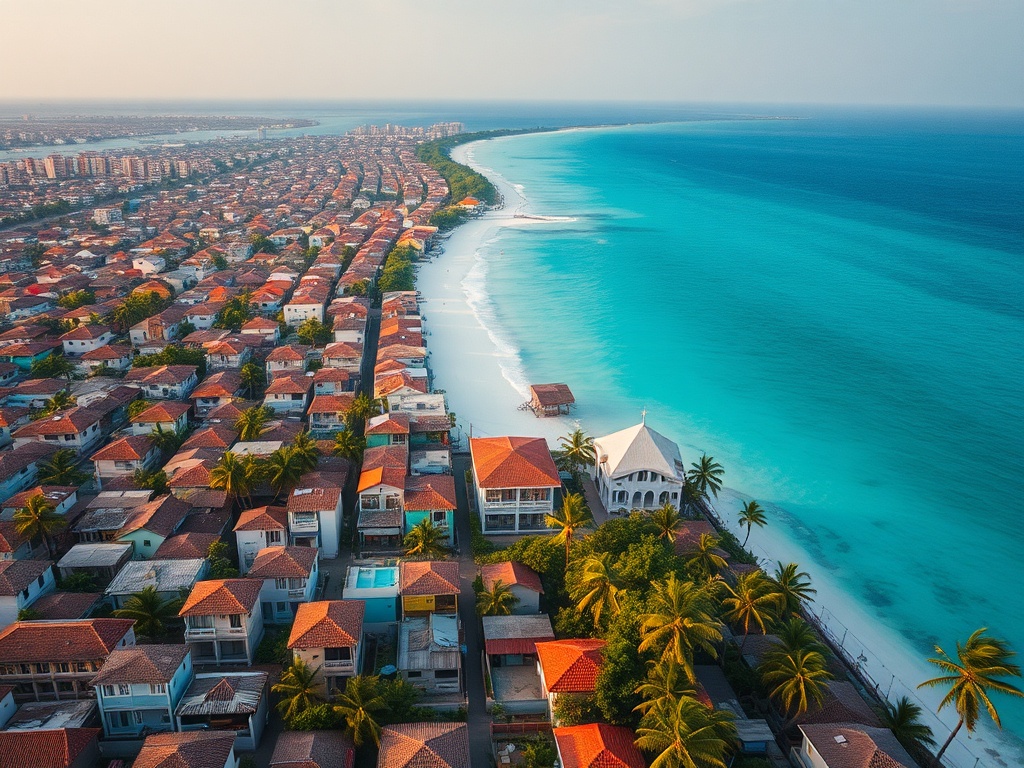
Binveriya: When Housing Policy Became Political War
In the crowded political landscape of Maldives, few issues have cut as deeply or revealed as much about the nation's political divides as the Binveriya housing scheme. What began as a policy initiative has transformed into a symbol of something far more profound: the enduring tension between the capital and the outer atolls, and the unfulfilled promises of political parties that claim to represent all Maldivians.
The scheme, implemented during the previous administration, was intended to address the chronic housing shortage that plagues the archipelago nation. Instead, it became a lightning rod for accusations of discrimination, with critics arguing it disproportionately favored Malé residents while neglecting the housing needs of those from the outer islands. The policy generated such public outrage that many political observers now see it as a decisive factor in the last presidential election.
This controversy exposes a fundamental challenge in Maldivian politics: the difficulty of crafting policies that bridge the geographic and psychological divide between the congested capital and the scattered atolls. The perception of 'Malé supremacy'—whether real or imagined—continues to shape political discourse and voter behavior. When political parties are seen as prioritizing the capital at the expense of the islands, they risk alienating a significant portion of the electorate.
The housing debate also reveals the limitations of political reform within established parties. Despite promises of change and listening to the people, the same patterns of centralized decision-making and political calculation persist. The gap between campaign rhetoric and governance reality has left many citizens disillusioned, questioning whether any party can truly break from the past.
What makes this moment particularly telling is how the housing controversy has overshadowed other policy achievements. Even genuine progress on other fronts can be severely undermined when a single issue taps into deeper anxieties about fairness and representation. The effects of such policies linger long after elections are decided, shaping public trust in institutions and the political process itself.
As Maldives faces existential threats from climate change and economic pressures, the housing debate serves as a cautionary tale. It demonstrates that technical solutions, however well-intentioned, will fail if they don't account for the complex social fabric of the nation. The challenge for any political movement seeking to govern effectively is to recognize that in a nation of scattered islands, policies must be built on the foundation of inclusion rather than political calculation.
The true test of political leadership in Maldives will be whether any party can move beyond the patterns of the past and genuinely address the needs of all Maldivians, regardless of which island they call home.
— Source fragments: Discriminative housing policy was one of the main reasons Ibu lost the last election; MDP centralized their housing voice for Male'. Not for the housing problem of the Maldives; The effects of this policy will be felt till Maldives goes under the waves; MDP's platform is riddled with double standards; All parties are scared of losing votes