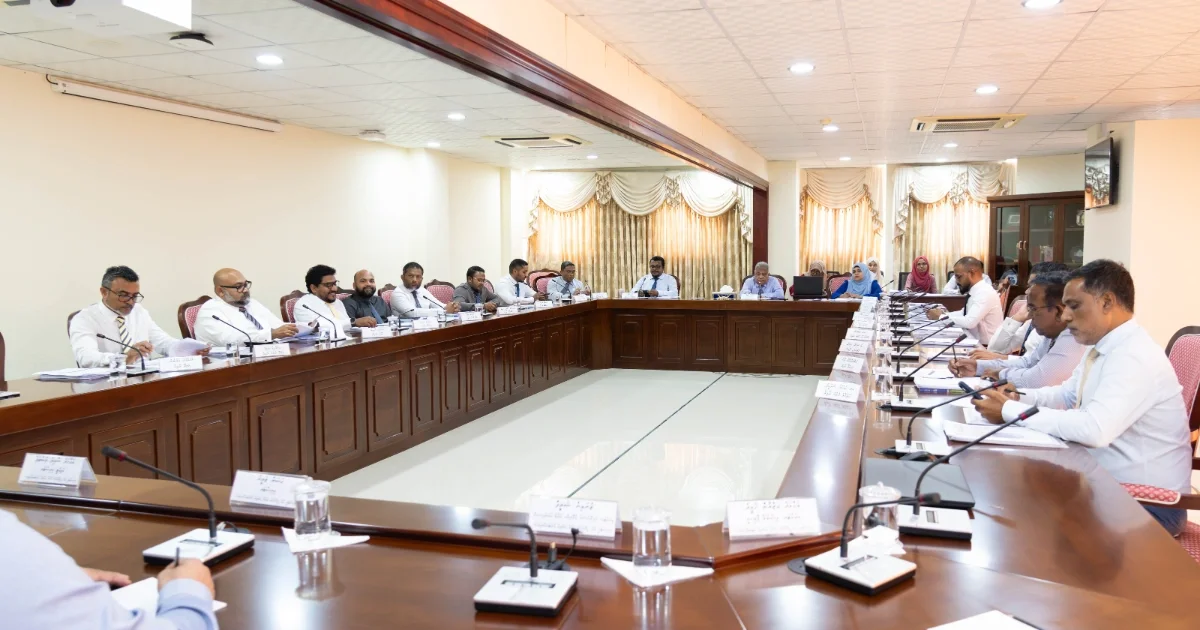
Budget Committee Passes MVR 59.7 Billion Budget Unchanged, Sends to Majlis Floor
The Budget Committee has passed the government's proposed MVR 59.7 billion state budget for the coming year without any changes, sending it to the floor of the People's Majlis for approval.
The decision was made at today's meeting of the Budget Committee after determining that no reductions or increases should be brought to the budgets of state institutions and independent institutions. With this decision, the amounts submitted by the Finance Ministry have been maintained, without allowing room for the increases requested by offices. Committee members passed by majority to compile the budget report and send it to the floor of the Majlis for a decision on the matter.
According to the decision passed by the committee, the recurrent expenses and capital expenses of state offices will be carried out in accordance with the framework compiled by the Finance Ministry. In addition, no changes have been brought to the budget of projects proposed to be carried out under the Public Sector Investment Programme (PSIP). Instead of adding new projects, the list sent by the government has been passed in full.
The MVR 59.7 billion budget submitted for the coming year is MVR 4.5 billion lower compared with this year's MVR 64.2 billion. However, spending on governance and development matters has increased by MVR 3.3 billion, rising to MVR 52.6 billion. While total revenue in the budget is estimated at MVR 43.2 billion, the budget deficit has grown to MVR 9.4 billion.
When the committee decided to pass the budget as submitted by the government, the Maldives Monetary Authority (MMA) and the Auditor General's Office had stated that there are major fiscal risks in this budget. In particular, those parties noted spending on operations reaching 101 percent of revenue received without grants, and the absence of a clear plan to recover funds the state has not received. However, in response to these concerns, no amendment has been brought at the committee stage to reduce the budget's expenditures.