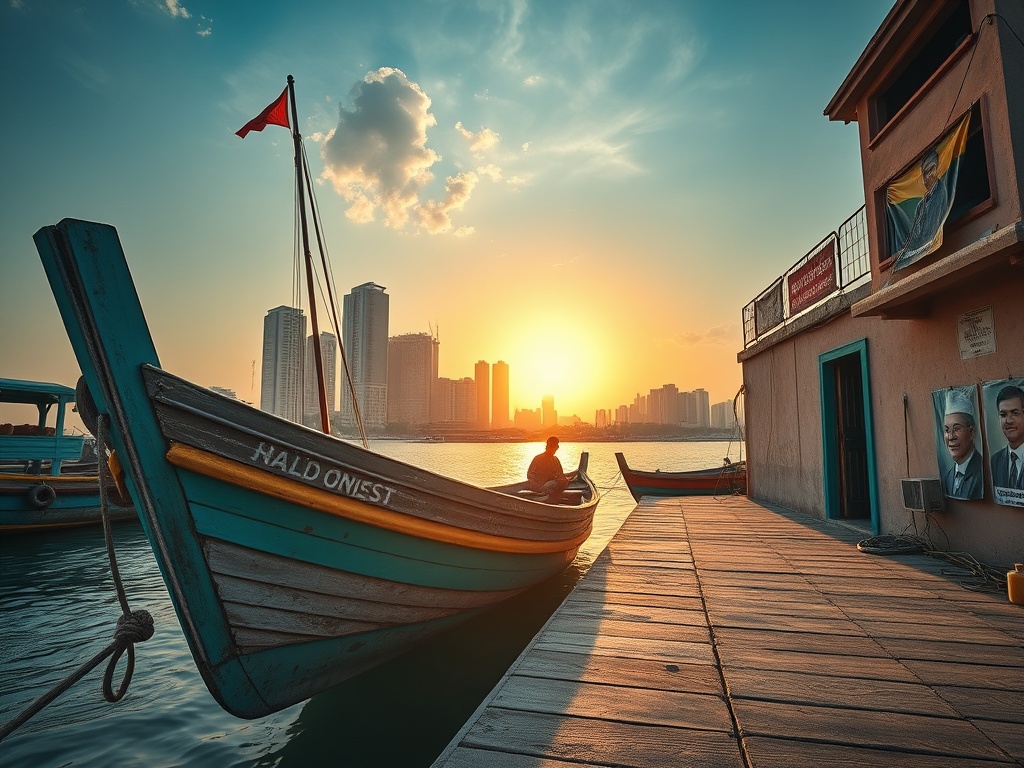
Campaign Posters Peeling Beside the Same Old Fishing Boat
There is a certain irony that washes over you when you watch the political tides shift from one administration to another, each wave promising to cleanse the shores of corruption yet leaving behind the same debris of broken promises. The conversations echo across the atolls—in crowded coffee shops in Malé, on the docks of remote islands, in the hushed tones of family gatherings. People speak of presidents with unlimited power to pardon tax evaders, of independent commissions stacked with loyalists, of a justice system that bends with the political winds.
You see it in the way housing projects become political currency, flats meant for struggling families instead becoming investment properties for those already living abroad. You feel it in the daily struggle—the rising cost of living that makes a simple bag of rice feel like a luxury, the medicine shortages that force families to choose between treatment and meals, the youth who drift toward substances because the horizon offers no jobs, no future.
There's a particular weariness that comes from watching the same patterns repeat. One party rises speaking of justice, only to become what it once opposed. Another campaigns on reform while appointing relatives to ambassadorial posts. The establishment, whether MDP or PNC, seems to share the same playbook—consolidate power, control the narrative, block dissent. Male' supremacists, as some call them, will silence you when you challenge the status quo.
Yet beneath this cynicism runs an undercurrent of something more fragile—hope. The hope that reform is still possible, that the composition of judicial committees can be changed, that powers can be limited, that a system can be built where land laws don't discriminate and governance serves the people rather than political interests. This hope persists like the morning sun rising over the Indian Ocean, persistent and undeniable, even when clouds gather.
We stand at a crossroads where the mistakes of the past threaten to become the blueprint for the future. The question isn't just about who leads, but about what kind of nation we want to become—one where corruption is the currency of power, or one where the voices of the people finally find their way through the corridors of power and into the heart of governance.
— Source fragments: Major reason for excessive corruption is the unlimited power vested in the President. Powers like pardoning tax evaders & criminals, & nominating members to independent commissions, must be removed. Reforming the JSC composition is also key to limiting corruption.; This is the reason why we need a two-tire system like in the US. We will need to keep a parliament member per atoll for the upper house. Otherwise this can't be fixed Discrimination against land laws between states is unheard of in developed nations.; Any Male' supremacist will block you when you go against the establishment. MDP or PNC; If re-elected, he will repeat these same mistakes for sure; So true, MDP is all abt corruption and laadheeny now. At the start it was more against injustice.