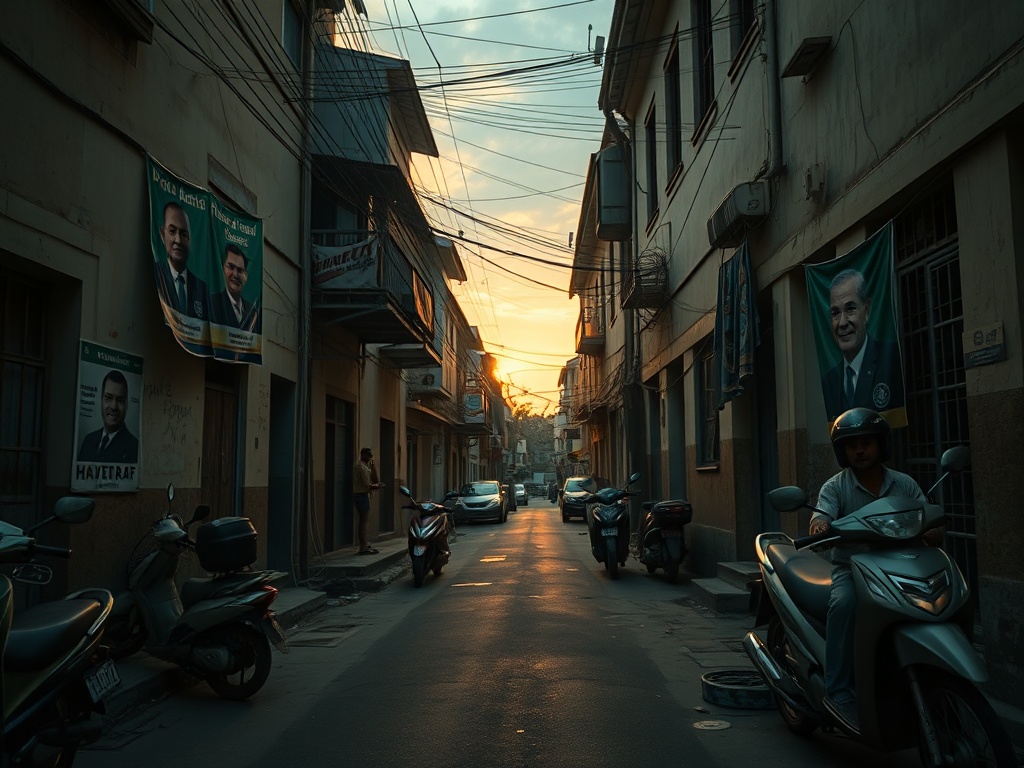
Campaign Posters Peeling on Malé's Concrete Walls
In the Maldivian political landscape, a familiar pattern repeats itself: governments rise on promises of reform only to be accused of perpetuating the very systems they vowed to dismantle. The public conversation has shifted from hopeful anticipation to weary resignation, with corruption emerging as the central thread connecting administrations across party lines.
The mechanism appears straightforward to many observers: state-owned enterprises become conduits for transferring public wealth into private hands, while land allocations in Malé—the nation's most precious urban resource—operate through opaque systems that benefit the connected rather than serving public interest. What begins as campaign rhetoric about justice and accountability transforms, once in power, into what critics describe as daylight redistribution to political allies and family networks.
This cycle raises fundamental questions about national leadership. Are honorable leaders simply absent from the political arena, or does the system itself corrupt those who enter it? The debate has moved beyond individual scandals to confront systemic failures that transcend any single administration. When compensation schemes and contract awards consistently favor political insiders, public trust erodes, replaced by the grim recognition that participation in the political process yields minimal returns for ordinary citizens.
Meanwhile, pressing national issues—soaring living costs, housing shortages, healthcare inadequacies—persist unresolved. The very resources needed to address these challenges seem diverted toward maintaining political patronage networks. The result is a growing disconnect between government priorities and public needs, with many Maldivians questioning whether any administration can break this established pattern.
After seventeen years of democratic experimentation, the political conversation has matured from naive hope to clear-eyed assessment. The central question is no longer which party will save the nation, but whether the system itself can be reformed to serve rather than exploit the people it claims to represent. The answer will determine not just political futures but the very fabric of Maldivian society.
— Source fragments: Government resource distribution, opaque land allocation systems, corruption as systemic problem, political promises versus reality, questioning leadership quality