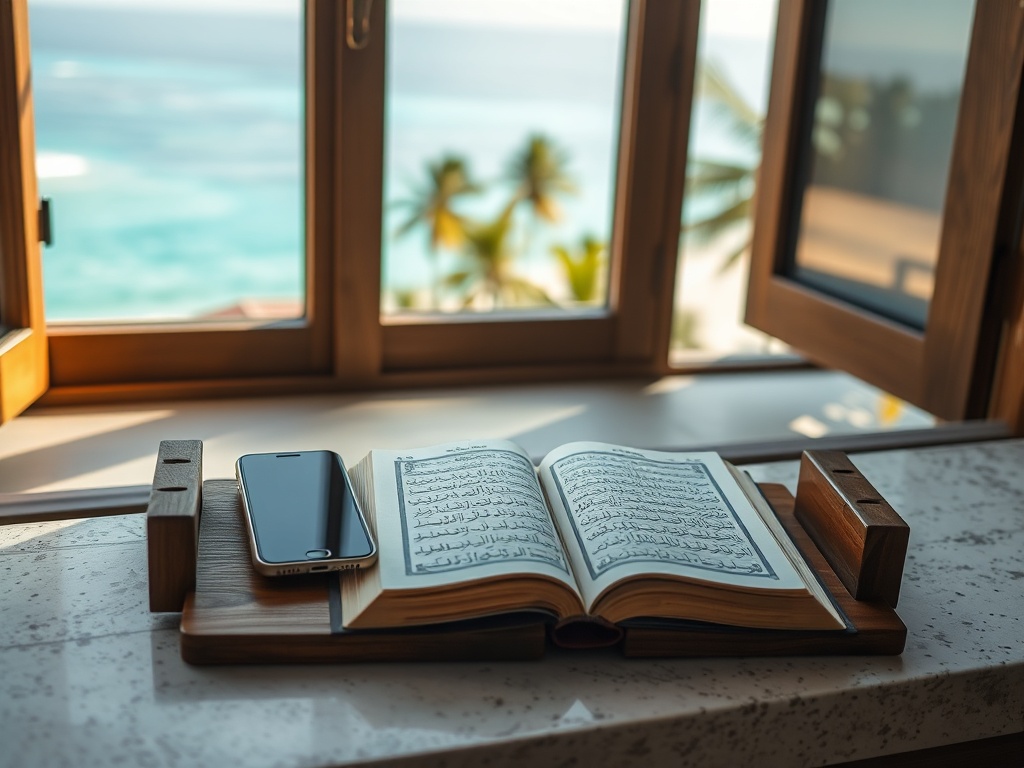
Can an Algorithm Understand Our Morning Quran Recitation?
In a world increasingly mediated by technology, a fundamental question emerges from the Maldivian discourse: Can artificial intelligence ever be trusted with matters of divine guidance? The conversation reveals deep skepticism about whether algorithms created by non-Muslim developers can properly handle Islamic knowledge, with critics pointing to potential alterations or omissions that could distort religious teachings.
The debate touches on core aspects of religious practice, including the obligation for Muslim women to cover themselves beyond their faces and hands. This isn't presented as a matter of personal choice but as divine commandment—a position that highlights the tension between modern interpretations and traditional understandings of Islamic law.
This technological skepticism extends to broader questions about religious authority. The discussion suggests that Islamic knowledge must come from qualified scholars rather than AI systems, drawing parallels to concerns about how similar technologies have handled other religious texts. The underlying fear is that without proper scholarly oversight, AI could provide answers that no traditional Islamic authority would endorse.
Meanwhile, the conversation reflects on the Maldives' unique position as a nation where Islamic law forms the foundation of governance. While some international observers question this religious exclusivity in citizenship policies, the local discourse remains focused on preserving religious authenticity in an increasingly digital age.
The intersection of faith and technology presents particular challenges for Muslim communities worldwide, but in the Maldives—where Islamic identity is intertwined with national identity—the stakes feel particularly high. As artificial intelligence becomes more integrated into daily life, the community grapples with how to engage with these tools while maintaining religious integrity.
What emerges is not just a debate about technology, but about the very nature of religious knowledge and authority in the 21st century. The conversation suggests that for many Maldivians, some questions are simply too important to delegate to algorithms, requiring instead the nuanced understanding that comes from traditional Islamic scholarship and community consensus.
— Source fragments: Revealing awra is a sin, do you agree? Muslim women are obligated to cover without disagreement other than their faces and hands. Why is it a choice. It is not. What I know is little. But I do know that seeking knowledge from an AI made by a kafir is just foolishness. Islamic knowledge can never be taken from AI, it can't be trusted. Developers of such Islamic AI aren't scholars dho? Just like what happened to the Bible the answers such things give might be altered and maybe programmed to give answers with some parts being altered or omitted.