Can Housing for All Unite a Divided Maldivian Electorate?
In the intricate calculus of Maldivian politics, where party loyalties often fracture along personality lines rather than policy platforms, a new political conversation is taking shape. Across social media platforms and casual conversations, supporters of Mohamed Azim are testing a proposition: that the most promising candidate in the upcoming MDP primary must be measured not just by political pedigree, but by commitment to fundamental rights.
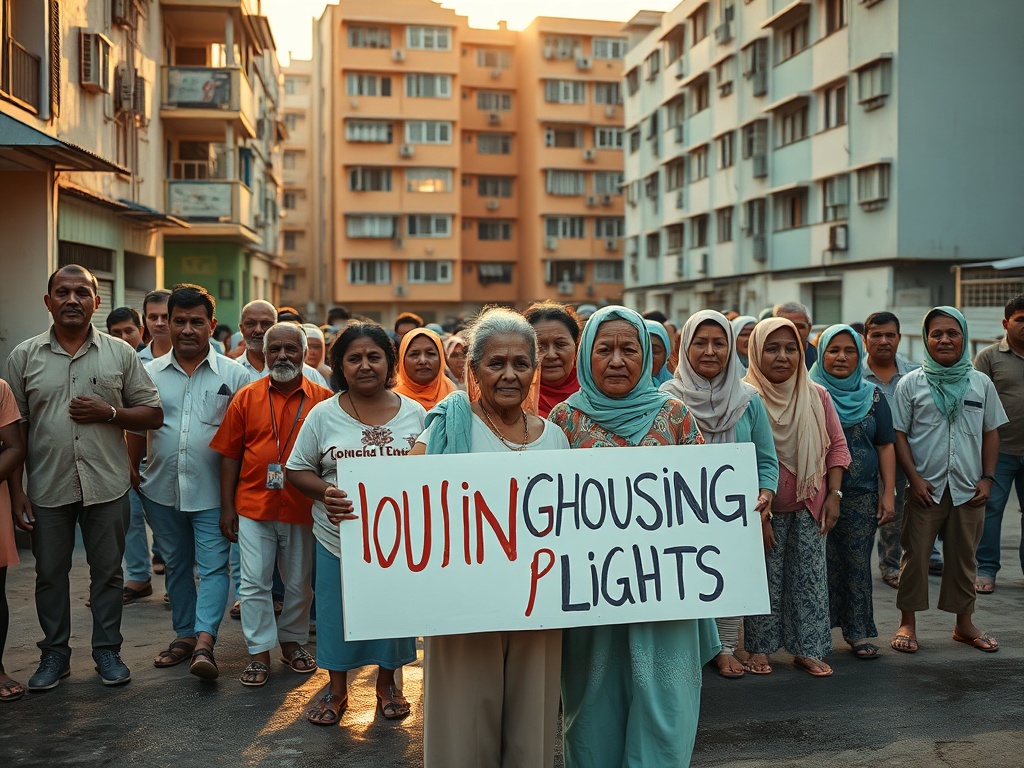
The emerging consensus centers on two non-negotiable pillars: housing for all without discrimination, and residency rights for every Maldivian citizen. In a nation where the capital Malé represents both opportunity and congestion, where government housing projects have become political bargaining chips, these issues strike at the core of daily struggles. The current reality sees subsidized flats frequently subleased for profit by absentee leaseholders, while genuine residents face endless waiting lists and overcrowded conditions.
What makes this political moment particularly significant is its cross-generational appeal. Younger voters, who have traditionally shown apathy toward political processes, are expressing renewed interest in a candidate who addresses these foundational concerns. The recognition that "so few Gen Z are running for such posts" underscores the hunger for representation that speaks to material conditions rather than political maneuvering.
The potential Azim candidacy represents more than just another factional contender in the ongoing struggle between Solih and Nasheed loyalists. It suggests the emergence of a platform-based politics that could transcend the usual personality-driven alignments. Supporters argue that this approach could attract new members to MDP—voters who prioritize concrete policy commitments over historical alliances.
This political development occurs against a backdrop of significant socioeconomic challenges: a high cost of living driven by monetary policy, foreign currency shortages, and an economy heavily dependent on tourism revenues that often bypass local communities. In this context, the focus on housing and residency rights represents a pragmatic response to systemic failures.
The question now facing MDP members isn't merely who can win the primary, but what kind of politics they want to champion. The conversation shifting toward housing justice and universal residency rights suggests that for many Maldivians, the measure of a worthy candidate has fundamentally changed. It's no longer about political lineage or rhetorical flair, but about addressing the basic needs that determine dignity and opportunity in an increasingly stratified society.
As one supporter succinctly put it, the candidate's policy on this fundamental issue will determine whether they're truly worthy of support. In a political landscape often characterized by vague promises, this specificity represents both a challenge and an opportunity—the chance to build a politics that starts with what people actually need to survive and thrive in their own country.
— Source fragments: I believe is the most potential candidate to win the MDP presidential primary. But his policy on this fundamental issue will decide if he's truly a worthy candidate to back. Housing for all without discrimination. Residency rights for all Maldivians, without exception.; Wouldn't it be something to see take on both Solih and Nasheed factions for the 2028 ticket? I actually think he's got a real shot.; You hear that? You could pull in a lot of new members to MDP who'd vote for you.; Might be a good initiative. Since so less GenZ are running for such posts.; I am a member of MDP. I will give my vote to Azim; I am a member of MDP and from Male', my vote is for Azim