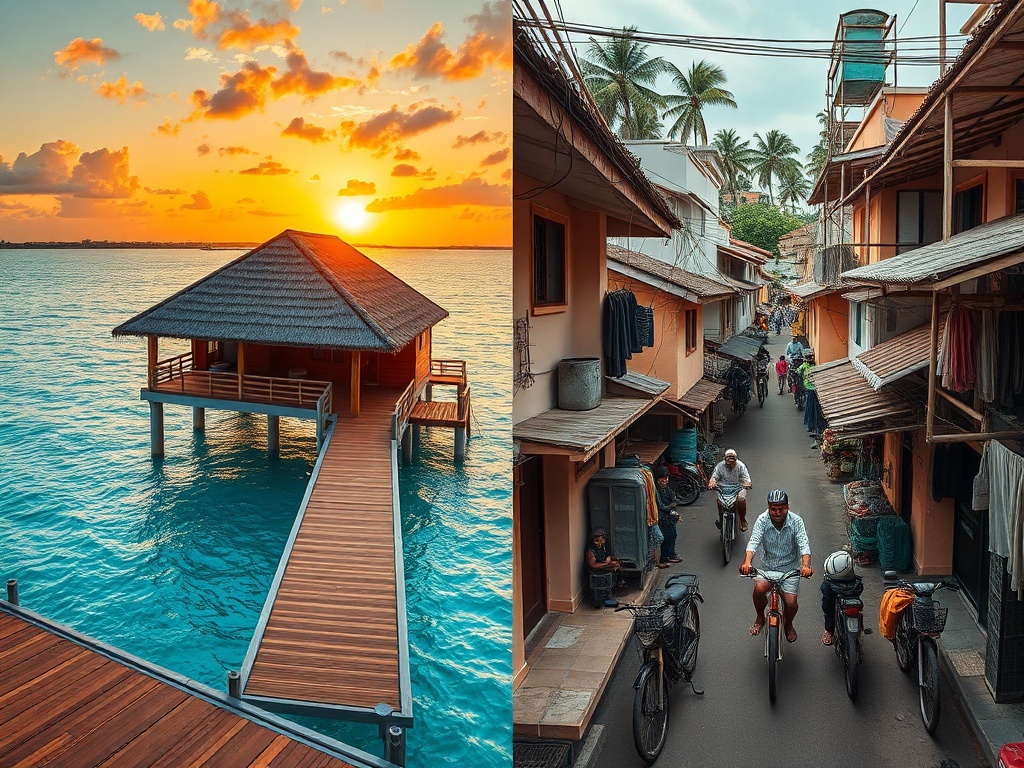
Can Maldives Afford to Build Beyond the Resort Villa?
The debate unfolding across Maldivian social circles and policy discussions strikes at the heart of national identity: can an archipelago nation built on tourism risk diversifying its economy without undermining its primary source of revenue? This is not merely an academic exercise—it's a pressing dilemma for a population of 400,000 relying on a workforce of roughly 100,000 to sustain a $5 billion economy.
The prevailing sentiment suggests tourism should remain the safety net while calculated risks are taken elsewhere. Critics argue against dismantling the industry that currently feeds the nation, while simultaneously questioning whether the current model truly serves Maldivian interests. The conversation has evolved beyond simple economic theory into a deeper examination of what constitutes genuine national prosperity.
Parallel to this runs a heated discussion about wealth distribution and housing justice. The controversy surrounding Hulhumale' land allocation reveals underlying anxieties about economic inequality. When Male' residents receive land only to rent it out while living abroad—particularly in places like Singapore—it creates visible disparities that fuel public discontent. This pattern highlights how asset distribution, when disconnected from residency requirements, can exacerbate perceptions of unfair advantage rather than fostering broad-based prosperity.
The housing dilemma intersects with broader economic concerns about the high cost of living that undermines Maldives' relative wealth advantage. While the nation lacks the slums and widespread homelessness seen in comparable developing countries, this achievement is tempered by financial pressures that prevent many from fully enjoying their standard of living.
Policy discussions now center on finding the precise balance in sectoral investment. The government faces the challenge of determining optimal spending ratios across tourism enhancement, potential new industries, and social welfare programs. This balancing act occurs against a backdrop where previous economic development often emerged from individual initiative and foreign investment, raising questions about the state's role in steering future growth.
As Maldives stands at this economic crossroads, the fundamental question remains: how does a nation transform its economy while preserving what already works? The solution likely lies not in destroying tourism but in elevating it—making policies more visitor-friendly while strategically investing in diversification. The path forward requires recognizing that wealth must be created, not just distributed, and that economic policies must serve the Maldivian people first, ensuring that prosperity reaches beyond resort owners and absentee landlords to the workforce that sustains the nation.
— Source fragments: Economic diversification vs tourism preservation debate; Housing and land allocation controversies in Hulhumale'; Workforce and economic distribution concerns; Cost of living pressures despite relative national wealth; Questions about optimal government investment ratios