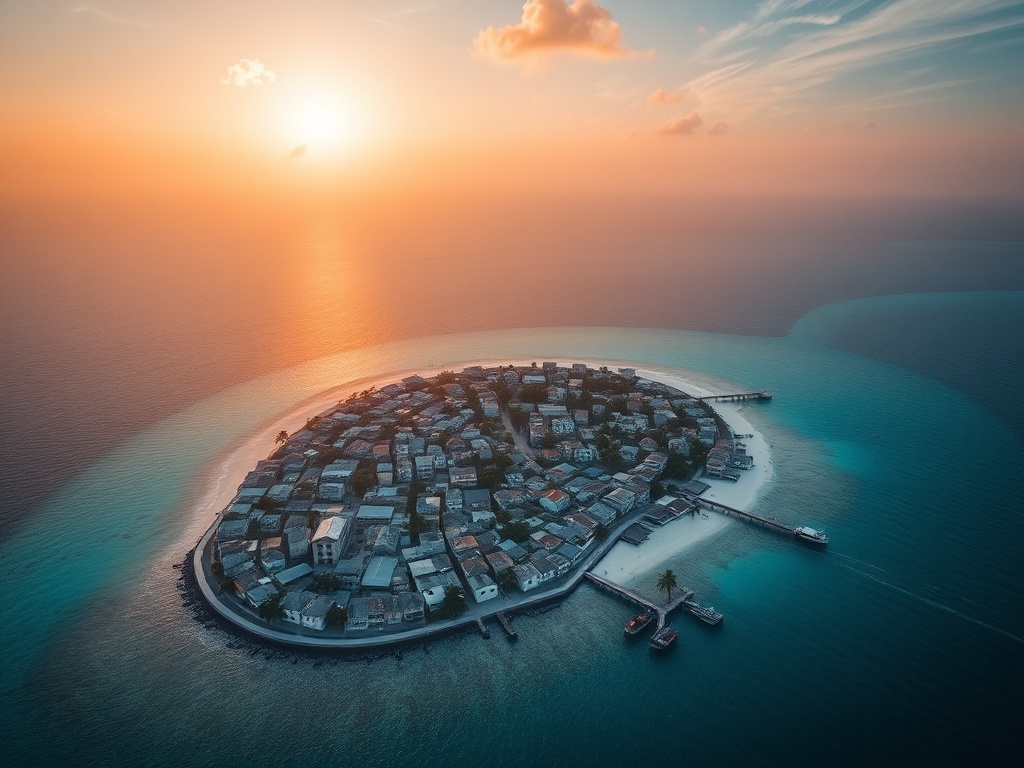
Can Malé's Tight Streets Hold Everyone Who Belongs There?
The debate over housing allocation in the Maldives reveals a nation wrestling with fundamental questions of fairness and resource management. At its core lies a tension between the principle of equal opportunity and the reality of limited land across the scattered islands.
The current system, as exemplified by the Land and Housing Act, theoretically allows every Maldivian citizen to apply for land regardless of their island of origin. This approach has seen residents from Laamu, Gaafu, and even Malé receiving plots in Addu City—a practice that some accept as part of national integration, while others view as exacerbating local housing pressures.
Yet beneath this surface-level acceptance simmers a deeper concern about how we define need in a country where land is our most precious and finite resource. The conversation has evolved beyond simple access to questioning what constitutes fair distribution. When one individual can accumulate multiple properties while others struggle to secure a single family home, the system's equity comes into question.
This has led to more nuanced policy discussions focusing on disincentivizing property hoarding through taxation mechanisms. The argument gaining traction suggests that while families naturally maintain their primary residences, additional properties should carry tax burdens that reflect the scarcity of land. This approach aims to balance individual property rights with collective resource stewardship.
Simultaneously, there's growing consensus that social housing allocation should transcend occupational status. The emerging view favors need-based assessment systems that prioritize applicants based on comprehensive evaluations of their living situations, financial circumstances, and genuine housing requirements. This represents a shift from categorical eligibility toward individualized need assessment.
The housing conversation in the Maldives is ultimately about more than bricks and mortar—it's about how we value community membership, intergenerational equity, and sustainable development in an island nation where every square meter matters. As we move forward, the challenge will be crafting policies that honor both the letter of equal opportunity and the spirit of equitable distribution, ensuring that Maldivians across all atolls can access the fundamental security of a home.
— Source fragments: Should have equal opportunity to apply. Period. However more points could be awarded for those who lived longer; The land and housing act allows for all Maldivian to apply for land; In general a family stays in one house. its the family home; A better policy would be to tax those extra houses to disincentivize this because land is scarce; social housing should not be given based on what your occupation is. Let people register their needs, assess their backgrounds and situation, prioritize those who really truly need it