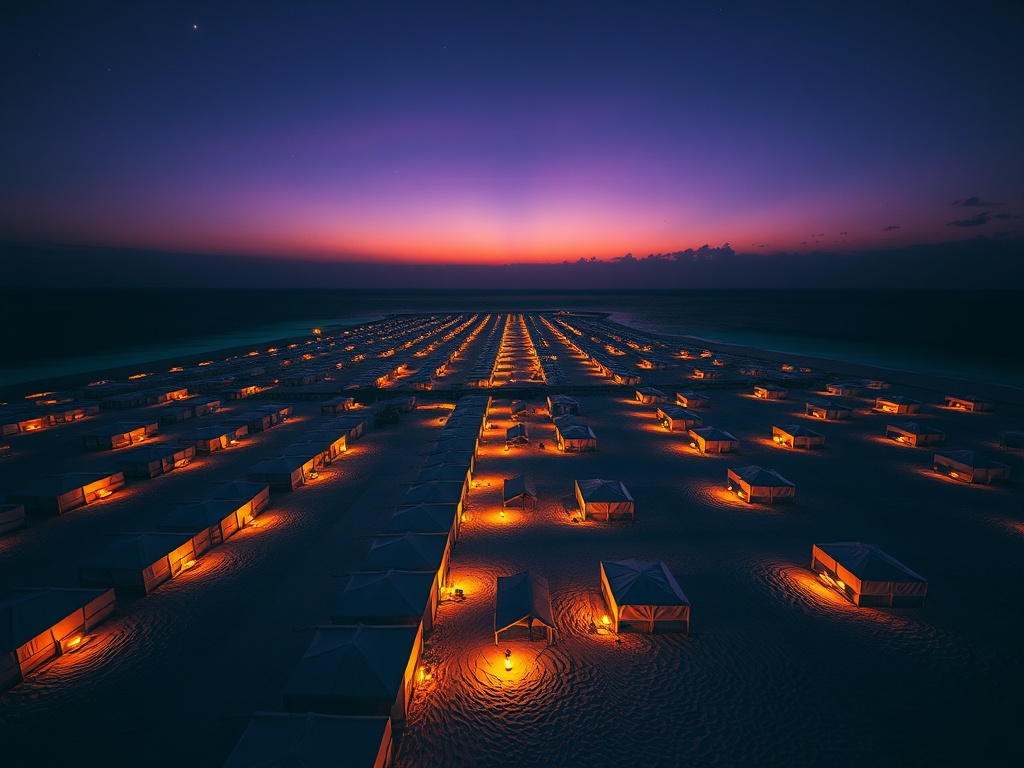
Canvas Homes Under Gaza's Winter Sky
The image of tents stretching toward the horizon, temporary shelters against an uncertain future, carries a universal language of displacement. In Gaza, families wait for winter that might sweep them away, their homes reduced to canvas and hope. This reality echoes across oceans and circumstances, touching even island nations where the concept of home takes on different but equally urgent meanings.
In the Maldives, the housing crisis manifests in concrete rather than canvas, but the underlying anxiety remains familiar. The capital Malé swells with residents competing for limited space, while government housing projects become political bargaining chips. The feeling of precariousness transcends geography—whether in refugee camps or overcrowded urban centers, the human need for stable shelter and dignity remains constant.
What happens when the basic contract between person and place breaks down? When home becomes something you might lose to winter winds or political winds? The psychological toll of displacement shapes communities in profound ways, creating parallel societies of the temporarily settled. In Gaza, it's tents awaiting winter; in Malé, it's subsidized flats often subleased by absentee owners, creating a secondary market of housing insecurity.
The conversation around displacement often focuses on the physical circumstances, but the deeper wound is the loss of belonging. When people become temporary residents in their own lives, when every sunrise brings uncertainty about where they'll sleep next season or next year, something fundamental shifts in the human spirit. The resilience required to maintain dignity amid such uncertainty becomes a daily practice, a quiet rebellion against circumstances beyond individual control.
In both contexts, the response reveals much about societal values. The way communities care for their most vulnerable members—whether through international aid or local housing policies—becomes a measure of collective humanity. The challenge isn't just providing shelter, but restoring the sense of permanence and belonging that makes a house a home.
As climate change threatens low-lying nations and political instability continues to displace populations globally, these questions will only grow more urgent. The winter that might sweep away tents in Gaza finds its counterpart in rising seas that might claim island homes. The fundamental human need for stable ground, for a place to belong, transcends borders and circumstances, reminding us of our shared vulnerability and interconnected fate.
— Source fragments: Good morning from Gaza 💔 This is the camp where I live now — rows of tents, and we're waiting for the winter that might sweep us away with it 😢