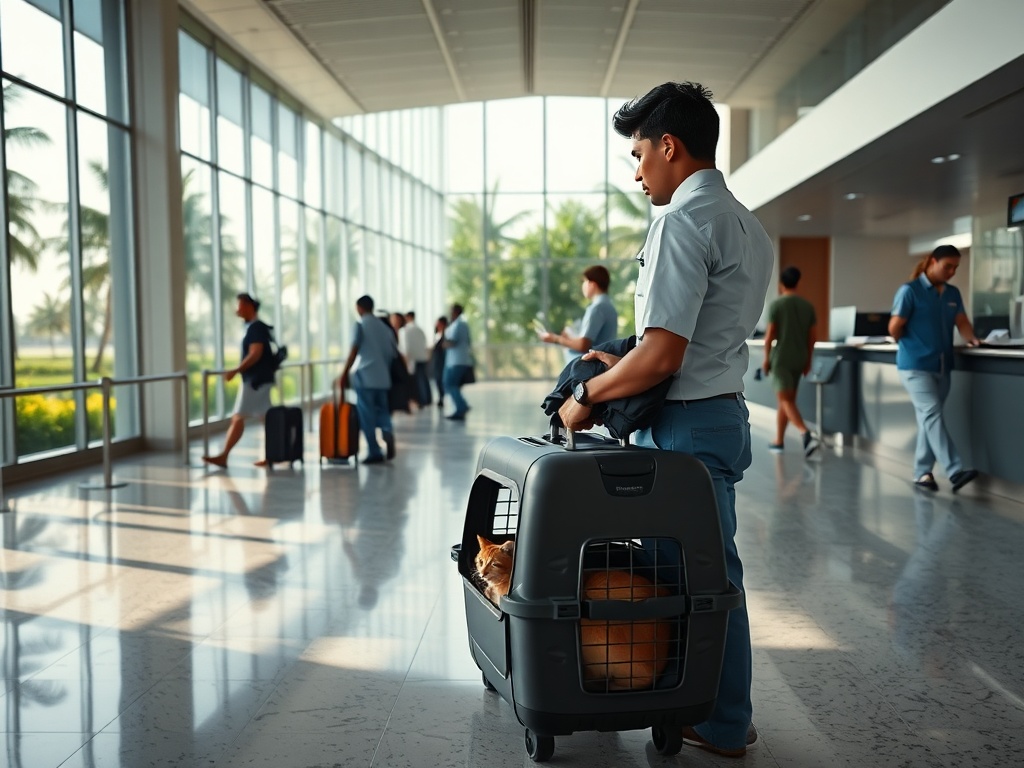
Cat Carrier Rejected at Check-in, Journey to Atoll Unravels
The announcement comes as a frustrating surprise at the check-in counter: no cat carriers allowed on the flight. For one pet owner traveling from the capital to the outer atolls, this meant an unexpected logistical nightmare—sending the carrier back to Malé and finding alternative transport via smaller aircraft. This seemingly minor inconvenience reveals a larger pattern of policy gaps that affect how we care for our animal companions during travel.
While the immediate reaction might focus on the inconvenience to pet owners, the deeper issue touches on animal welfare standards and the consistency of their application across different transportation providers. The inconsistency between major carriers and smaller aircraft operators creates confusion and unnecessary stress for both animals and their owners.
This experience raises important questions about how we define and enforce animal welfare protections. Many argue that cruelty to animals should carry meaningful consequences, but the debate extends beyond simple punishment. Financial penalties, while convenient for enforcement, often fail as deterrents for those with sufficient means. The wealthy can treat fines as mere operating costs rather than behavioral corrections.
A more effective approach might involve community service sentences that require offenders to confront the consequences of their actions directly. Working at animal shelters or participating in conservation efforts could foster genuine understanding and behavioral change in ways that monetary penalties cannot.
The sight of abandoned animals in public spaces like Raalhugandu underscores the broader societal challenge. When transportation policies create barriers to responsible pet ownership, the risk of abandonment increases. Each abandoned animal represents a systemic failure—a moment where our infrastructure and policies failed both the animal and the person trying to care for it.
As the Maldives continues to develop its transportation networks and urban infrastructure, integrating animal welfare considerations into policy planning becomes increasingly important. The solution requires coordination between airlines, regulatory bodies, and animal welfare organizations to create consistent, compassionate standards that protect both animals and the people who care for them.
— Source fragments: cat carriers not allowed on flights, had to send carrier back to Malé, find alternative transport on smaller aircraft, cruelty to animals as punishable offense, limitations of fines versus community service, abandoned cat at Raalhugandu