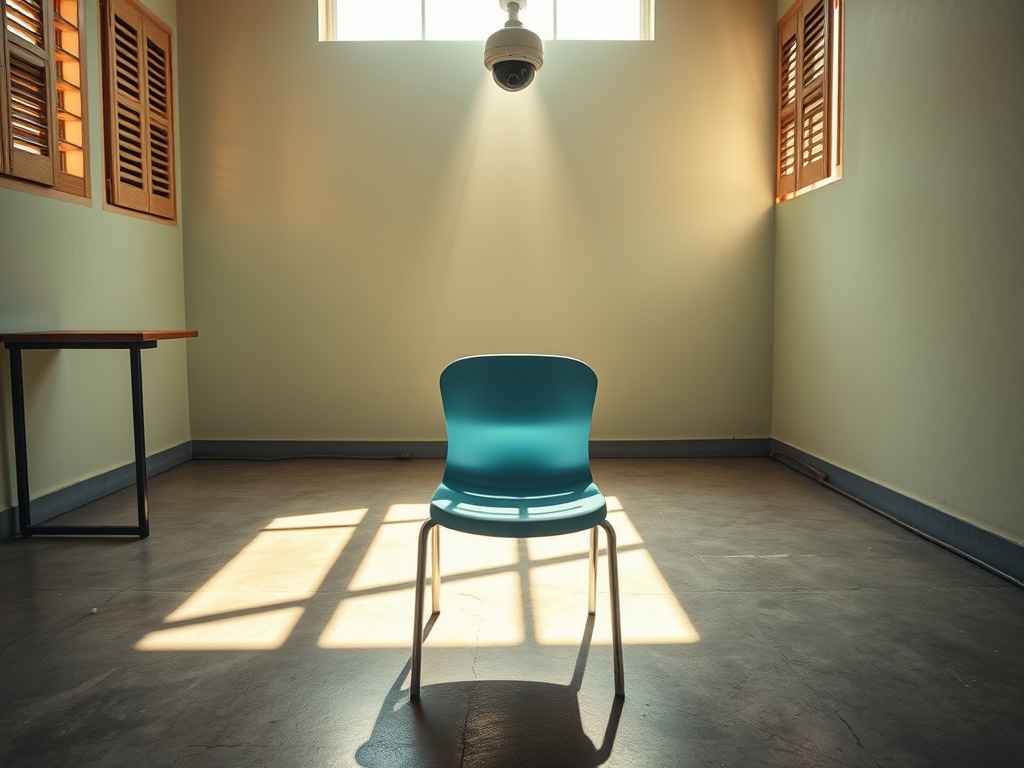
CCTV Footage and the Search for Truth in a Maldivian Classroom
A dispute in a Maldivian classroom has ignited a national conversation that reveals deep fractures in the education system. The immediate instinct is to demand a side: the teacher's or the student's. Yet, the only viable path forward is a third side—the side of unvarnished truth, reached through diligent investigation and protected by systemic integrity.
The core principle at stake is universal dignity. The fundamental unit of a functioning education system is the mutual respect between individuals, regardless of nationality, age, or authority. When this breaks down, the entire edifice of learning is compromised.
This is why the call for evidence-based investigation is so urgent. The gap between speculative social media narratives and the cold, clarifying light of recorded fact is a systemic weakness. In a nation grappling with perceptions of a politicized judiciary and inefficient public sectors, public trust in official investigations is fragile. The presence or absence of objective evidence like CCTV footage becomes the litmus test for credibility. Without it, every conclusion risks being seen as another act in political theater, further eroding faith in institutions meant to administer justice.
The incident has also sparked a foundational debate about pedagogy itself. Critics question whether certain progressive educational models contain elements that might be misunderstood or deemed inappropriate without clear context. This debate mirrors larger societal tensions between tradition and modernity. It asks a fundamental question: what should happen in a classroom? Is it solely the transmission of academic knowledge, or is it a whole journey of experiences? For the Maldives, with its youth facing drug use and unemployment, this is not an abstract debate. The answer defines what the next generation is prepared for.
Beyond the immediate actors, the discussion reveals ancillary cracks in the system. Questions about scholarship stipends and tuition fees point to opaque financial burdens on students and families. The suggestion to organize digital literacy classes for parents on outer islands speaks to a generational and geographical divide in a nation where technology moves faster than public capacity. It is a microcosm of broader socio-economic challenges: a high cost of living, foreign currency shortages, and a sense that the system is not built to support those it serves.
Ultimately, the moment demands moving beyond choosing sides between teacher and student. The real choice is between conjecture and evidence, between dignity and prejudice, between a system that obscures and one that illuminates. The third side—the side of the actual reason—is not a neutral midpoint. It is the only ground upon which a just resolution can be built, and the only foundation for an education system worthy of the nation's future.
— Source fragments: Key themes from user input: The three sides (teacher, student, truth/actual reason); Investigation and evidence (CCTV); Dignity and rights of all; Debate on classroom purpose and 'natural learning'; Systemic issues (scholarship/stipend transparency, need for parent digital literacy classes); Institutional and community reactions (school/faculty support).