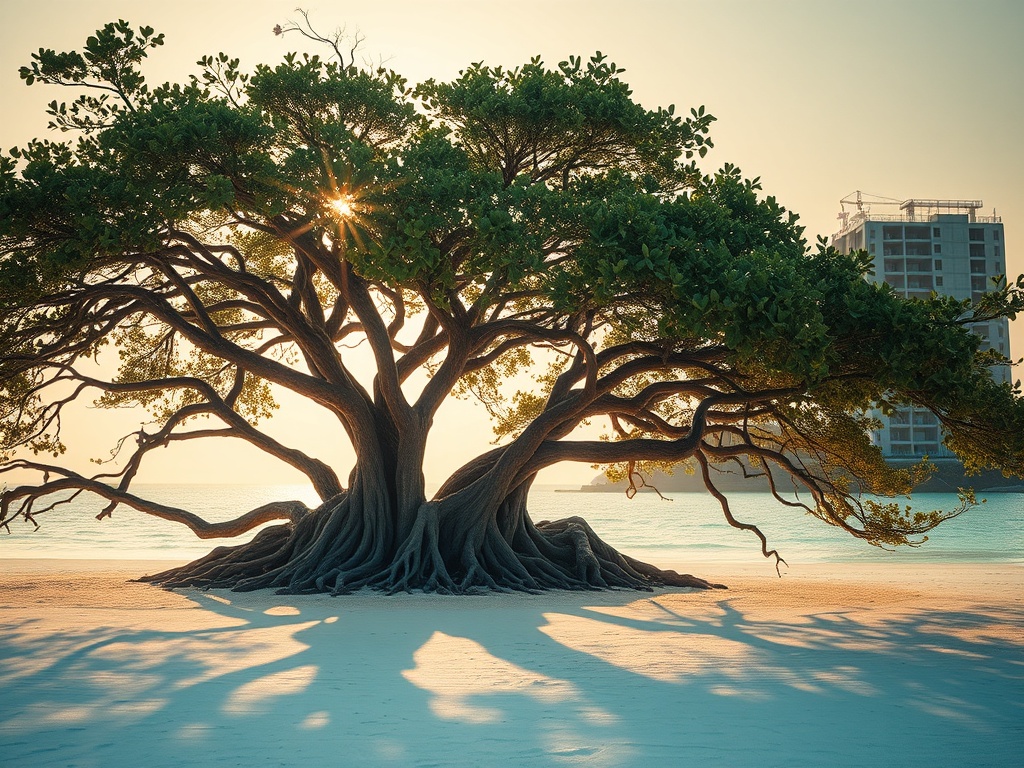
Chainsaws Echo Where Our Ancestors Once Listened
There is a quiet violence in the sound of a chainsaw biting through centuries-old wood. It echoes across our islands with increasing frequency, a stark departure from the harmony our ancestors maintained with the natural world. In the Maldives, where land is precious and history fragile, the falling of ancient trees represents more than just ecological loss—it signals the erosion of cultural memory itself.
Our relationship with trees once reflected a deeper understanding of balance. They provided shade from the equatorial sun, prevented soil erosion on our fragile islands, and marked sacred spaces where communities gathered. The wisdom of living in harmony with nature wasn't abstract philosophy; it was practical survival in an environment where every resource mattered. Today, that ancestral understanding seems distant as development priorities override ecological consciousness.
This severing from our natural heritage finds parallel in the physical destruction of historical sites. When centuries-old cemeteries are desecrated and ancient trees felled, we aren't just losing physical landmarks—we're dismantling the very connections that tie inhabitants to their land. Heritage functions as the living tissue between people and place, the cumulative memory of generations who adapted to, respected, and sustained these islands.
The phenomenon extends beyond our archipelago. The shared history between the Maldives and Lakshadweep, particularly Minicoy, reminds us that cultural connections transcend modern borders. Our languages, traditions, and ancestral knowledge systems developed in dialogue across these waters. When we forget these connections, we risk becoming what one observer aptly described as "a random people living on islands in the Indian Ocean"—unmoored from the stories that give our presence here meaning.
What happens when the physical markers of our past disappear? When the tree that shaded generations of fishermen is cut for a parking lot, when ancestral burial grounds make way for concrete, we don't just lose scenery—we lose reference points. The landmarks that taught children their place in a continuum vanish, and with them, the subtle understanding of how to live sustainably in this delicate environment.
The challenge facing Maldivian society isn't merely about preservation versus development. It's about recognizing that our future viability depends on maintaining continuity with the ecological wisdom that sustained previous generations. The trees our ancestors protected weren't just vegetation—they were living libraries of adaptation, resilience, and respect for natural limits.
As we navigate the pressures of modernization and development, the question remains: Will we become caretakers of our heritage or agents of its erasure? The answer may determine whether future generations will inherit islands rich with memory and meaning, or merely real estate surrounded by sea.
— Source fragments: Living in harmony with trees; ancestral ways in Maldives; modern tendency to cut trees; shared history with Lakshadweep/Minicoy; heritage links inhabitants to land