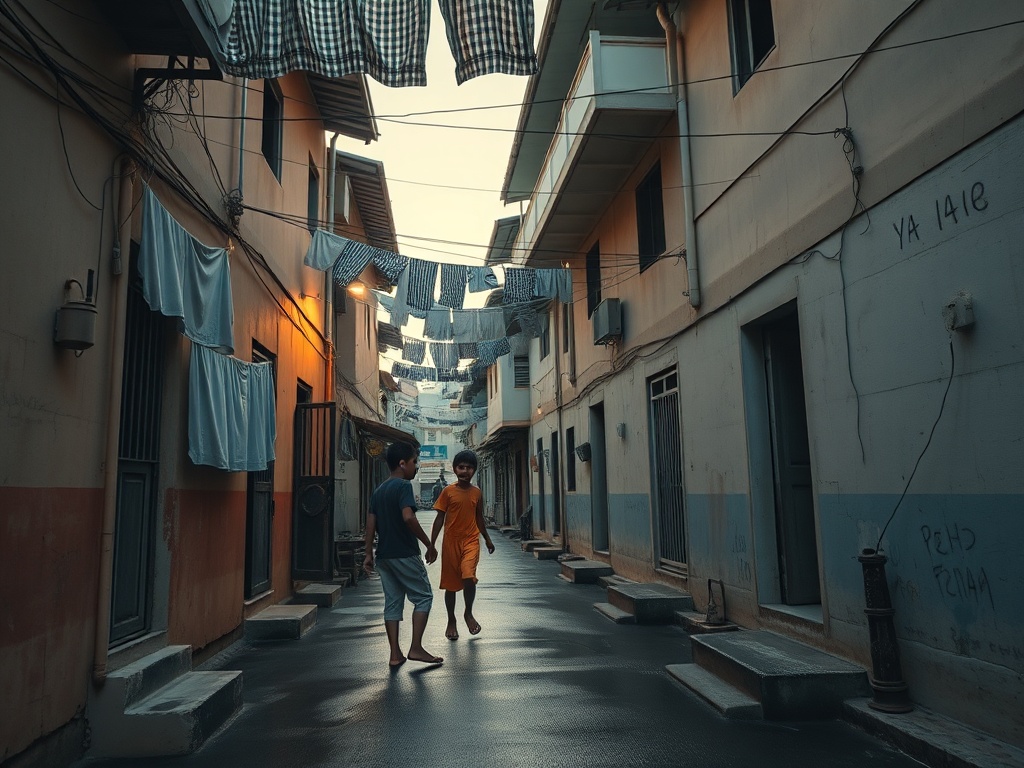
Children Growing Up in Malé's Shared Single Apartments
In the cramped living rooms of Malé, where multiple families share single apartments and children grow up knowing no other home, a quiet desperation has been building for years. The housing crisis that has long plagued the Greater Malé Region has now reached a boiling point, exposing fundamental fractures in how the nation addresses one of its most basic human needs.
The recent distribution of land in Hulhumalé Phase 2 was meant to represent hope—a solution to the chronic shortage of housing and skyrocketing prices that have made homeownership a distant dream for thousands. Instead, it has become another chapter in a familiar story of inequality. The sight of these newly acquired plots appearing on online marketplaces like ibay, sometimes before the ink on ownership papers has dried, reveals a painful truth: what was intended as relief for the housing-starved has become another opportunity for speculation and profit.
This isn't merely about real estate transactions. It's about a generational mindset that treats opportunity as personal property rather than public good. The same elitism that has long characterized resource distribution in the Maldives now manifests in housing policies that leave native Malé residents watching their city transform while they remain trapped in overcrowded conditions.
The numbers tell a stark story: over 30,000 applicants still wait for social housing while rental prices reach absurd heights—16,000 rufiyaa for two-bedroom apartments, 23,000 for three-bedroom units—figures that represent months of income for many families. The government's contradictory approach becomes glaringly obvious when comparing policies: while authorities fix taxi rates for vehicle owners, they claim helplessness in regulating a rental market that bleeds working families dry each month.
What makes this crisis particularly cruel is how it pits Maldivian against Maldivian. The legitimate grievances of islanders who migrated to the capital for opportunity clash with the claims of native Malé residents who have nowhere else to go. Both sides have valid arguments, but both are victims of a system that has failed to plan for equitable development.
The solution cannot be found in simply redistributing limited Malé land or in depopulation fantasies that ignore economic realities. It requires a fundamental rethinking of how we value community, how we plan cities, and how we ensure that every Maldivian has access to dignified housing. Until we address the systemic issues that allow housing to become another commodity for speculation rather than a fundamental right, the weight of those four walls will continue to crush the dreams of generations.
— Source fragments: Hulhumalé Phase 2 plots being sold on ibay; rental prices of 16k/23k; 30k+ waiting for social housing; native Malé residents sharing overcrowded spaces; government regulating taxi rates but not rents; inter-community tensions between Malé natives and island migrants