Chinese Partnership Delivers New Solutions to Combat Widespread Maldivian Tree Diseases
The Maldives is seeing the first tangible results of a strategic partnership with China aimed at eradicating persistent plant and tree diseases that have long plagued local farmers. Minister of Fisheries, Agriculture and Ocean Resources Ahmed Shiyam announced that collaborative research is now yielding actionable solutions to protect the nation's greenery.
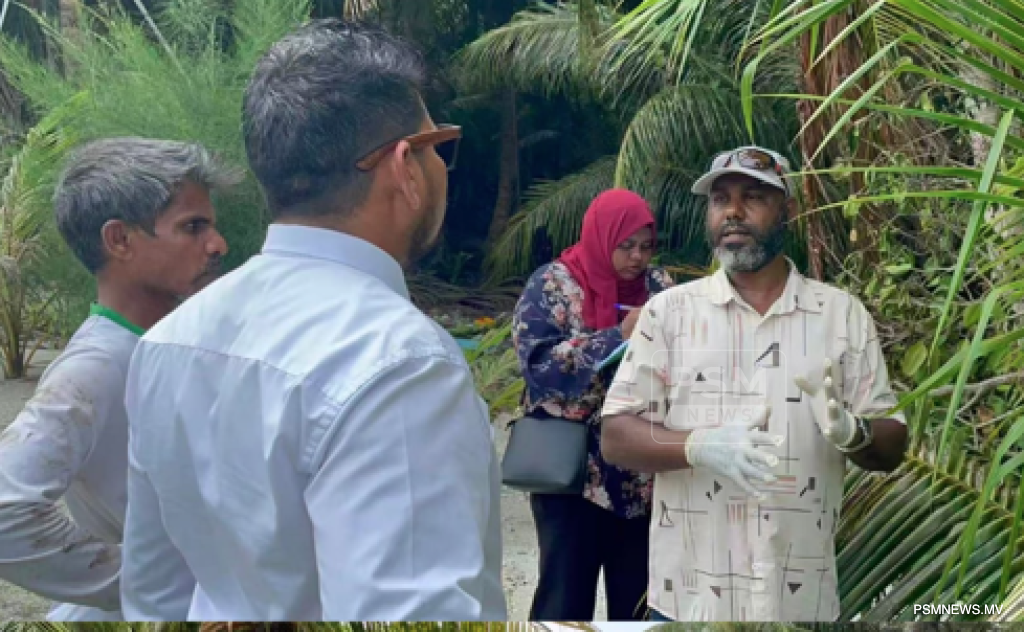
Central to this effort is a team of experts from the Environment and Plant Protection Research Institute of the Chinese Academy of Tropical Agricultural Sciences (CATAS). These specialists are working on the ground to identify and treat diseases affecting various crops, with a specific focus on the coconut palm infestation known locally as "Ruku Madi."
According to Minister Shiyam, critical analysis is currently being conducted at the Agriculture Center in Hanimaadhoo. The government is prioritizing the rollout of these scientific solutions to the islands most severely affected by the infestation. To provide immediate relief, CATAS has supplied systemic pesticides to control the white beetle and the coconut hispid beetle, accompanied by technical training for farmers in locations such as Baarah in Haa Alifu Atoll.
To ensure these gains are sustainable, the Maldives has established a dedicated national laboratory for plant disease analysis. This facility is designed to overcome previous technical limitations, improve disease diagnosis, and strengthen the country's overall biosecurity and agricultural productivity.
The ministry has formalized this partnership through a comprehensive agreement with CATAS, focusing on coconut palm health and broader botanical research. Recognizing that lasting success requires a scientific foundation, the government has implemented a two-year action plan to guide these interventions.
Looking ahead, the ministry aims to transition the program into a long-term sustainable model. Efforts are now underway to integrate the private sector and state-owned enterprises into the initiative, ensuring that the Maldives can maintain its plant health management independently in the future.