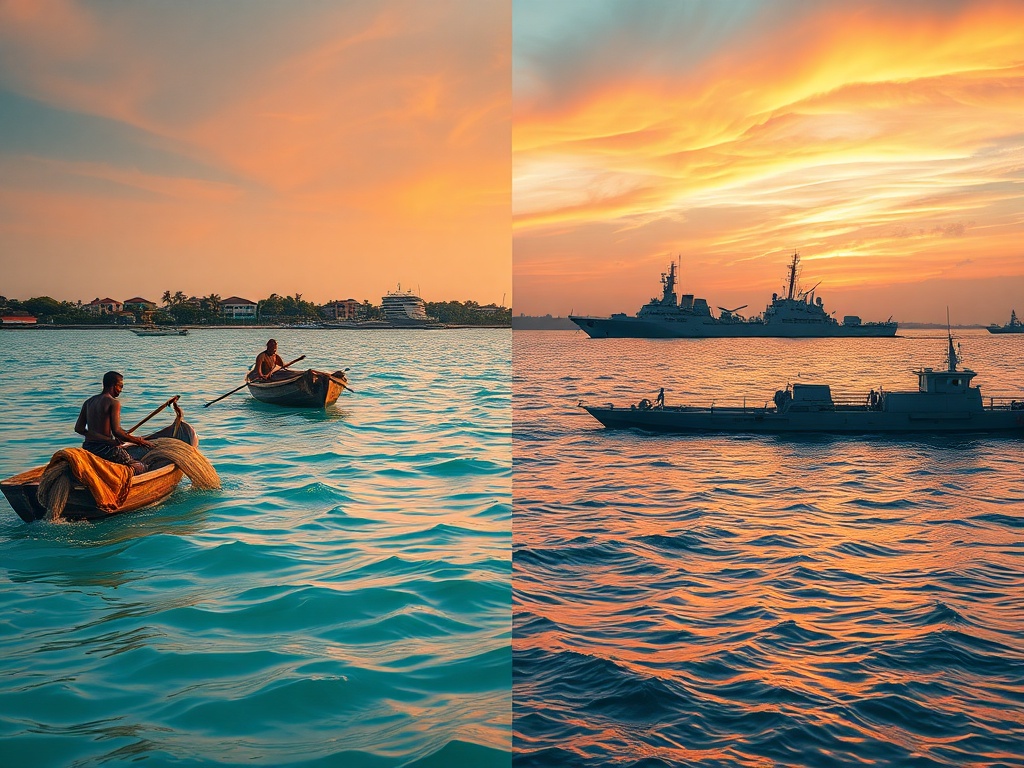
Choosing Between a New Patrol Boat and a New Hospital Wing
Across Maldivian social platforms, a persistent debate simmers—one that pits national security concerns against pressing domestic needs. The conversation reveals a population grappling with questions of sovereignty, fiscal priorities, and the very nature of threats facing the island nation.
At the heart of the discussion lies the allocation of approximately 4% of the national budget to defense spending. Critics argue this represents misplaced priorities in a country with no territorial conflicts or imminent invasion threats. They point to islands lacking basic services, a housing crisis in Malé, and healthcare systems requiring urgent investment. The sentiment echoes through online discourse: why purchase million-dollar military hardware when fundamental social services remain underfunded?
Yet another perspective emerges from those who see recent geopolitical developments as necessitating enhanced defense capabilities. The presence of foreign military assets in Maldivian territory has sparked concerns about sovereignty erosion. Some voices contend that when other nations maintain military presence in your waters and airspace, building defensive capacity becomes not just prudent but essential.
This tension reflects a broader dilemma facing small states in strategic locations. The Maldives finds itself navigating between great power interests while trying to maintain its independence. The debate isn't merely about military spending versus social welfare—it's about how a nation of scattered islands preserves its autonomy in an increasingly contested region.
What makes the conversation particularly poignant is the recognition that traditional security paradigms may not apply. As one thread noted, combining 25 years of Maldivian GDP would barely match India's annual military budget. In such asymmetrical circumstances, some question whether conventional military buildup represents genuine security or symbolic gesture.
The discussion frequently returns to opportunity costs. Every dollar spent on drones and missiles is a dollar not spent on education, healthcare, or decentralized services that could improve lives across the archipelago. Yet simultaneously, the fundamental responsibility of any government remains protecting territorial integrity.
This isn't merely an abstract policy debate—it touches on how Maldivians perceive their place in the region and the world. The conversation reveals a population deeply aware of both their vulnerabilities and their strengths, seeking a path that ensures both security and prosperity in challenging times.
— Source fragments: traditional libraries with books and stuff... i think that era is gone; 4% of annual budget We are not going for a war; We cant justify spending 4% of annual budget to military; Our EEZ is patrolled 24/7 by Indian military vessels; Maldives has no enemy countries, no territorial conflict; We need to spend on military more now because we have another country's military here