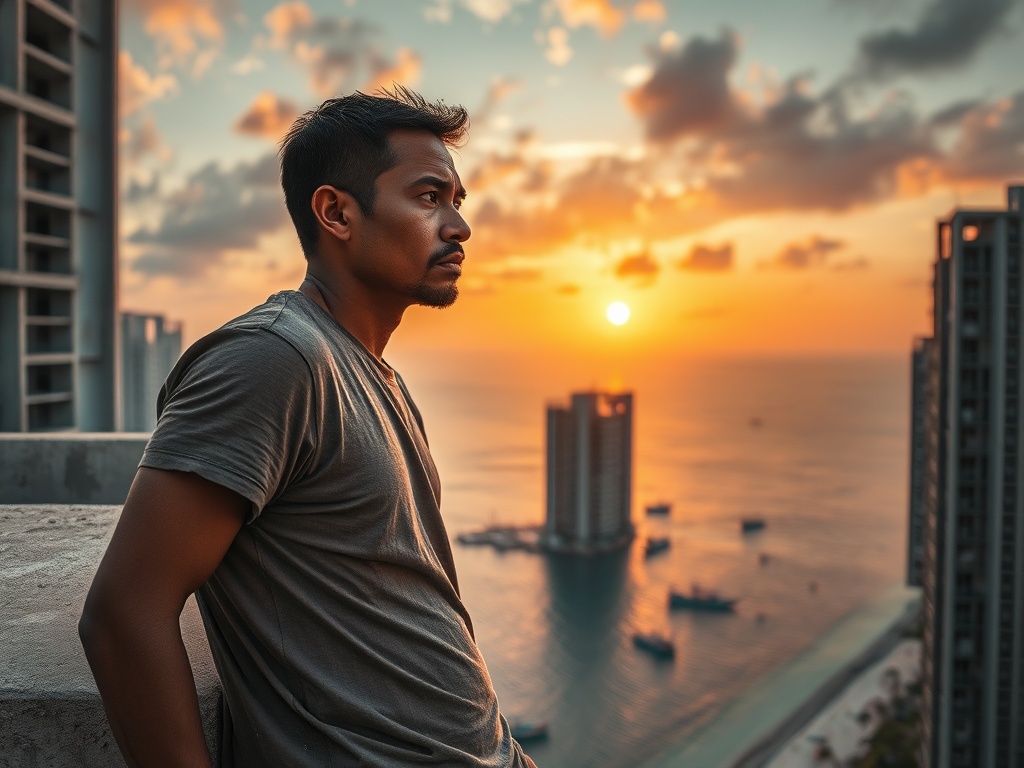
Concrete Dust on My Skin, the Ocean in My Eyes
The concrete dust settled on my skin like a second layer, fine and stubborn. From the twelfth floor of this Hulhumalé high-rise, I could see the ocean stretching toward infinity—a turquoise canvas interrupted by the skeletal frames of half-built towers. My hands, calloused from mixing cement and hauling steel, paused as I watched another truckload of sand arrive, destined to become someone else's dream home.
Down below, the new link road curved like a ribbon, adorned with decorative palms that would likely wither in the saline air. 'Tangible and useless,' someone had called it. The phrase echoed in my mind as I remembered the conversations I'd overheard at the tea shop—whispers of land allocations, of certificates that appeared like magic, of fortunes built while ordinary people waited for their binveriya applications to be processed.
My cousin Ahmed had applied three times. He lived with his wife and two children in a single room in Malé, the walls so close they could touch both sides with outstretched arms. Meanwhile, I'd heard stories of people who already owned flats receiving free land, their names appearing on lists that seemed to follow invisible patterns of connection and favor.
The sea breeze carried the scent of salt and diesel, a familiar perfume for those of us building this new city from the ocean. Sometimes, when the sun set and painted the sky in hues of orange and purple, I'd look at these towers and wonder who they were really for. The politicians spoke of development, of progress, of a modern Maldives rising from the waves. But from up here, I saw something else—the shadow economy of influence, where the same names kept appearing like recurring characters in a play where the script never changed.
Yesterday, a Sri Lankan worker had shown me his certificate, grinning as he explained how easy it was to get. We both laughed, but my laughter tasted bitter. He was gaming a system that had been gamed for generations, just newer players in an old game.
As I poured the final concrete of the day, smoothing it with practiced hands, I thought about the weight of it all—not just the physical weight of the materials, but the burden of knowing that these structures would stand long after the current arguments faded. They would become part of our landscape, monuments to both our aspirations and our compromises.
When I descended the scaffolding at dusk, my body aching and my mind restless, I looked back at the tower silhouetted against the darkening sky. We were building futures, yes, but whose futures? The question hung in the salt-heavy air, unanswered, as the lights began to blink on across the artificial island, each one a promise someone had made, and someone else would keep—or break.
— Source fragments: HDC could have stopped it, they didn't; Malé goathi allocations will directly be beneficial; Parliament with majority RT seats approve of this BS because they are the beneficiaries; There's no development without justice; Lankans will be joking how easy its to game the system here; Tangible and useless; Either lands from family or lands/flats they've bought; This is the real problem in this country; No administration can break this vicious, never ending cycle