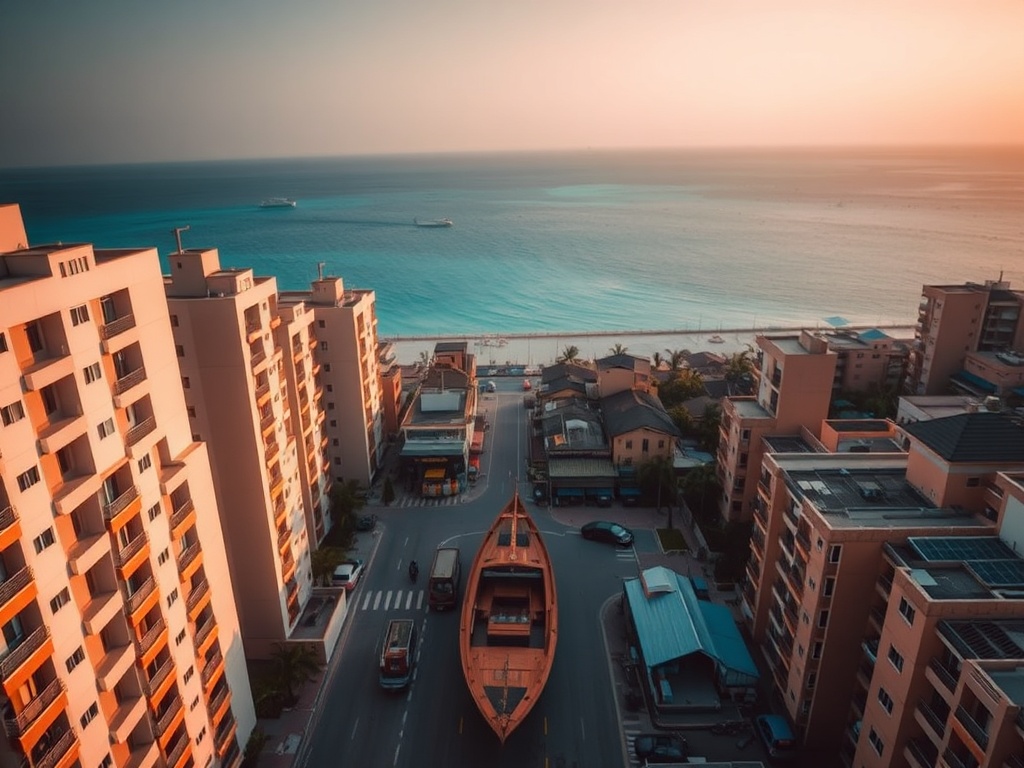
Concrete Rises, Dreams Remain Anchored in Our Shores
The conversation had shifted away from the real issue—the people living between these walls, the dreams housed within concrete frames. Someone mentioned local data, numbers that told a story of growth: thousands of apartments rising from the ground, approved quickly by councils whose names sounded like distant geography. The prices climbed steadily, they said, as if this were proof of success.
But in the Maldives, we understand what happens when buildings multiply while opportunities shrink. We've watched our own islands transform, concrete replacing coral stone, the horizon changing shape with each new development. The real story isn't in the rising prices or the construction statistics—it's in the spaces between the numbers, the lives adapting to these new landscapes.
There's a particular quality to light when it hits fresh concrete—harsh and unyielding, unlike the gentle way it once danced on traditional coral walls. The sea breeze must navigate new obstacles now, finding its way through canyons of buildings rather than sweeping freely across open spaces. These changes happen gradually, approval by approval, until one day you look around and the place you knew has been replaced by something both familiar and foreign.
We measure progress in square meters and currency values, but the true cost is measured in different currencies—the loss of community spaces, the straining of infrastructure, the quiet displacement of those who can no longer afford to stay where they've always lived. The buildings may be new, but the human struggles remain ancient: finding belonging, seeking stability, longing for home.
Perhaps what we're really discussing isn't architecture or economics, but the tension between growth and preservation, between what we build and what we value. The apartments will continue rising, the approvals will keep coming—but the real question remains whether our communities will rise with them or be buried beneath them.
— Source fragments: The discussion isn't about rents. I can give you local data. Pagewood has had 3000 apartments built on a mega site. Both quick approval 10 years ago from Randwick City Council & Botany/Bayside Council. The price of apartments have gone up in the area, they haven't decreased.