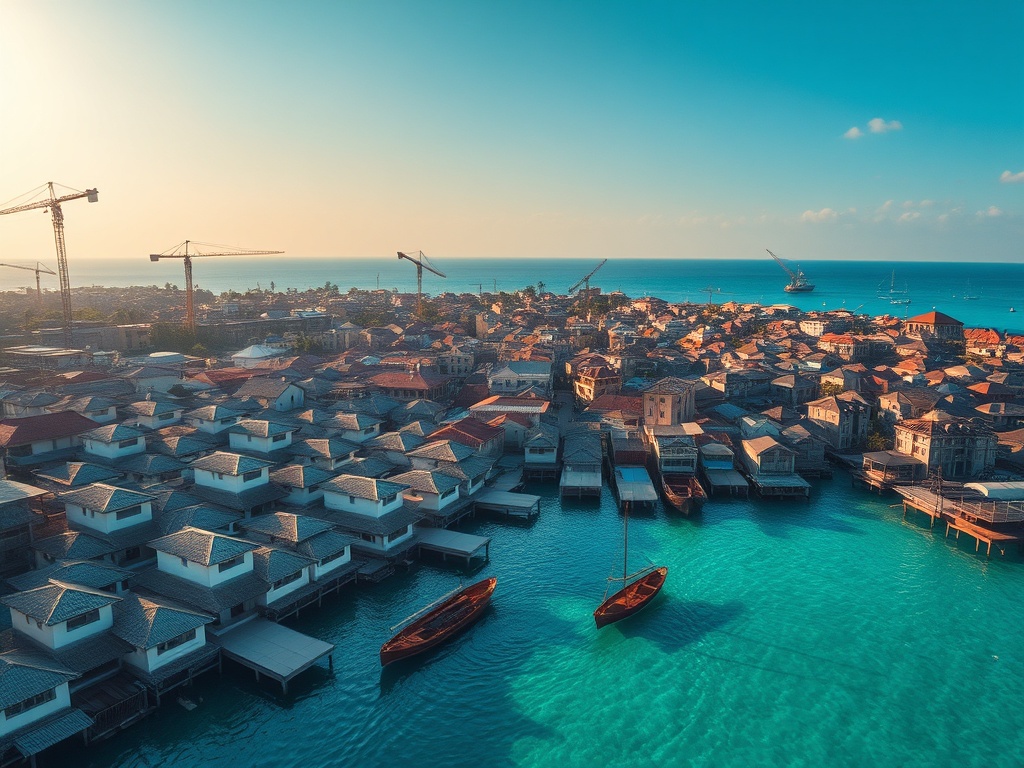
Concrete Tides: The Unseen Walls Dividing Our Islands
The sea connects us, but policy builds walls. I watch from my window in Malé as another high-rise climbs skyward, its concrete bones rising where old neighborhoods once stood. They say these buildings will solve our housing crisis, but I see how the allocation feels like a lottery where some are born with better tickets. The discrimination isn't written in law, but felt in the quiet conversations at tea shops, in the way certain names get priority, in the unspoken hierarchy that determines who gets to call which island home.
Across the water, on Maafushi, the stories are different but the division feels the same. Visitors see paradise—white beaches, blue lagoons—but residents know the tension beneath the surface. When a neighbor dies and a party rages across the street the same night, it's not just about disrespect. It's about what happens when communities fracture, when the social fabric that once held us together begins to unravel thread by thread.
We speak of equality as if it's a distant concept, something for political rallies and campaign promises. Yet in our daily lives, we feel its absence. The construction cranes that dot our skylines promise progress, but their shadows fall unevenly. Some get land, some get promises, some get nothing but the certainty that their children will inherit this same struggle.
There's a particular irony in watching politicians debate housing policy while standing in air-conditioned halls, far removed from the cramped living rooms where families make do. The debate becomes abstract—percentages, allocations, policy frameworks—while the reality remains concrete: too many people, too little space, and the slow erosion of what it means to be neighborly.
Perhaps the true housing crisis isn't just about physical shelter, but about the spaces between us—the growing distance between islander and city dweller, between native and newcomer, between those who benefit from the system and those who watch from outside. The sea has always been our common ground, but lately, it feels more like a moat separating us from each other, from the shared future we once imagined.
— Source fragments: Discriminative housing policy, Every Maldivian irrespective of their birth island must have equal opportunity, When your neighbor dies and you hold a drug fueled party, Probably the least community oriented island, the state of maafushi