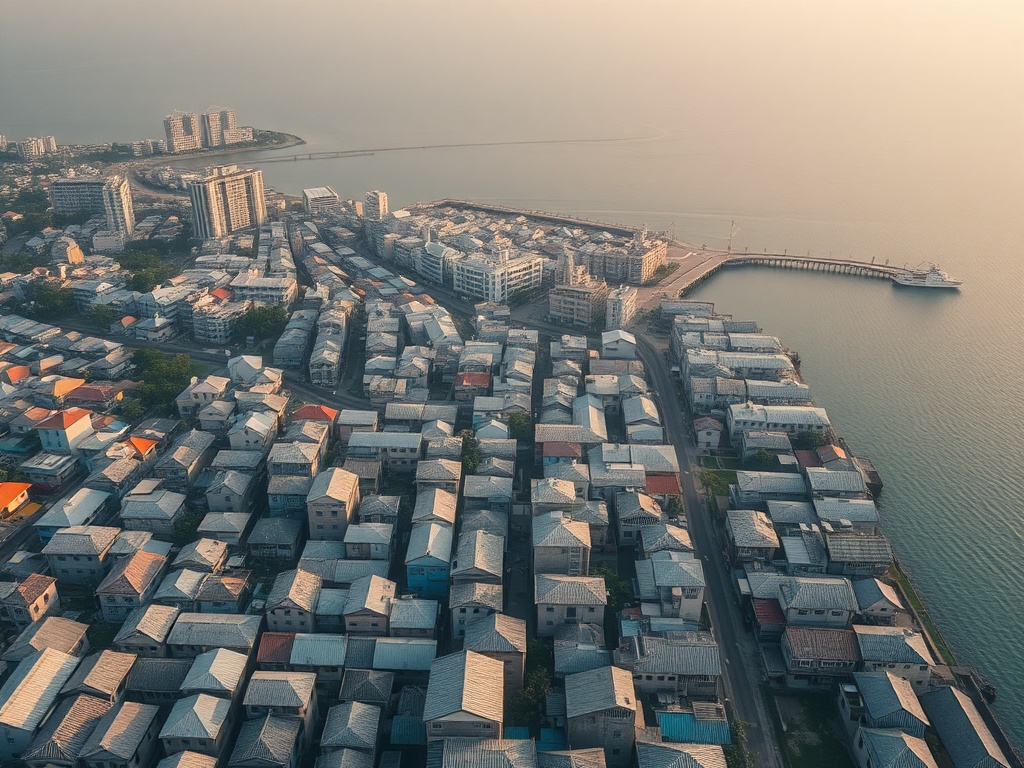
Constitutional Right to Move, Nowhere to Live in Malé
The Maldivian constitution guarantees every citizen the right to migrate to any inhabited island without restrictions—a promise of equal mobility across the archipelago. Yet this constitutional assurance increasingly collides with a complex reality where rights appear stratified, access unequal, and belonging conditional.
At the heart of this tension lies the capital, Malé—a reclaimed city built "for birds, corals and fish" that now represents both opportunity and exclusion. As one observer notes, "We all paid for the city through reclamation and infrastructure investments," raising the fundamental question: "Why are we second-class citizens in our capital?" This sentiment echoes across social media discussions where citizens express frustration at being treated as "opportunists" when seeking basic rights.
The debate has shifted beyond legal technicalities to confront what some describe as an unwritten system of privilege. Critics argue that equal residency rights effectively apply only to "a small group of people with Male' DNA and the rich elites," creating a de facto hierarchy that contradicts constitutional principles. This perception of elitism fuels broader concerns about discrimination within the nation's borders, where thought processes akin to 'jus sanguinis'—the law of blood—inform exclusionary practices.
Meanwhile, discussions of policing and human dignity intersect with these residency concerns. The treatment of individuals in authority positions—whether judges or ordinary citizens—raises questions about compassion and dehumanization in enforcement. These incidents become symbolic of larger systemic issues where power dynamics overshadow human dignity.
The government's approach to dissent further complicates the landscape. When citizens note that "they didn't give us a place to protest, so we can't protest about how bad they are," it highlights how procedural limitations can silence legitimate grievances. This connects to broader patterns where advocacy for rights is met with accusations of troublemaking rather than engagement with substantive issues.
As the conversation evolves, it reveals a society grappling with the gap between constitutional ideals and lived experience. The fundamental question remains whether the Maldives can reconcile its unitary state identity with residency practices that create tiers of citizenship. Until then, the tension between constitutional promises and practical limitations will continue to define the boundaries of belonging in the island nation.
— Source fragments: Constitutional right to migrate, second-class citizen sentiment, Male' DNA privilege references, capital access debates, human dignity in enforcement, protest limitations