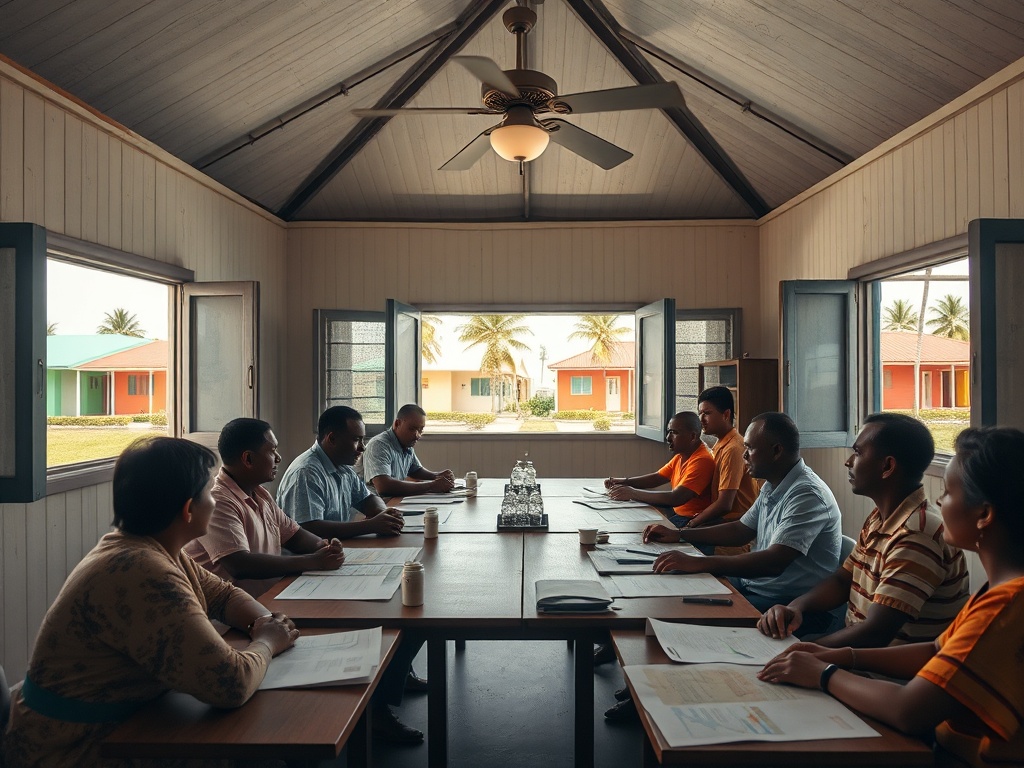
Councils need the same power & trust to shape their islands
In the heart of Europe, a Maldivian observer witnessed democracy in action—not as a distant concept debated in parliament halls, but as a living force in city streets. Erfurt demonstrated how citizens directly shape their environment through participatory budgeting and genuine community voice. This experience sparked a crucial question for our islands: why can't Maldivian councils wield similar power and trust to transform their own neighborhoods?
The contrast between theoretical democracy and practical local governance has never been more apparent. While national politics dominates headlines, the real potential for change lies in empowering island councils with budgetary control and decision-making authority. When communities are trusted with resources and responsibility, they demonstrate remarkable capacity to address local needs—from infrastructure improvements to environmental conservation.
This isn't about replicating foreign models but adapting proven principles to Maldivian context. Our unique geography of scattered islands demands decentralized solutions where each community can respond to its specific challenges. The current system often leaves councils as implementers of central government directives rather than genuine representatives of local will. Changing this dynamic requires both legal reforms and cultural shift toward trusting community wisdom.
Across social media platforms, citizens are expressing this same fundamental insight: democracy flourishes when it touches daily life. The call isn't for radical change but for practical empowerment—giving councils the tools to transform public spaces, manage local resources, and respond directly to resident priorities. This grassroots perspective suggests that Maldivian democracy's next evolution may happen not in Majlis debates but in island council meetings across the archipelago.
As we consider our governance future, the message from both international observation and local voices is clear: trust communities with real authority, and they will shape their islands with care, creativity, and commitment to the common good. The potential for more responsive, localized democracy exists—if we have the courage to distribute power beyond the capital.