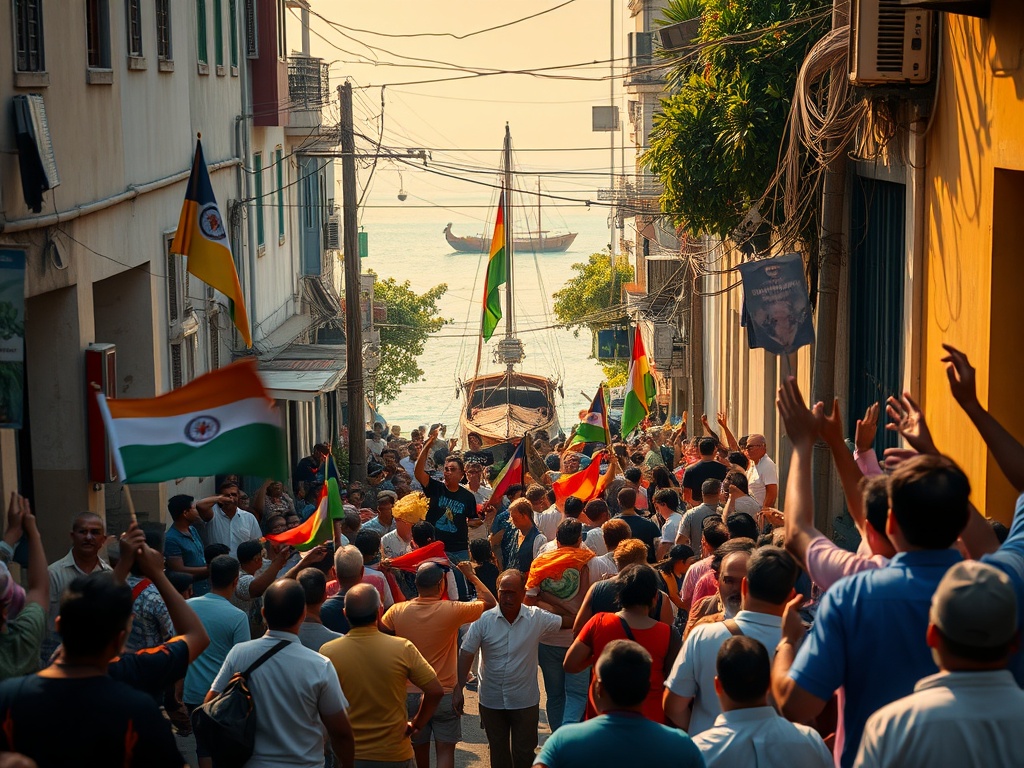
Counting Crowds While the Capital Crumbles
The political stage in the Maldives has become a theater of competing spectacles, where the size of rally crowds serves as the primary metric of success. This focus on numerical supremacy between the ruling PNC and opposition parties reveals a troubling reality: political discourse has been reduced to a performance that distracts from the systemic issues plaguing the nation.
The obsession with rally attendance numbers represents more than just political posturing—it signifies a fundamental diversion from substantive governance. While politicians measure their influence by the crowds they can gather, citizens grapple with the practical realities of survival in an economy marked by rising costs, housing shortages, and limited opportunities. This disconnect between political theater and public need creates a vacuum where genuine accountability disappears behind the spectacle.
Historical patterns suggest this is not a new phenomenon. Successive governments have employed similar strategies of grand gatherings and public displays of support. Yet these events often create false confidence and distract from the structural problems that require sustained attention. The temporary euphoria of political rallies gives way to the enduring challenges of governance that affect citizens' daily lives.
At the heart of this dynamic lies a complex relationship between citizens and the political system. Some observers note that Maldivians have developed patterns of political engagement shaped by historical conditioning and practical necessity. The choice between principle and survival often tilts toward the latter, creating a cycle where short-term benefits outweigh long-term integrity. This transactional relationship maintains the status quo while preventing meaningful systemic change.
The conversation extends beyond mere political strategy to questions of national character and collective courage. Comparisons to other nations facing oppression highlight the tension between immediate comfort and principled resistance. While such comparisons may oversimplify complex geopolitical realities, they reflect a growing frustration with political dependency and the perceived trade-offs required for basic survival.
What remains clear is that the focus on political spectacle over substantive policy discussion serves to maintain divisions rather than foster solutions. As the country moves toward future elections, the challenge lies in shifting the conversation from crowd sizes to concrete governance, from temporary political victories to sustainable national progress. The real measure of political success should not be how many people attend rallies, but how effectively leaders address the pressing needs of all Maldivians.
— Source fragments: Political rally attendance competition, historical patterns of grand gatherings, citizen dependency on political favors, systemic maintenance through transactional politics