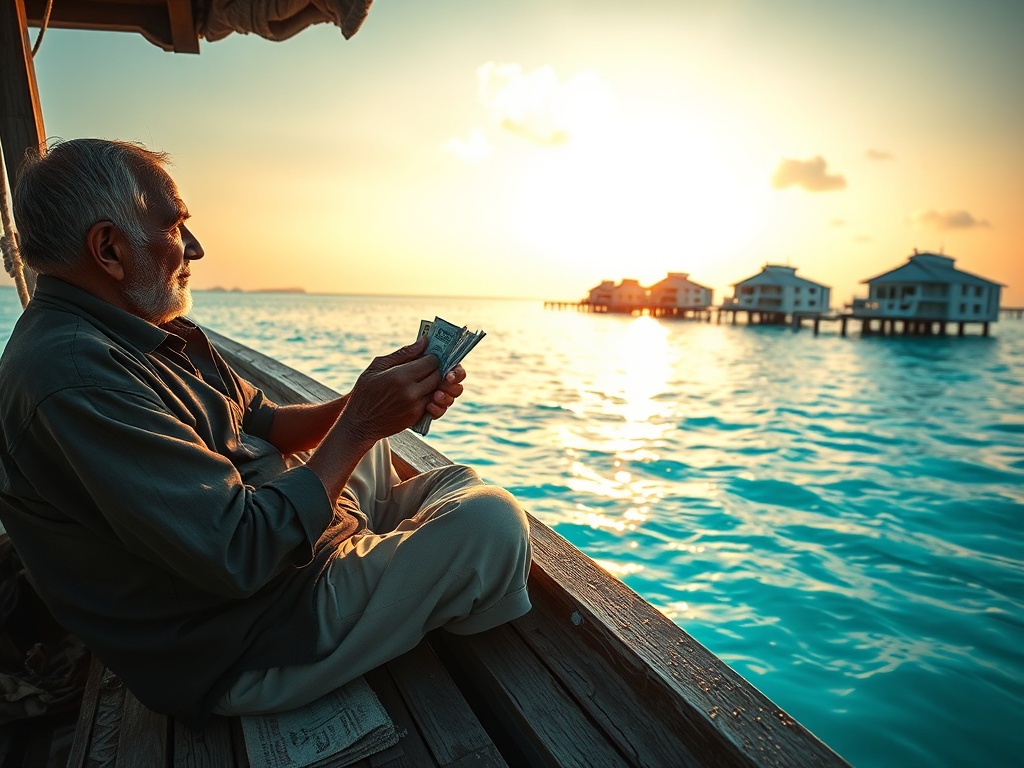
Counting Rufiyaa While Resorts Count Dollars
The question hangs in the humid air like the salt spray off the Indian Ocean: what truly constitutes the 'private sector' that drives our economy? It's a query that echoes through the narrow streets of Malé, where shopkeepers count rufiyaa while wondering about the dollars flowing to resorts across the atolls. The answers we receive often feel like distant waves—visible but impossible to grasp.
There's a particular frustration that comes from watching economic policies unfold like a poorly written script. The generation ban, the forced currency conversions, the remittance caps—each measure creates ripples that touch every Maldivian life. When a worker receives their pay in rufiyaa while the resorts operate in dollars, it feels like living in two different countries sharing the same shoreline. The economic reality for the average Maldivian bears little resemblance to the polished narratives presented in official statements.
For fifty years, we've spoken of diversification as if repeating the word might make it materialize. Yet here we remain, watching the same economic patterns repeat like the monsoon cycles. The worker paid in local currency wonders why the system seems designed to benefit those already floating comfortably while they struggle to stay above water. There's an audible sigh across the islands when economic solutions feel like rearranging deck chairs on a ship that's taking on water.
The most painful realization isn't the complexity of our economic challenges, but the growing sense that those making decisions inhabit a different Maldives altogether. It's the space between the resort worker counting their rufiyaa and the policy maker discussing forex rates. Between the shopkeeper facing practical realities and the theoretical solutions imposed from above. This gap isn't just about economics—it's about whose reality gets to define our collective future.
Perhaps what we're witnessing isn't just an economic crisis, but a crisis of understanding. When policies feel disconnected from the lived experience of Maldivians going about their daily lives, when the solutions offered seem to ignore the fundamental realities of how money actually moves through our islands, we're left with more than just economic anxiety. We're left wondering if anyone truly sees the currents beneath our economic surface.
— Source fragments: What is the 'private sector' that matters to our economy; Its not fair and they have no clue to fix this mess; generation ban is useless; maldivian workers suffering because they're being paid in ruffiya; govt forcing them buy mvr at imaginary rate; our economy needs diversification for 50 years but hasn't happened