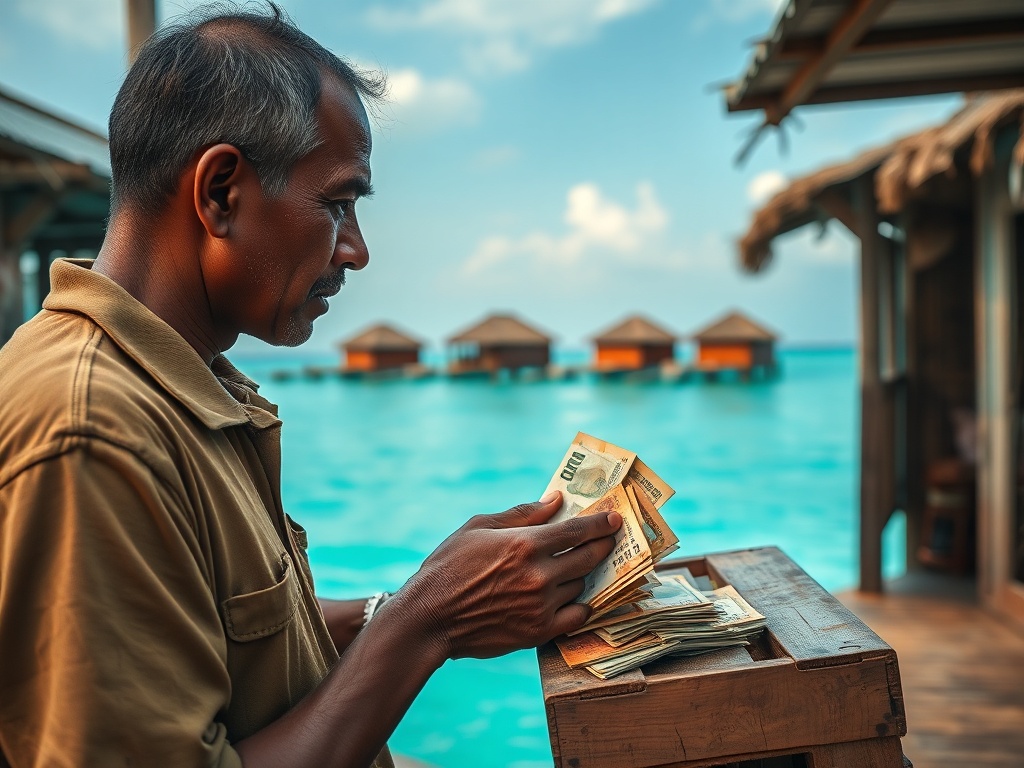
Counting Rufiyaa While Watching the Resorts Bloom
The question hangs in the salty Male' air, heavier than the monsoon humidity: what exactly is this 'private sector' we keep hearing will save our economy? It's not the newspapers, someone observes—and the observation feels true in our bones. We've been talking about economic diversification for fifty years, watching governments come and go while the fundamental problems remain unchanged.
In the narrow streets where laundry hangs between buildings and the sea breeze carries the scent of fried fish, workers feel the consequences of policies made in distant offices. The forced USD policy sounds technical, bureaucratic—until you're the Maldivian worker being paid in rufiyaa instead of dollars while resorts operate in foreign currency. The question echoes through tea shops: why does the government force resorts to buy rufiyaa at imaginary rates, creating a system where everyone loses except those with the right connections?
Meanwhile, the generation ban debate reveals our fractured perspectives. Some see it as useless 'woke policy' while others recognize the deeper issue—when drugs are injected in broad daylight in Male', what power does a shopkeeper have to refuse a paying customer? We're arguing about cigarettes while the ocean of our problems runs deeper than any atoll channel.
Our economy feels like a dhonis with too many captains—each pulling the rudder in different directions while the vessel drifts. The STO rates returning, the remittance caps leaving our Indian diaspora stranded, the workers suffering through currency games—these aren't isolated issues but symptoms of a system that serves the few rather than the many.
The frustration isn't just about policies; it's about the growing realization that those making decisions might not understand the mess they're trying to fix. When you can't read a simplified version of government revenue, how can you possibly steer an entire economy? We've become a nation of economic spectators, watching from the sidelines as the same patterns repeat—money printing, rising taxes, foreign currency shortages—while the real private sector, the one that actually matters to ordinary Maldivians, continues struggling to survive.
Perhaps the question isn't what the private sector is, but who it serves—and why, after fifty years of promises, it still doesn't serve us.
— Source fragments: What is the 'private sector' that matters to our economy? It certainly aren't the news papers; even in the forced usd policy it's the maldivian workers suffering because they're being paid in ruffiya now instead of dollars; wrong angle. why does the resorts have mvr to pay workers in mvr in the first place?; My fellow countrymen, if you can't even read a super simplified version of Gov revenue then we really can't rely on your views to fix the economy