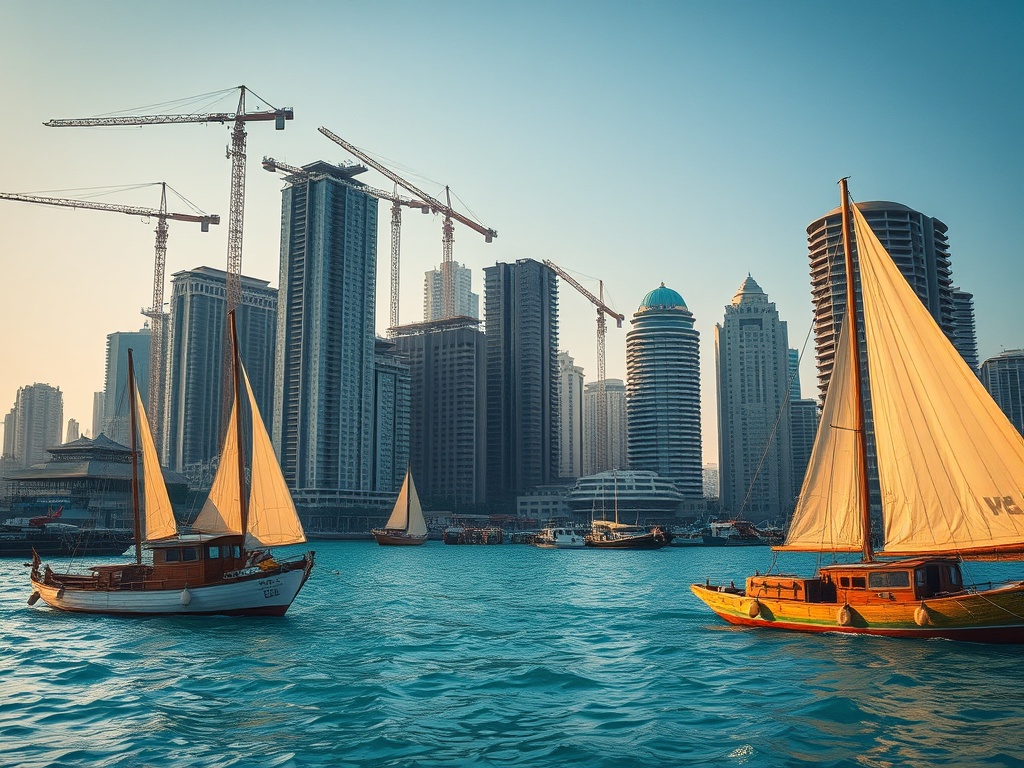
Cranes Over Malé, Contracts Under the Table
Across the archipelago nation, cranes dot the skyline and new infrastructure projects promise transformation. Yet beneath the glossy surface of development announcements lies a troubling reality: what appears as progress often serves as a sophisticated mechanism for corruption to flourish. The pattern has become familiar—each new initiative, regardless of its stated public benefit, becomes another opportunity for the well-connected to profit at public expense.
This phenomenon manifests in multiple forms. Major infrastructure contracts frequently bypass transparent bidding processes, awarded to companies with political connections rather than demonstrated competence. Land reclamation projects, marketed as solutions to the chronic housing crisis in Malé, often end up benefiting developers and speculators while failing to address the core needs of ordinary citizens. The result is a landscape of half-finished projects and misallocated resources that do little to improve daily life for most Maldivians.
The consequences extend beyond wasted funds. When development becomes synonymous with corruption, public trust in institutions erodes. Citizens grow cynical about government announcements, viewing each new project with suspicion rather than hope. This skepticism undermines the social contract, making it increasingly difficult to mobilize public support for genuinely beneficial initiatives. The very concept of progress becomes tainted, associated not with improved living standards but with the enrichment of a privileged few.
Meanwhile, the actual needs of the population—affordable housing, quality healthcare, educational opportunities—remain inadequately addressed. The housing crisis in Malé continues unabated despite numerous government initiatives, while healthcare shortages force many to seek treatment abroad. Youth unemployment persists even as massive infrastructure projects claim to create jobs. The disconnect between official rhetoric and lived experience grows wider with each "development" announcement.
Breaking this cycle requires more than just anti-corruption rhetoric. It demands transparent procurement processes, independent oversight mechanisms, and genuine citizen participation in planning decisions. Most importantly, it requires a fundamental shift in perspective—viewing development not as an opportunity for private gain but as a collective investment in the nation's future. Until those in power recognize that true progress serves the many rather than the few, the development mirage will continue to lead the country deeper into the very problems it claims to solve.
— Source fragments: If that’s the case, then whoever it is must walk away from corruption. In this country, every so called “development” is just another step deeper into corruption.