Criticism Mounts Over Muizzu's 'Small Group' Remark as Public Outcry Grows Against Rasmalé Land Deal
President Dr. Mohamed Muizzu's characterization of opposition to the leasing of Rasmalé land to a foreign company as the concern of only a small group has drawn widespread criticism, with many describing it as a mockery of genuine public concerns.
In his Republic Day address, the President said Maldivians have historically welcomed progress and development, citing education for girls under Mohamed Ameen's rule, the installation of engines in fishing boats under Ibrahim Nasir's rule, and the introduction of tourism. However, the signing of a commercial terms agreement to sell 500 hectares of land from Rasmalé—being reclaimed at great expense from the state budget—to the UAE's Egal Hills company has raised national and economic concerns that are now being voiced by many, not just a small group.
The Rasmalé project is directly linked to the housing problem, described as the greatest hope of the general public. The leasing of a large portion of land being reclaimed at great expense from the state treasury to a foreign company is a sensitive decision connected to the people's rights and future, affecting thousands of families living in difficult circumstances without their own plot of land or a home. On social media, the public is openly raising questions about the dangers to the ownership of the Maldives' land, to national sovereignty, and to Islamic unity arising from this decision.
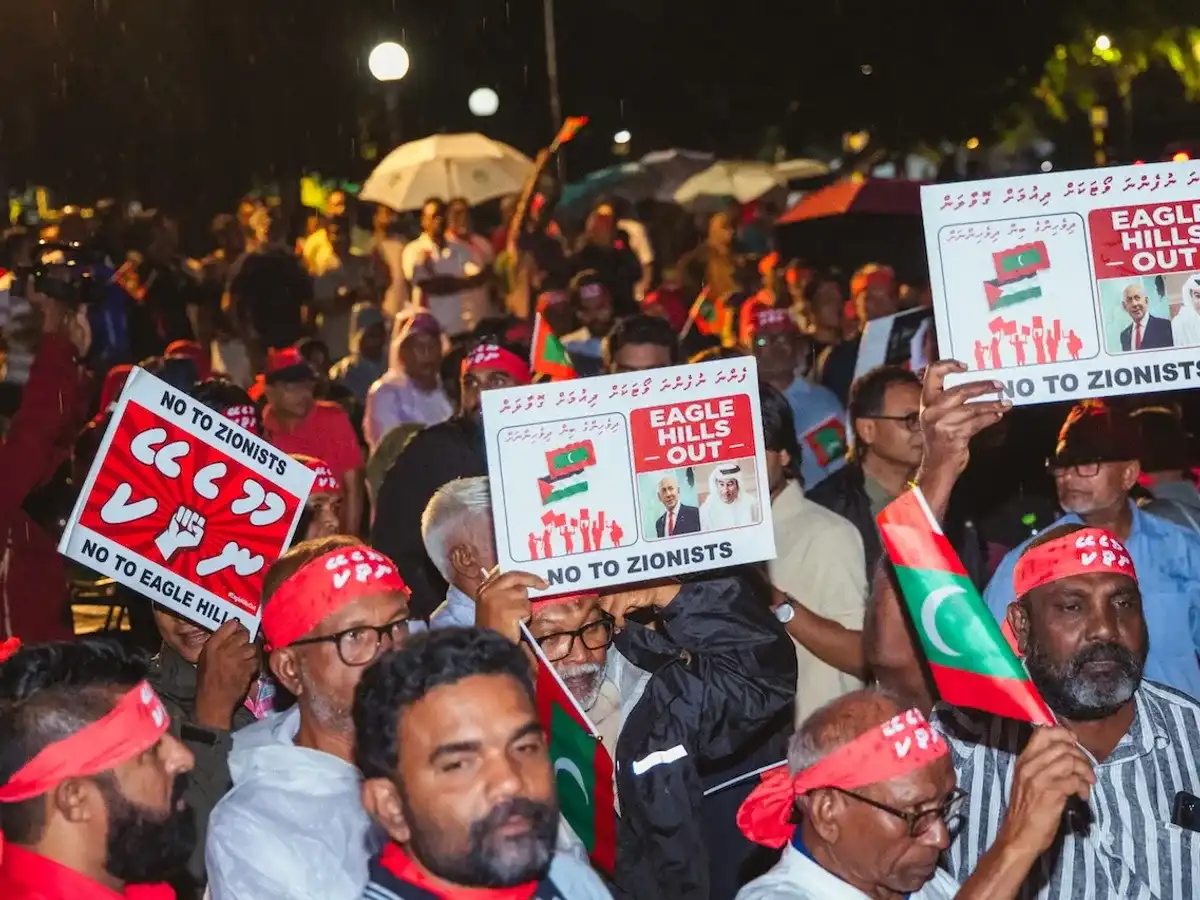
Protests and gatherings on the streets also show the gap between government statements and public sentiment. Movements such as "The Maldivians' land for Maldivians" and nightly gatherings, in which the general public, lawyers, and public associations are participating, are raising their voices against the leasing of Rasmalé land to foreign parties. Religious scholars and associations have also expressed concern over the project and called for it to be halted before the agreement is signed.
Opposition political leaders and parties are calling for a public vote or referendum to seek the people's opinion on the matter, holding that such a major decision concerning the Maldives' land must involve direct public input as a matter connected to the principles of democracy and the sovereignty of the people. President Muizzu has said there is no intention to hold a referendum and has characterized concerns regarding the Rasmalé project as statements without any basis.
The article states that proceeding while disregarding the people's concerns, and pushing forward in haste within the Majlis legal changes concerning 99-year-long leases and land ownership, is evidence that the government has lost the character of a government that listens to the people.
Many view the equating of important historical developmental changes with the sale of Rasmalé land as an attempt by the government to obscure the matter. Installing engines in fishing boats, providing education to girls, and introducing tourism are described as important steps taken to achieve progress through the strength in the hands of Maldivians and by using Maldivians' own land and resources. But the questions that arise over the manner in which a large portion of the land being reclaimed from state funds is leased to a foreign investor, and the lease arrangements for the properties developed there, are entirely different and connected to the nation's future and independence.
The article concludes by stating that making statements conveying that there is no significant opposition from the people, when public feelings, protests, and media statements are so clearly visible, reveals the scant attention given by the leadership to the genuine feelings of the general public. Such gaps weaken the bond of trust between leaders and the people, damage social calm and peace, and pave the way for increased political and social instability.