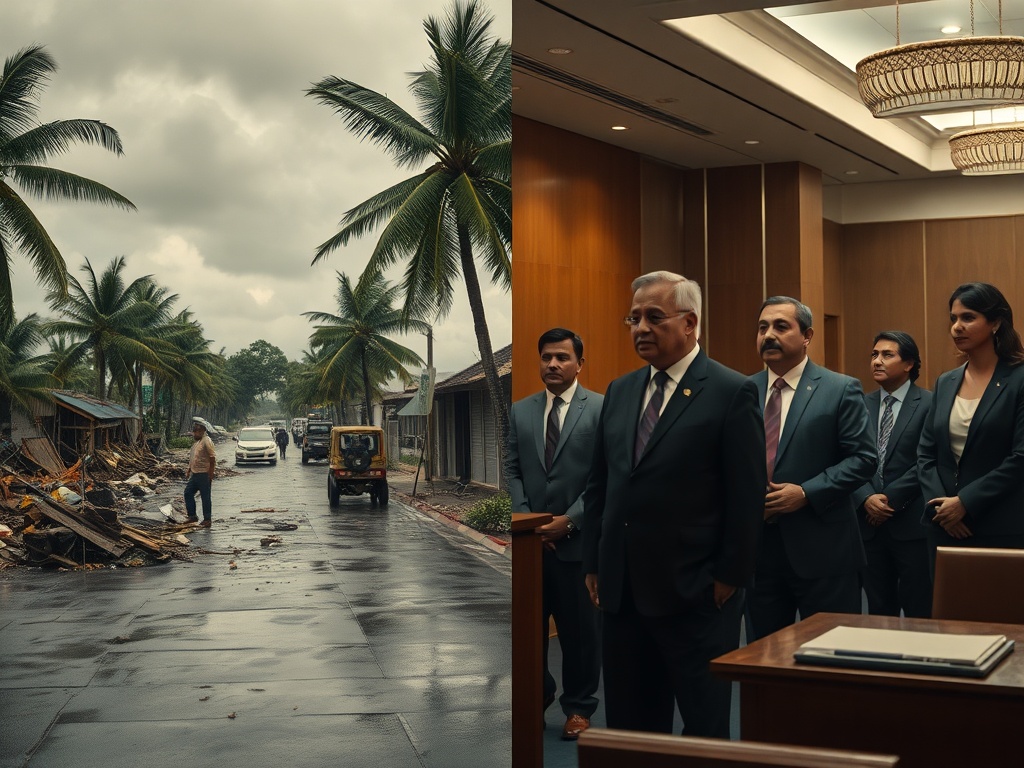
Cyclone Warnings and Courtroom Arguments: Maldives' Dual Response
When Cyclone Ditwah began unleashing catastrophe across Sri Lanka this week, the Maldivian government moved swiftly to protect its citizens, issuing clear advisories against unnecessary travel and ensuring communication channels remained open. The High Commission in Colombo stood ready to assist any Maldivians caught in the storm's path, a demonstration of practical regional solidarity in times of crisis.
Yet even as emergency protocols activated for one neighbor, Maldives was advancing sophisticated legal arguments about sovereignty and self-determination for another context entirely. In ongoing discussions about decolonization, Maldivian representatives have stressed that acknowledging the Chagossians as a distinct people actually strengthens, rather than weakens, lawful decolonization processes. This position challenges automatic succession claims and underscores the continuing obligations of colonial powers under international law.
The legal argument rests on Article 73(e) of the UN Charter, which obliges administering powers to report on non-self-governing territories. Maldives maintains that both the British Indian Ocean Territory and the Maldives itself should be recognized as such territories, creating a framework for proper decolonization that respects the rights of indigenous populations.
This dual focus—emergency response for immediate regional crises alongside strategic positioning in international law—characterizes modern Maldivian foreign policy. The government simultaneously addresses pressing humanitarian needs while building legal precedents that could shape sovereignty discussions for years to come.
Meanwhile, public attention remains divided between international concerns and domestic priorities. Social media reflects this split consciousness, with expressions of solidarity for Sri Lanka coexisting with questions about government initiatives for other causes. The digital conversation reveals a citizenry both globally aware and domestically focused, seeking clarity on how international engagements align with local needs.
The cyclone response demonstrates Maldives' capacity for effective regional cooperation, while the decolonization arguments showcase the nation's growing sophistication in international legal forums. Both efforts reflect a country navigating complex geopolitical waters—extending help to neighbors in distress while carefully protecting its own sovereignty interests in broader international discussions.
As the region weathers literal and metaphorical storms, Maldives continues to balance immediate humanitarian responsibilities with long-term strategic positioning, revealing a foreign policy approach that is both reactive to crises and proactive in shaping the international legal landscape.
— Source fragments: As cyclone Ditwah unleashes catastrophe across Sri Lanka it's important that we comply with all govt advisories. Do avoid all unnecessary travel. Keep your devices charged. If anyone needs assistance, our High Commission's number is 0112580076 and they are on X; Maldives stresses that acknowledging Chagossians as a distinct people strengthens, not weakens, lawful decolonisation. It proves Mauritius cannot claim automatic succession. Article 73(e) obliges the UK to report BIOT and the Maldives as NSGTs.