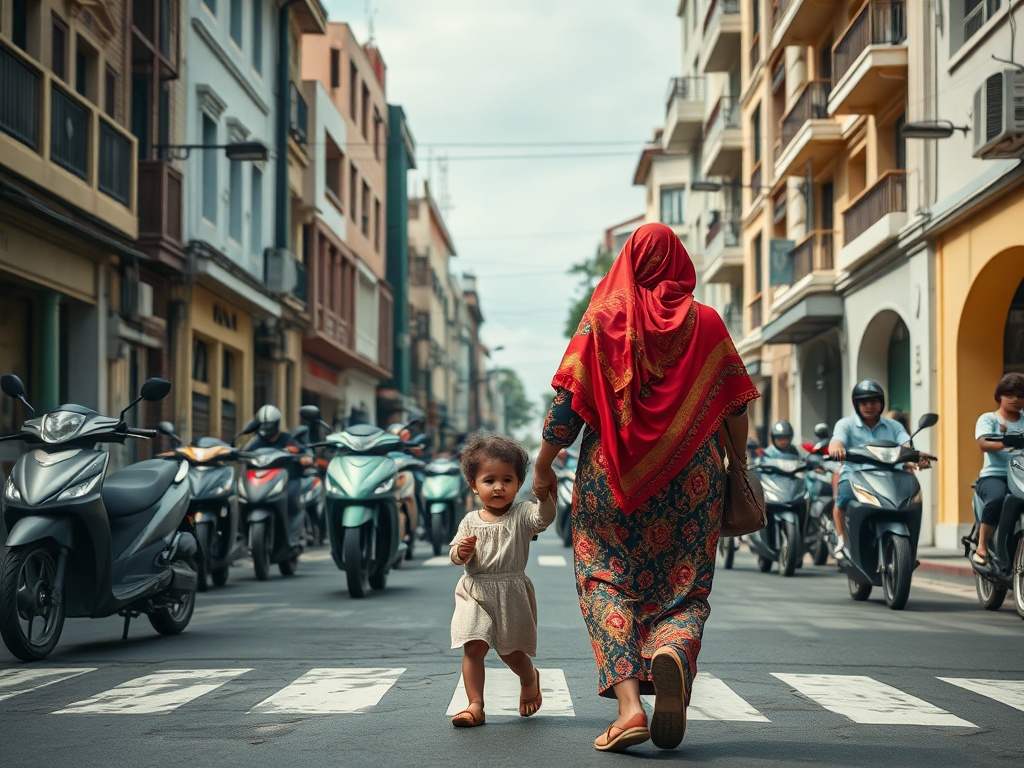
Dear Parents teach your kids about road safety
In the narrow, bustling lanes of Malé, where scooters weave between pedestrians and construction dust hangs heavy in the air, a simple message cuts through the noise: 'Dear Parents teach your kids about road safety.' This isn't just about traffic rules—it's a symptom of a city stretched to its limits. Why does this basic parental duty feel like a urgent public cry now?
Look around. The capital's infrastructure groans under population density that rivals the world's most crowded cities. Every new high-rise, every influx of expatriate workers, every family squeezed into tiny apartments means more feet on pavement, more vehicles in streets never designed for this volume. When a society's most fundamental unit—the family—must publicly remind itself to protect its children from traffic, what does that say about our urban planning failures?
Consider the domino effect. Inefficient public sectors bloated with political appointments fail to deliver basic civic services. Corruption scandals drain funds that should build sidewalks, traffic signals, and safe crossing zones. Meanwhile, parents juggle multiple jobs amid rising living costs, leaving less time to supervise children's movements. The very fabric of community vigilance frays when survival becomes the daily focus.
Yet road safety intersects with deeper maladies. Uncontrolled expatriate numbers bring unfamiliar driving norms. Youth disillusionment and drug use create distracted pedestrians. Even the housing crisis plays its part—families subleasing subsidized flats often live in neighborhoods far from schools, forcing children to navigate dangerous routes alone. Each problem compounds the other until a child's walk home becomes a risk assessment.
What would it take to transform these streets from hazard zones to safe passages? It begins with acknowledging that road safety isn't merely parental responsibility—it's a measure of governance. Do our leaders prioritize ribbon-cutting ceremonies over pedestrian crossings? Do tourism revenues get reinvested into communities where children play? The answers might lie not in grand policies, but in whether a child can safely chase a ball across the street.
Perhaps this plea represents something larger: a society yearning for order amid chaos. When parents must explicitly teach road safety, they're really teaching awareness of a system that no longer protects automatically. They're preparing the next generation to navigate not just streets, but a world where basic safeguards can't be taken for granted. And in that lesson lies both a warning and a hope—that from today's cautious steps might emerge tomorrow's demand for safer communities.