Defence Ministry Clarifies Maldives' Limited Control Over International Airspace
The Ministry of Defence has clarified the legal limits of the Maldives' jurisdiction over its airspace and seas, stating that areas beyond 12 nautical miles are international airspace and not under Maldivian legal control.
The Ministry's detailed explanation comes in response to what it terms "false allegations" that Maldivian territory is being permitted for use in war efforts. It reaffirmed the government's stance that it will not allow the nation's territory to be used to attack any country involved in the ongoing conflict in the Middle East.
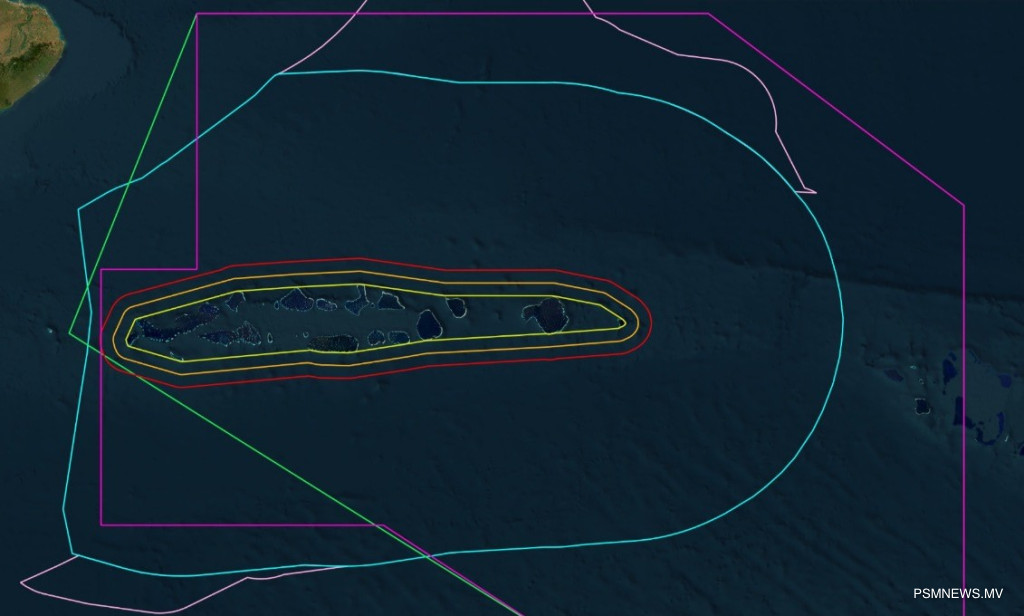
Citing the United Nations Convention on the Law of the Sea (UNCLOS) and domestic Law No. 6/96 (the Maritime Zones of Maldives Act), the Ministry outlined the nation's sovereign zones. Full Maldivian sovereignty extends to its internal waters, archipelagic waters, and territorial sea—a band stretching from the baseline to 12 nautical miles. This includes complete control over the water, seabed, subsoil, and the airspace above.
For airspace specifically, the Ministry referenced the Convention on International Civil Aviation (Chicago Convention), which defines the airspace above a country's territorial sea as sovereign, requiring permission for entry. The airspace beyond this limit is classified as international airspace.
While the Maldives provides air traffic control services within its designated Flight Information Regions (FIR) to ensure safety, entering these FIRs within international airspace does not require the country's permission. The air traffic services will, however, continue to monitor such flights and share information.
The Ministry provided a breakdown of Maldivian maritime zones: the Contiguous Zone (12-24 nm) allows for law enforcement in specific areas; the Exclusive Economic Zone (24-200 nm) grants sovereign rights over natural resources; and the Extended Continental Shelf (beyond 200 nm) provides rights to seabed resources only.
The core clarification is that while the Maldives exercises full jurisdiction up to 12 nautical miles, decisions regarding the use of airspace beyond that limit are not within its sovereign control.