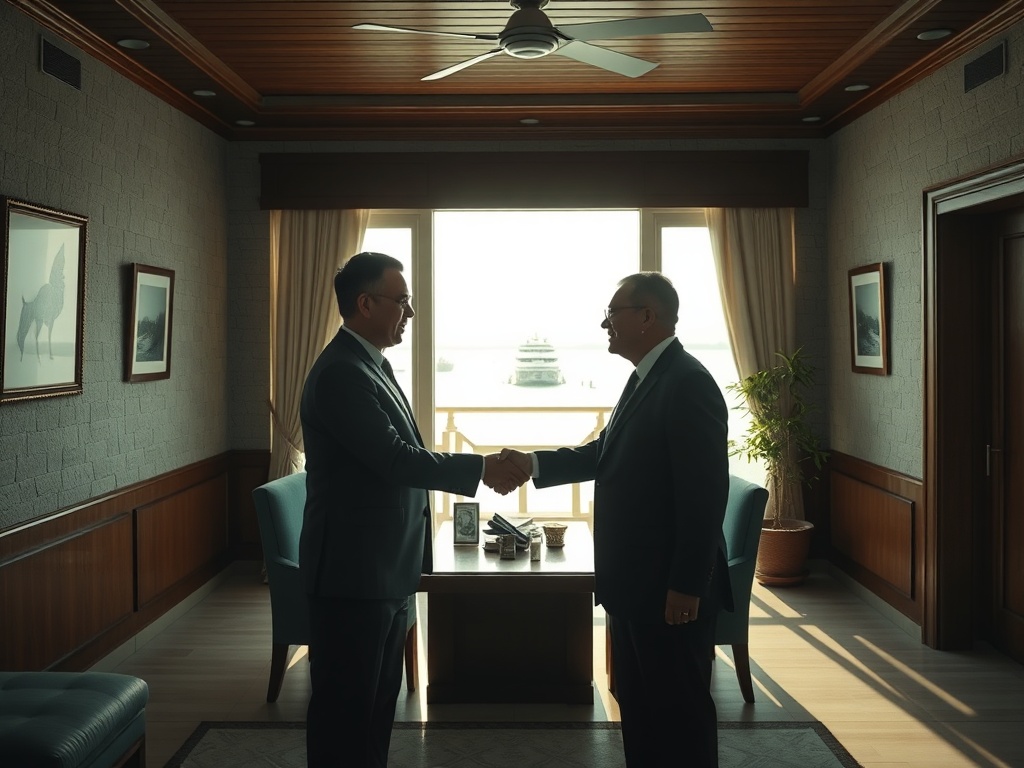
Defence Secretary Rajesh Kumar Singh calls on Defence Minister Mohamed Ghassan Maumoon.
When senior defence officials from India and the Maldives meet, the conversation is rarely just about military hardware or training exercises. It’s a careful calibration of sovereignty, regional influence, and national security priorities. For the Maldives, a nation of scattered islands in a vast ocean, defence partnerships are existential. But what does 'strengthening cooperation' actually mean for the average Maldivian?
Many islanders recall a time when foreign military presence was a distant concept. Today, the strategic importance of the Indian Ocean lanes means that Male’s decisions ripple across diplomatic circles in New Delhi, Beijing, and beyond. The commitment to deepen ties with India suggests a deliberate choice—one that balances historical friendship with contemporary geopolitical realities. Are we reinforcing a reliable partnership, or are we becoming increasingly entangled in a larger power play?
The economic implications are equally significant. Enhanced defence cooperation often brings infrastructure projects, technical training, and potential investments in surveillance and maritime domain awareness. For local youth, this could mean new skilled employment opportunities in coastal security or naval support services. But it also raises the question: does this external collaboration foster self-reliance, or does it create a dependency that might constrain our autonomy in the long run?
On the social front, such high-level engagements stir mixed feelings. Some citizens view closer defence ties as a necessary step for national security—especially with growing non-traditional threats like illegal fishing, human trafficking, and climate-related disasters. Others worry that increased foreign involvement might overshadow local decision-making or alter the cultural fabric of our island communities. How do we ensure that cooperation serves Maldivian interests first, without alienating the very partners we seek to engage?
Ultimately, every handshake between defence ministers carries the weight of public expectation. Maldivians want safety, stability, and sovereignty—not just on paper, but in the quiet waters around our homes. As these dialogues continue, it’s crucial to ask whether the avenues being explored truly lead to a more secure and self-determined future, or if they simply redirect our course toward someone else’s horizon.