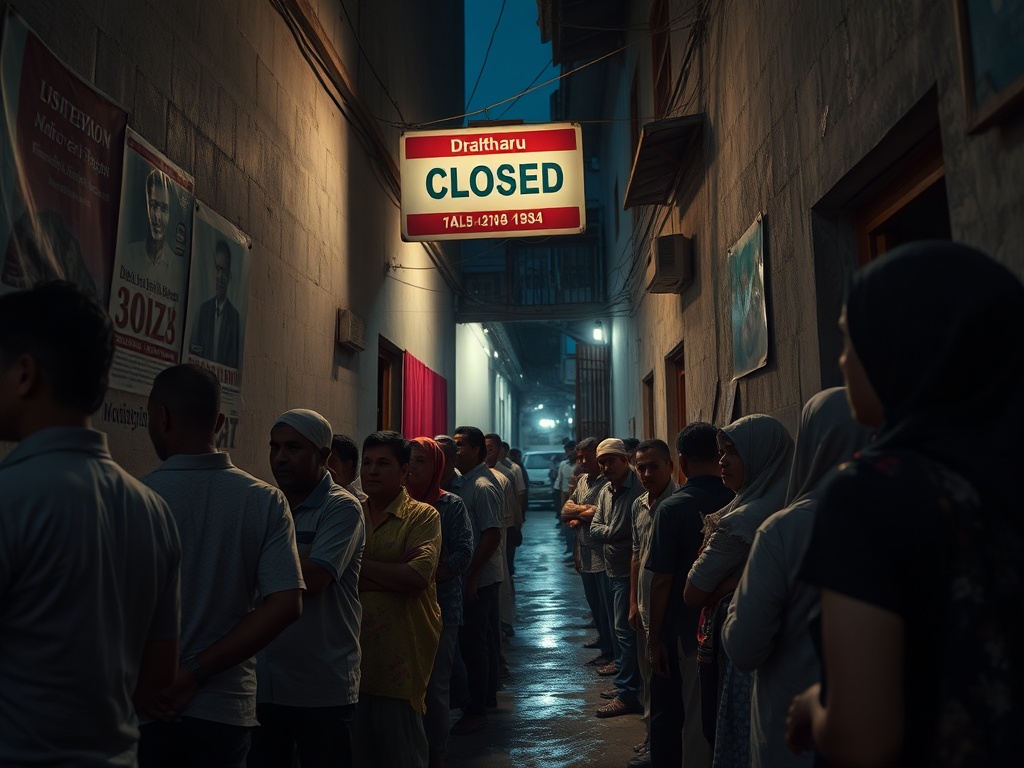
Dhaftharu Closed, Reforms Unopened
The European Union's Election Follow-Up Mission recently noted with concern that most of its recommendations for electoral reform in the Maldives remain unimplemented. This international assessment echoes the daily frustrations of Maldivians navigating a system where democratic participation often hits bureaucratic walls.
In the congested capital of Malé, the practical barriers to voting reveal deeper structural issues. The closure of dhaftharu—the traditional land registry offices—for years has created a generation of residents effectively disenfranchised. Without property registration, many urban dwellers find themselves in electoral limbo, unable to participate in the democratic process they're told to cherish.
The Local Council Election Act, intended to decentralize power, instead highlights the contradictions in the system. When citizens cannot register to vote because they lack formal property documentation, the very foundation of representative democracy weakens. This isn't merely an administrative oversight—it's a symptom of how governance systems fail to adapt to urbanization and population mobility.
Meanwhile, the debate around electoral participation reveals competing visions of democracy. Some voices emphasize that true democratic expression requires moving beyond traditional voting patterns and community pressures. The call for Muslims to 'come out of the majlis box' suggests a desire for more individual, considered voting rather than bloc-based political behavior.
The solution many point toward is genuine decentralization—not just in policy documents but in practical implementation. The argument goes that until citizens elect better parliamentary representatives who aren't drawn exclusively from elite or wealthy circles, meaningful power distribution remains elusive. The current system tends to concentrate influence while creating procedural obstacles that discourage broader participation.
These electoral challenges exist against a backdrop of broader governance concerns, including perceptions of politicized institutions and systemic inefficiencies. When citizens cannot register to vote because of bureaucratic hurdles, it undermines confidence in the entire democratic project. The gap between international recommendations and local implementation reflects deeper questions about political will and institutional capacity.
As the Maldives continues its democratic journey, the unresolved tension between electoral ideals and practical accessibility remains central to the quality of its governance. True democracy requires not just the right to vote, but the ability to exercise that right without unnecessary obstruction.
— Source fragments: EU Election Follow-Up Mission concern about unimplemented reforms; Registration difficulties in Malé due to no land/flat and closed dhaftharu; Calls for decentralization and better Majlis candidates; Commentary on voting patterns and democratic participation