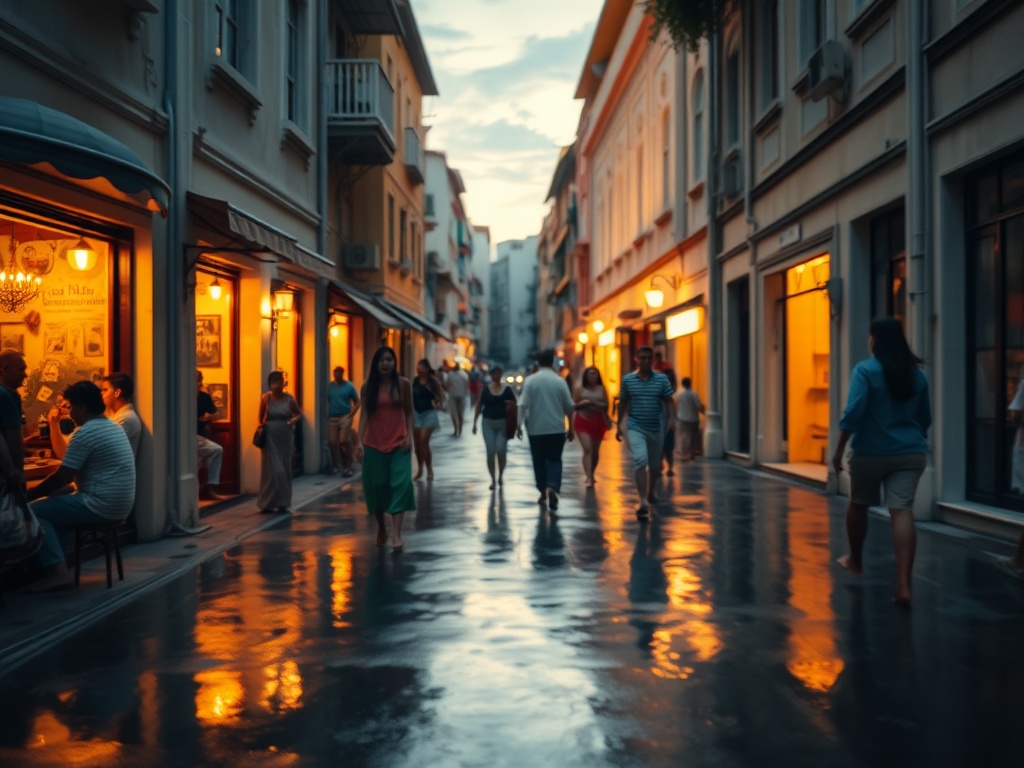
Dhivehi Echoes in a Malé Café Corridor
The young man's laughter echoes through the narrow corridor of a Malé café, his words hanging in the humid air like condensation on glass. "Ey mee majaa golaeh," he says, the Dhivehi phrase cutting through the English conversation like a familiar scent from childhood. He's encountered someone he recognizes but cannot place—a ghost of memory in a city where faces blur into the daily tide of comings and goings.
This small moment of social uncertainty reflects a larger reality in the Maldives' crowded capital. In a city where nearly half the nation's population lives within a few square kilometers, the lines between community and crowd have blurred. The young man's confusion isn't merely personal—it's symptomatic of a society navigating the space between traditional island intimacy and modern urban anonymity.
Malé has always been a place of connections, where family names carry generations of history and where a chance encounter might reveal shared relatives or childhood neighbors. But as the city swells with internal migration and expatriate workers, these traditional social maps are being redrawn. The familiar rhythms of island life collide with the accelerated pace of urban existence, creating moments where recognition falters and social certainty wavers.
In these spaces between knowing and not knowing, something essential about contemporary Maldivian life reveals itself. The young man's bemused confession—"we met a few times and he'll be like he knows me but not how or where"—captures the delicate dance of urban social navigation. It's a minor social mystery that speaks to larger questions of identity and belonging in a nation undergoing rapid transformation.
These fleeting connections form the invisible architecture of daily life in the capital. They're the brief smiles exchanged with familiar strangers at the fish market, the nod to someone whose face you see every day on the ferry, the half-remembered conversation from a political rally or community event. In a society where extended family networks once provided clear social coordinates, these ambiguous connections represent a new kind of social landscape.
The phenomenon reflects the tension between the Maldives' deep-rooted cultural traditions and the forces of modernization reshaping its social fabric. As young people migrate to the capital for education and employment opportunities, they leave behind the certainty of island communities for the complexity of urban social networks. The result is a generation navigating between worlds—connected enough to recognize faces, but not always certain of the connections themselves.
This social ambiguity isn't necessarily negative. It represents the creative adaptation of a society learning to balance its cherished communal values with the realities of urban density and mobility. The young man's lighthearted confusion suggests a cultural resilience—the ability to find humor and humanity in the spaces between certainty and doubt.
In the end, these half-remembered encounters form a different kind of community—one built not on bloodlines or shared history, but on the accumulated moments of urban coexistence. They're the gentle reminders that in a city of thousands, we're all connected by the simple fact of sharing space, time, and the occasional moment of mutual, if imperfect, recognition.
— Source fragments: Ey mee majaa golaeh, we met a few times and he'll be like he knows me but not how or where 😆