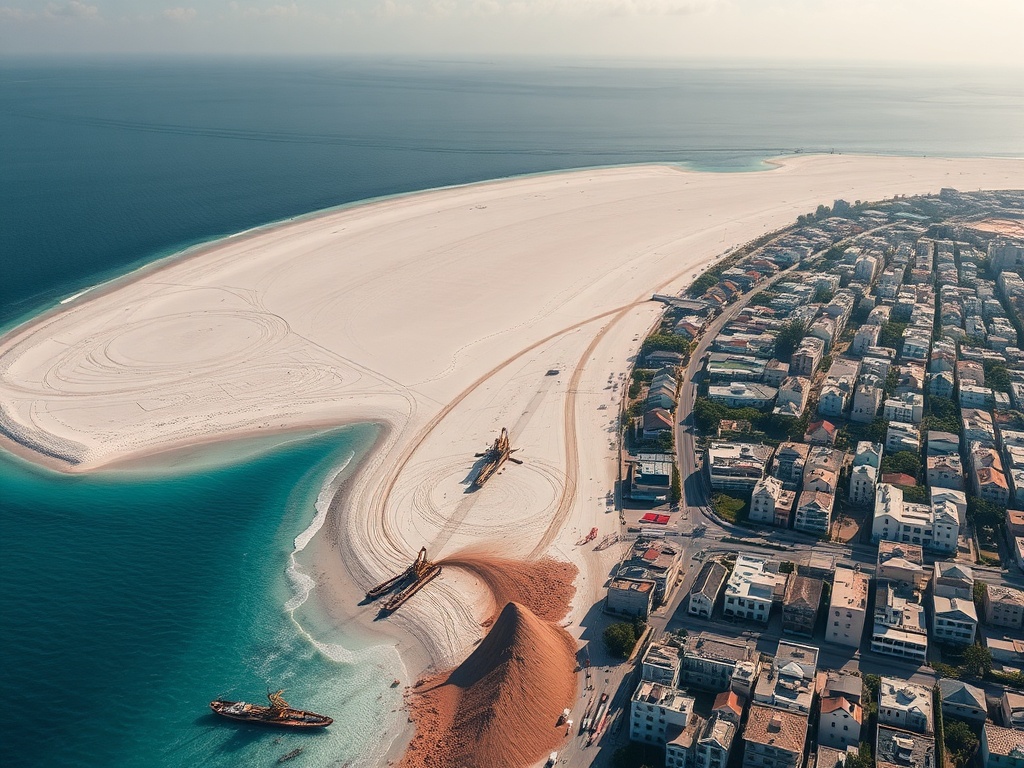
Dhivehin Ask: Who Gets the Land the Dredgers Bring?
The roar of dredgers fills the air as artificial islands emerge from our turquoise seas. These reclaimed lands represent both opportunity and conflict—physical manifestations of our deepest debates about who deserves what, and why.
At the heart of the matter lies a fundamental question: if we cannot use land for anything beyond holding it, what value does it truly hold? This philosophical inquiry underpins practical policy discussions about land distribution across our scattered nation.
The current landscape presents what one observer aptly calls the 'Maldivian paradox'—we embrace socialist principles when demanding free land from the government, yet transform into staunch capitalists when that same government attempts to regulate what happens on that land. This ideological whipsaw reflects the complex relationship Dhivehin have with territory in a nation where physical space remains both scarce and sacred.
Some advocate for a unified approach that eliminates distinctions between Malé and other islands. Under this vision, any Dhivehin seeking to settle anywhere in the archipelago should have the right to acquire land for that purpose, with the freedom to sell or move as life circumstances dictate. This perspective champions mobility and choice as fundamental rights of citizenship.
Others focus on practical implementation. The suggestion that primary residences could receive different treatment than secondary properties attempts to balance need with fairness. If land is provided for living, the reasoning goes, it should serve that purpose—not become an investment vehicle. The proposed mechanism: strict primary residence requirements coupled with tax structures that prevent cost-shifting to tenants.
The financial dimensions cannot be ignored. The stark disparity between land values in Malé versus the atolls creates inherent tensions. A 2000 square foot plot in S. Hithadho might command 300,000-500,000 rufiyaa, while a 200 square foot parcel in the capital can fetch millions. This valuation gap shapes perceptions of fairness and entitlement.
Meanwhile, the Binveriya scheme has revealed both administrative challenges and philosophical divides. Some citizens have voluntarily declined participation, adhering to personal principles against accepting free land. Others report complexities in the transfer process, including questions about existing property rights and inheritance implications that the judiciary may need to resolve.
What emerges from these conversations is a collective recognition that land policy touches something deeper than mere property—it engages our sense of identity, belonging, and what it means to be Dhivehin in a rapidly changing nation. As we continue this necessary dialogue, we seek not just solutions for today, but principles that will guide our relationship with these islands for generations to come.
— Source fragments: User voices discussed land policy distinctions between Malé and other islands, free land distribution paradoxes, practical implementation mechanisms, financial valuation disparities, personal principles regarding participation in land schemes, and administrative challenges in existing programs.