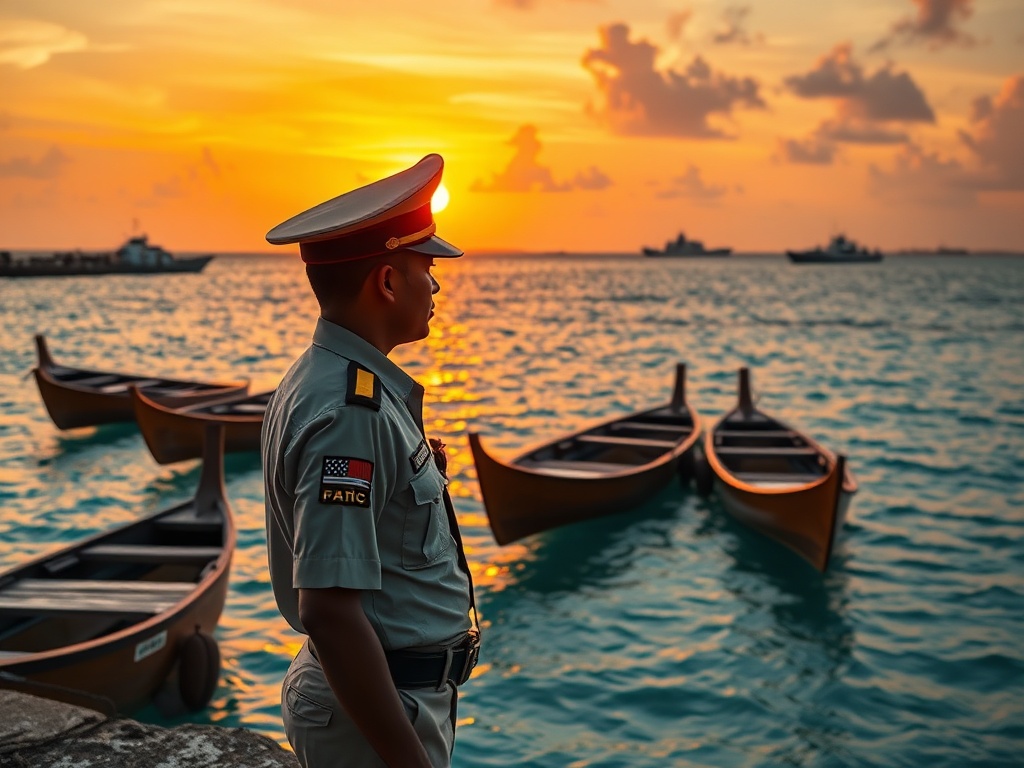
Dhoni Fishermen Watch as Maldives Buys Its First Naval Patrol Ships
The debate over military spending in the Maldives reveals a fundamental tension between economic pragmatism and strategic sovereignty. Proponents of increased defense investment argue that even a small island nation must cultivate credible deterrent capabilities to maintain independence in foreign relations. The comparison to Singapore—another small nation with substantial military expenditure—resonates powerfully in this discourse, suggesting that sovereignty isn't granted but earned through demonstrated capacity.
This perspective challenges conventional wisdom about small states' limitations. The argument isn't about preparing for all-out war—a remote possibility—but about strengthening negotiating positions. When a nation can demonstrate self-reliance in security matters, its diplomatic engagements carry different weight. The historical precedent of former President Maumoon Abdul Gayoom successfully negotiating the departure of Indian forces after their extended stay following the 1988 coup attempt serves as a touchstone for those advocating strategic autonomy.
The rehabilitation of MNDF and police facilities represents more than infrastructure upgrades—it signals a commitment to professionalizing national security institutions. This approach mirrors the Swiss model, where responsible arms ownership by trained citizens complements state security structures without descending into chaos. The distinction between arming a population and maintaining professional standards is crucial to this vision.
Yet counterarguments point to nations like Iceland, which maintains zero military expenditure while ranking among the world's safest countries. This raises legitimate questions about opportunity costs in a nation facing pressing domestic challenges including housing shortages, healthcare inadequacies, and youth unemployment. Every rufiyaa spent on missiles and drones is currency not invested in social development.
The current government's defense investments occur against the backdrop of the 'India Out' campaign and shifting regional alignments. While drones and surveillance systems offer clear practical benefits for maritime monitoring in the archipelago's vast territory, the strategic purpose of missile systems invites more complex consideration. Their value may lie less in actual deployment than in the subtle recalibration of regional power dynamics.
This conversation ultimately transcends military hardware to address deeper questions of national identity in the 21st century. How does a small Muslim nation navigate between superpowers while preserving its cultural and political autonomy? The answer may determine not just security policy but the very character of Maldivian sovereignty for generations.
— Source fragments: Singapore military spending comparison, sovereignty arguments, historical precedent of Indian forces departure, MNDF facility rehabilitation, Swiss gun ownership model, Iceland's zero military budget, purpose of missiles versus drones