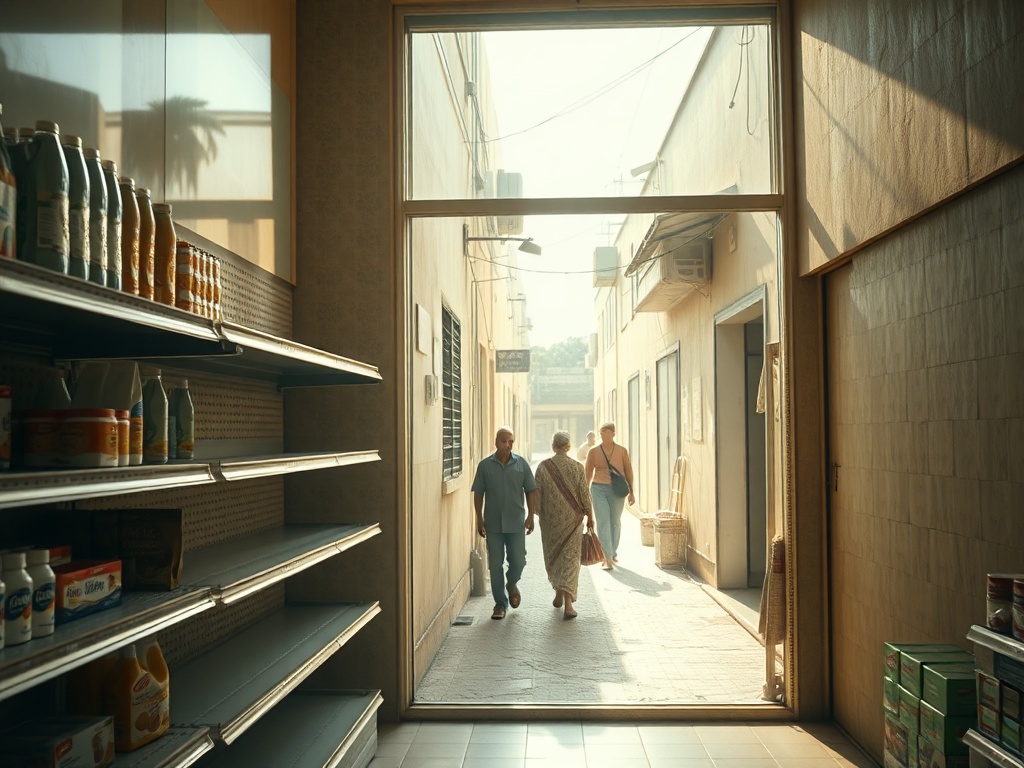
Diapers out of stock, drugs always available
Walking through the narrow aisles of a Malé supermarket, the empty shelf where my daughter's nappy brand should be is a familiar sight. It’s been months. The space is vacant, a silent testament to a supply chain that fails our most basic needs. Yet, just outside, in the shadowed corners of our neighborhoods, another market thrives uninterrupted. The flow of narcotics is so constant, so reliable, it feels like a state-sponsored service. This isn't just an inconvenience; it's a profound moral failure that cuts to the heart of our society.
We are a nation that prides itself on family, on community, on raising the next generation with care. But what does it say when a mother cannot find diapers for her child, while substances that destroy minds and futures are restocked with the efficiency of a well-oiled machine? The irony is bitter. Our national logistics seem to have mastered the delivery of despair, while the essentials for our children's well-being vanish. It speaks to a system where profit and power overshadow public good, where the cries of parents are drowned out by the silent, lucrative trade that preys on our youth.
This is not an isolated complaint but a symptom of a deeper sickness. With youth unemployment hovering around thirty percent and a sense of hopelessness festering, the easy availability of drugs becomes a dangerous escape. It’s a supply meeting a demand born of desperation. Meanwhile, the real building blocks of a future—reliable access to childcare products, honest employment, and a government that prioritizes its people—are treated as secondary. We subsidize fuel and electricity, which is vital, but if we cannot protect our children from the cradle and our youth from the lure of addiction, what is the value of those subsidies?
Every administration seems to have perfected this twisted supply-chain mastery. The budget, the effort, the logistical networks—all appear reserved for the wrong essentials. Who needs diapers when the next generation can be offered a different, darker future on demand? This is the question we are forced to ask, not with anger alone, but with a heavy heart. It is a call to re-examine our priorities, to demand that the same efficiency applied to the flow of illicit goods be directed toward the flow of hope, health, and dignity for every Maldivian family.
We must look at our islands, from the crowded streets of Malé to the quieter atolls, and recognize that the true measure of our progress is not in the vices we can access, but in the virtues we can provide for our children. Let this frustration be a catalyst for change, a reminder that our national soul depends on nurturing our future, not numbing it.