Digging for Answers in the Sand While the Nation Debates Its Future
In the midst of political turmoil and economic uncertainty, a different conversation is emerging in the Maldives—one that reaches back thousands of years before the current debates over governance, foreign relations, and national debt. At its heart lies a fundamental question: who were the original Maldivians, and what can their story tell us about who we are today?
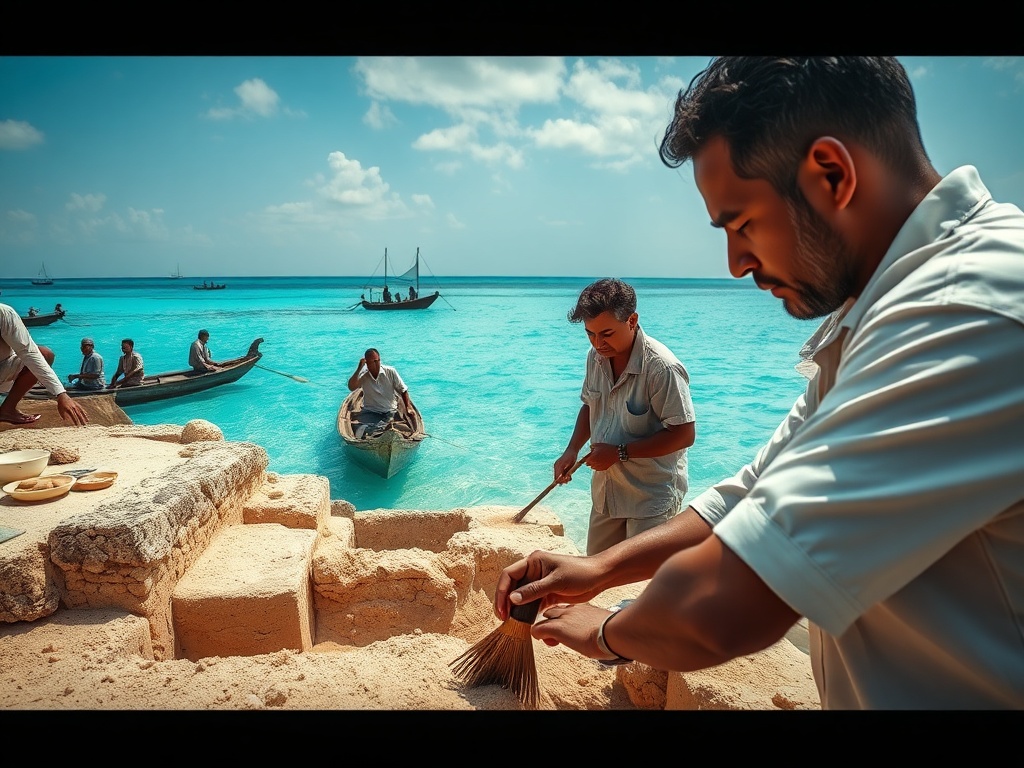
The Giraavaru people represent the earliest known population group in the archipelago, their existence raising compelling questions about genetic origins and migration patterns. While modern DNA testing could potentially trace their lineage across the Indian Ocean, the more immediate challenge lies in the ground beneath our feet. Archaeological evidence of pre-Buddhist settlement remains elusive, creating a historical gap that mirrors the contemporary disconnect many Maldivians feel from their own narrative.
This search for ancient roots occurs against a backdrop of modern struggles. The same islands that once supported giant taro tubers—the 'Maa Ala' or 'Furahdhe Ala' that sustained generations—now face import dependency and foreign currency shortages. The traditional knowledge that allowed our ancestors to thrive in this challenging environment seems increasingly distant as we confront youth unemployment, housing crises, and healthcare inadequacies.
Historical photographs, like the recently colorized 1983 tourism development plan image showing a man holding a giant taro tuber, serve as poignant reminders of both continuity and change. They capture moments when traditional lifeways coexisted with emerging modernization, much like today's tension between global tourism and local identity.
The archaeological quest takes on deeper meaning when viewed alongside contemporary political realities. As governance structures face challenges of nepotism, politicized judiciary, and electoral bribery, the search for authentic foundations—both historical and institutional—becomes more urgent. The very land that might hold evidence of ancient civilizations is the same land now subject to political distribution and housing crises.
This parallel examination of past and present reveals a nation at a crossroads. The determination to 'confront our past' applies equally to archaeological excavation and political accountability. Just as researchers seek physical evidence of pre-Buddhist settlement, citizens seek transparency in governance and economic management.
The conversation about origins inevitably becomes a conversation about destination. Understanding where we came from informs where we're going—whether in terms of political development, economic sustainability, or cultural preservation. The giant taro tuber in that 1983 photograph represents not just agricultural heritage but resilience, adaptation, and the ability to thrive in challenging circumstances—qualities that remain essential as the Maldives navigates its contemporary challenges.
As archaeological work continues alongside political and economic reforms, these parallel journeys of discovery may ultimately converge, offering a more complete understanding of Maldivian identity that embraces both ancient roots and modern realities.
— Source fragments: The earliest known population group in Maldives are the Giraavaru people. Maybe a DNA test of them will show their genetic origins. Archeological evidence of people existing here for thousands of years pre-dating Buddhism must be found; This is an original black and white photo published in the final report of the Maldives' tourism development plan in 1983. The man is holding a giant taro tuber, locally known as 'Maa Ala' or 'Furahdhe Ala'; We do not move forward until we confront our violent and gruesome past.