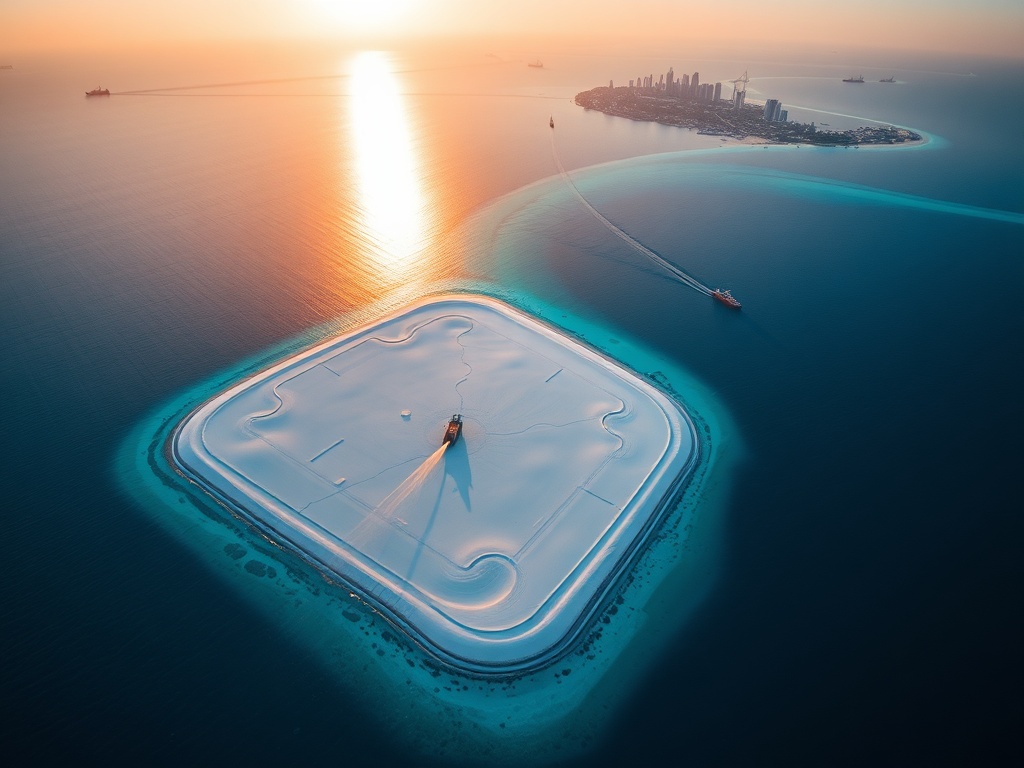
Dredgers Roar While We Debate Who Owns This New Land
The roar of dredgers fills the air across Maldivian waters, creating new land from ancient seas. Yet this modern engineering marvel has unearthed a deeper, more divisive question: who truly owns the land beneath our feet?
Across social media platforms and coffee shops, a national conversation unfolds with remarkable intensity. The debate centers on what many call the 'entitlement paradox'—where citizens demand free land from the government while resisting regulation of that same property. This contradiction reveals the complex relationship Maldivians have with land, ownership, and state responsibility.
At the heart lies the Binveriya scheme and similar initiatives that have created precedent for free land distribution. Supporters argue that if the government is giving away land, Male' residents should have first rights to plots in the capital their families have called home for generations. The emotional weight of this position stems from decades of congestion, where multiple families squeeze into ancestral homes as land values skyrocket beyond reach.
Yet critics see a fundamental unfairness. If reclamation projects are funded by national resources, shouldn't every Maldivian citizen have equal claim? This perspective challenges the very notion of differentiating between 'Male' meeha' and 'Raajjetherey meeha'—a distinction that some argue perpetuates geographic discrimination in a nation where internal migration should be seamless.
The financial dimensions reveal stark disparities. A 2000 square foot plot in Hithadhoo might trade for 300,000 Rufiyaa, while a 200 square foot parcel in Male' commands millions. This valuation gap creates different economic realities and expectations across the archipelago.
Practical solutions emerge from the debate: requirements that recipients use free land as primary residences, taxation systems that prevent profiteering while allowing mobility, and mechanisms that balance individual rights with community needs. Some suggest looking to historical policies that combined primary residence protection with optional second-home opportunities.
What's clear is that land policy has become the ultimate political litmus test, touching on core questions of identity, fairness, and economic opportunity. As one observer noted, we become socialist communists when demanding free land but transform into pro-capitalists when regulations threaten our property rights.
The way forward requires moving beyond binary arguments. It demands recognizing both the historical ties that bind families to specific islands and the modern reality of a mobile population seeking opportunity across the archipelago. The land may be new, but the questions it raises about who we are as a nation are as ancient as the coral foundations beneath our feet.
— Source fragments: technically maybe not, but if you can't yourself wean out of the land and use it for anything else then what is it?; I think the correct policy is not to differentiate between Male' meeha or Raajetherey meeha; I don't believe in free land handouts to begin with; About land: I believe land for living shall be given for free; We become socialist communists when we demand free land; Those who are against the Male Free Goathi Scheme; A 2000 sqft land in S. Hithadhoo on average is worth about 300-500k I believe. A 200sqft land in Male' is still worth millions