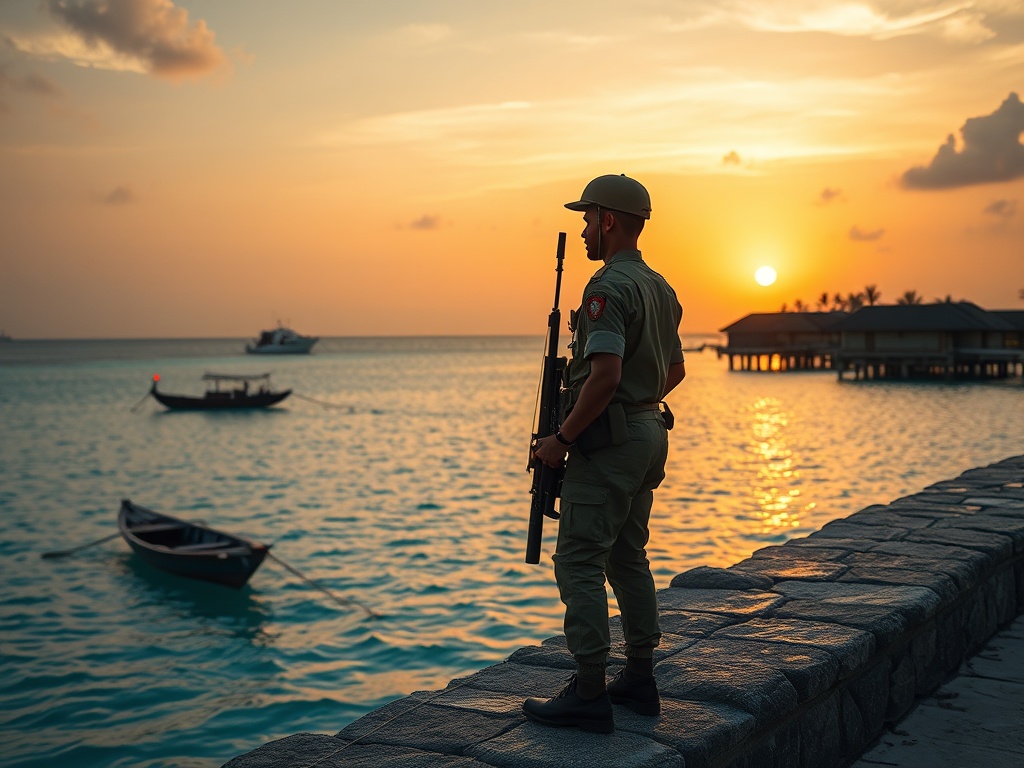
Drones Over Fishing Dhows: The Maldives' Sovereignty Debate
The debate over military spending in the Maldives has intensified, revealing deep-seated concerns about national sovereignty and strategic positioning. Proponents argue that consistent investment in defense capabilities—from drones to missile systems—represents not just security but national dignity. 'Wealth is generated over time,' one perspective holds, 'and independence is worth spending for.' This view sees military modernization as essential for being taken seriously on the international stage.
The shadow of history looms large in these discussions. References to Victory Day and the 1988 coup defense underscore how national memory shapes contemporary security thinking. The heroic actions of figures like retired Brigadier General Ibrahim Didi, who reportedly ran through gunfire to open armories during the coup attempt, have become symbolic of the courage needed to protect sovereignty. These historical touchpoints fuel arguments that preparedness cannot be deferred until threats materialize.
Current government officials have framed recent defense budget increases as correcting years of neglect. The 4% allocation that some consider excessive is defended as 'barely anything' compared to the potential cost of vulnerability. Beyond direct defense applications, supporters note that security infrastructure attracts foreign investment by demonstrating stability—who would invest in a nation that cannot defend itself?
The geopolitical dimension adds complexity to the calculus. References to 'balancing out' regional powers and concerns about foreign military presence reflect broader anxieties about sovereignty erosion. The discourse often contrasts Maldives' ability to debate these matters openly with the situation in contested regions like Kashmir, framing military spending as a privilege of independence.
Yet beneath the strategic arguments lies a fundamental question about national priorities. As the country grapples with housing shortages, healthcare limitations, and economic pressures, each defense expenditure represents opportunity costs elsewhere. The challenge becomes determining what level of military investment truly serves national interests without compromising other critical needs.
This conversation ultimately transcends budget percentages and hardware acquisitions. It touches on how a small island nation navigates an increasingly multipolar world while addressing domestic challenges. The ongoing dialogue reflects a nation wrestling with what sovereignty means in the 21st century—and what price its preservation demands.
— Source fragments: wealth generation over time, military spending for sovereignty, Victory Day historical context, defense sector neglect claims, historical heroism during coup, security as investment attraction, geopolitical balancing arguments, sovereignty comparison to other Muslim regions