Economist Warns It Is 'Too Late' to Delay Spending Changes as Inflation Bites Maldives Households
An economist has warned that waiting for another global crisis to prompt changes in spending habits and lifestyles is already too late, as successive external shocks continue to push up the cost of living in the Maldives.
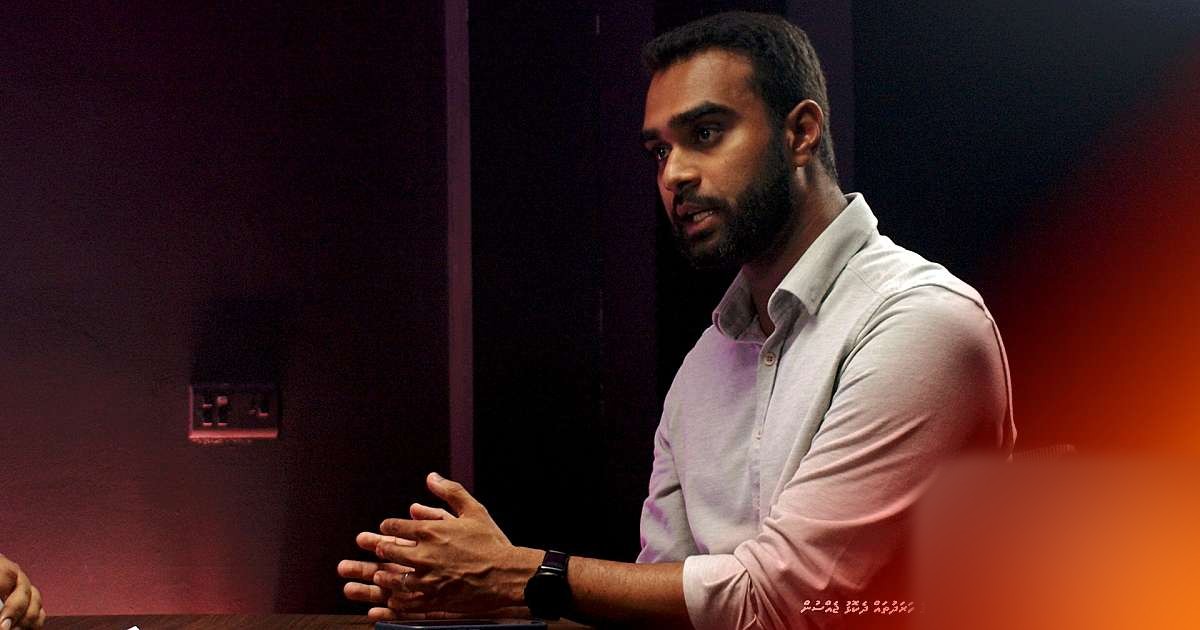
Speaking on Dhauru's 'Ehbasve Dhebasvuma' podcast, lecturer and economic analyst Mohamed Imthinan Saudulla said the country has faced the economic hardships of the Covid-19 pandemic, then the Russia-Ukraine war, and now a war in the Middle East, leaving the world economy unstable. He said such shocks are especially severe for a country like the Maldives, which relies heavily on imported oil for electricity generation, transport, fishing and tourism, as well as for bringing essential goods into the country.
According to the article, approximately 10 billion rufiyaa was spent last year on importing oil into the Maldives, amounting to roughly 10 percent of GDP, while government spending on fuel subsidies has risen to about 3.6 billion rufiyaa this year.
The pressure on family budgets is reflected in official statistics cited in the article: inflation stood at 1.40 percent in 2024 and rose to 4.04 percent in 2025, and although the inflation rate remained at 1.17 percent up to September last year, the prices of basic food items remain 8.59 percent higher than the previous year.
Asked whether it is time to rethink reducing expenses and the living environment, Imthinan said: "I think it is already late. It has been many days since the Middle East war began. Before that, this had to be experienced from the Russia-Ukraine war as well. Many days have passed since this signal was received."
Imthinan noted that inflation in the Maldives is calculated by aggregating the prices of many goods and services into a single basket, which also includes services provided by the government through subsidies, and that this is why aggregate inflation appears low. "But when the basic food category is separated out, one will see that inflation is at a very high level. One will also see levels rising very sharply. For example, in a situation where inflation is at 5% for a person receiving a salary of 15,000 rufiyaa, he loses approximately 750 rufiyaa in purchasing goods," he said.
He pointed out that, unlike other countries, salaries in the Maldives are not indexed to inflation, noting that most countries following this principle are European, including Spain, Belgium and Iceland, and that neighbouring India includes the inflation rate in income for public sector employees as an allowance. Imthinan believes salaries must rise to the extent that goods prices rise, adding that in many other countries this indexing is done once a year.
He also said strengthening the social protection system is important, and that taxes levied on income must be made more progressive, or rates increased on the principle that the tax rate is greater as income is higher, so the state can increase assistance to families through the social protection system. "Income tax rates too without proper study. But this is something that needs to be studied and discussed further and decided," he said.
On managing household finances, Imthinan stressed the importance of tracking the budget. "Every person is making many expenses without knowing it. Once you start tracking the budget, it will become very easy to see, and to think about where the money is being spent and how it should be managed," he said, noting that there are Maldivian applications specially for that purpose.
He also urged caution over loans, noting that many Maldivians buy everything from mobile phones to motorbikes through loans or instalments, and that major living expenses such as building houses are settled with bank loans. "A person also needs to be careful when taking a loan. Many studies in the world recommend that the monthly loan expense should not be greater than about 30% of income," he said.
Imthinan acknowledged the difficulties of saving, noting that when people are forced to migrate to Malé, a large portion of income goes on rent, electricity, water, internet, phone and waste bills, as well as food and cleaning supplies, leaving only a small amount. "Instead of saving the little that is left at the end of the month, one should think about saving a certain percentage of income first as soon as the income is received. It is a big difficulty to do it when some sudden event happens in the middle of the month. But it is something that must be done anyway," he said.
He also called for changes to eating and transport habits, suggesting that at least one of the day's three meals be made up only of things produced in the Maldives, a custom that previously existed especially in the southern atolls. Despite the lack of safe road conditions for walking, he said it is good to increase time spent walking and to begin travelling in environmentally friendly vehicles such as battery-powered bicycles instead of oil-burning vehicles. He added that the state must also exert effort to increase production on Maldivian farms and to establish Maldivians' eating habits from those goods, and that every individual must now change habits thoughtfully.